


SANCTUARIES LA EXPLORES THE QUIETER SIDE OF LOS ANGELES THROUGH DESIGN.
ROOTED IN THE BELIEF THAT SANCTUARY EXISTS EVERYWHERE, OFTEN HIDDEN IN PLAIN SIGHT.
IF YOU ENJOY THIS PUBLICATION, CONSIDER SUBSCRIBING OR SHARING IT WITH A FRIEND.
PHOTOGRAPHY BY SHELBY NICO DIAMOND
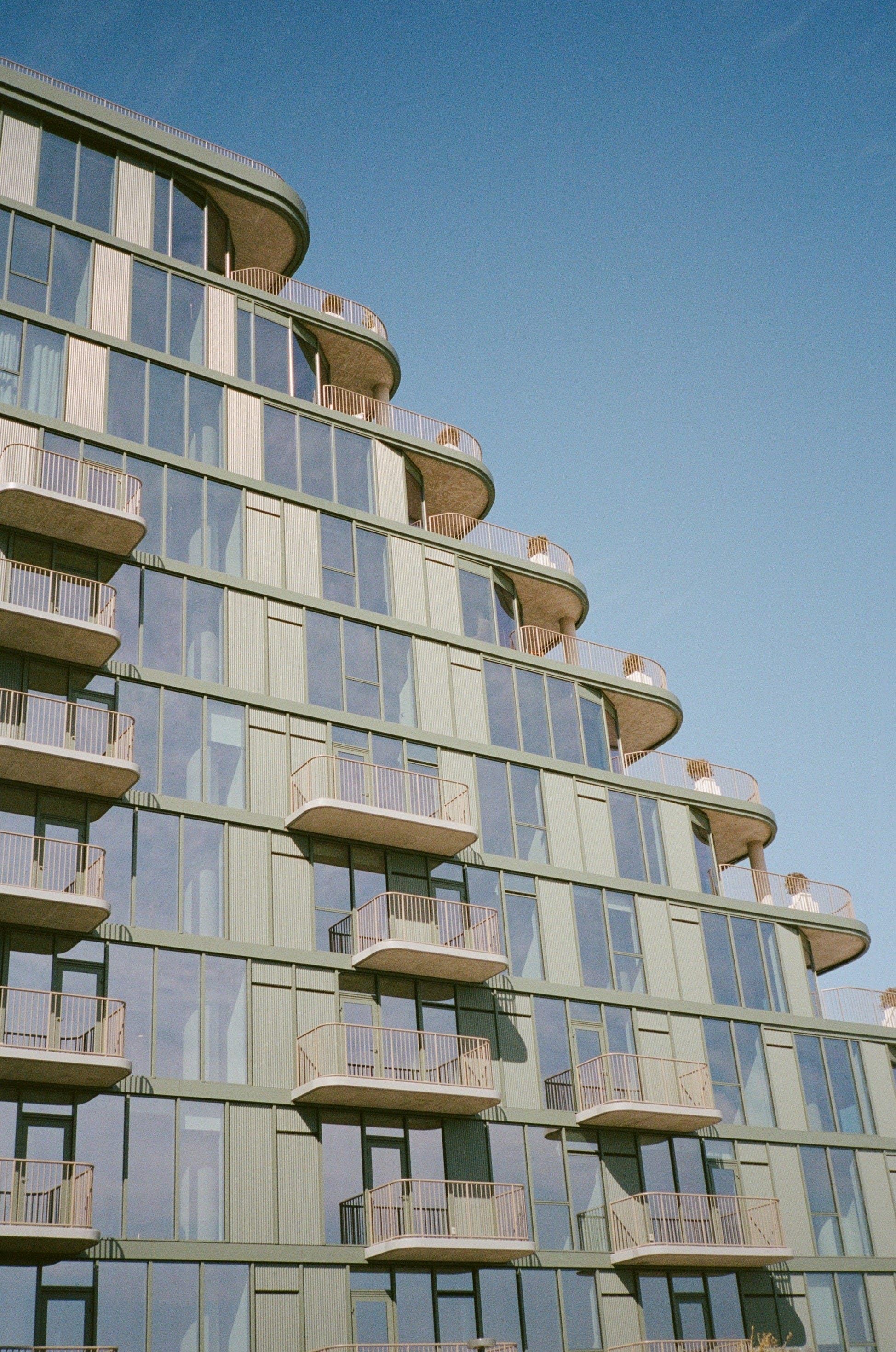
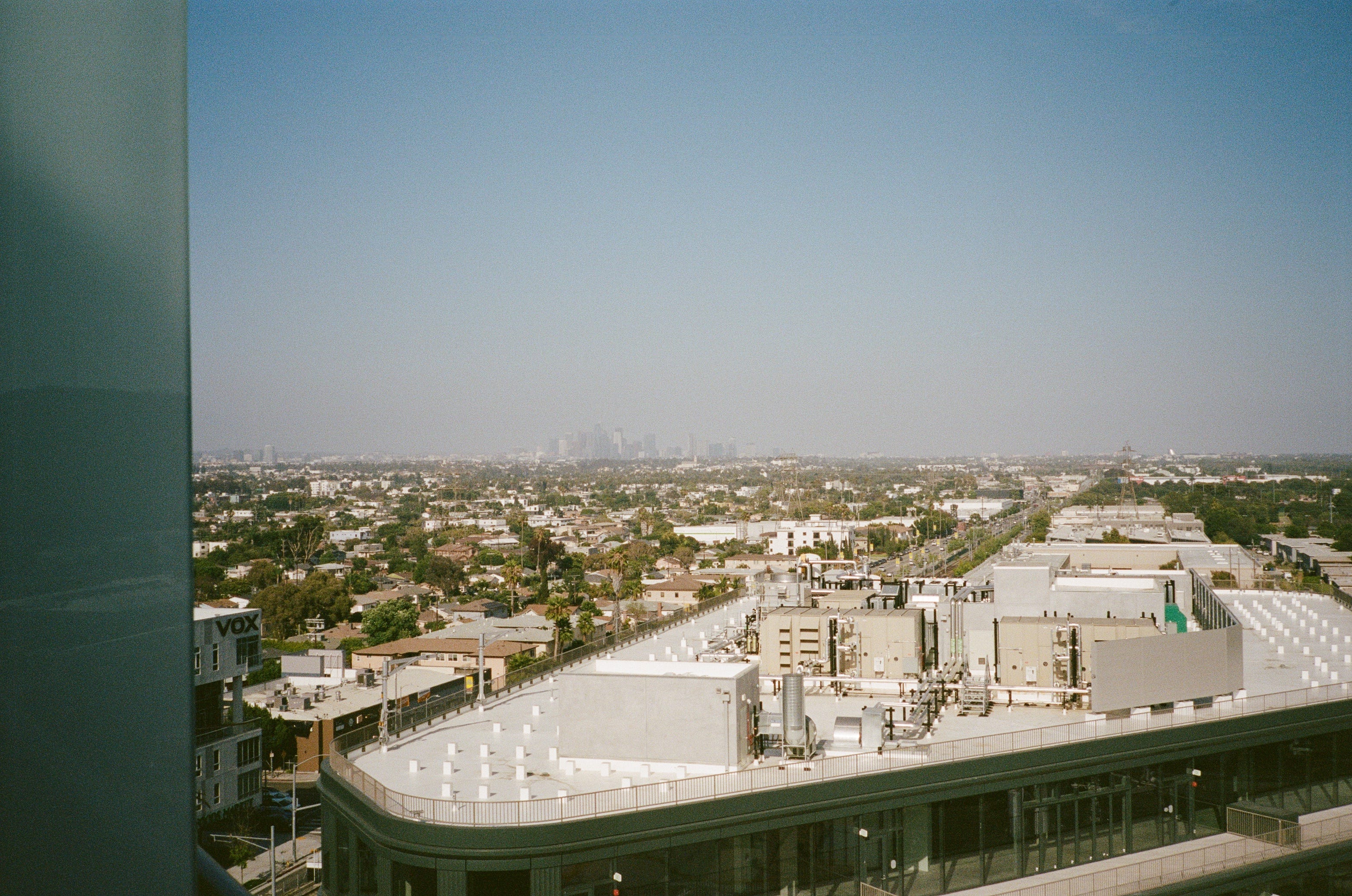
Last Tuesday, Andrei Pogany and I went to an Urban Land Institute tour of Habitat, the new mixed-use development at 3401 S. La Cienega at the edge of Culver City and Baldwin Hills. The pitch: sustainable, well-designed, live-work-thrive. Residences, creative offices, coworking, a screening room, a full acre of park space. On paper, this is a style of development that I want to root for.
A little context. Lendlease and its pension fund partner Aware Super bought the 3.5-acre former Public Storage facility parcel in 2020 for $92 million, then secured $316 million in construction financing to build it out. The architect of record is SHoP, the New York firm working on their first Los Angeles project, led here by Principal Dana Getman, a Cornell & Yale-trained architect who also oversaw Essex Crossing in Manhattan. Landscape by downtown LA-based Relm. Interiors by Kelly Wearstler. On the Lendlease side: Rodney James Ross and Glen Rosic. And Ellen Way, the senior superintendent who led the build: 45 years in construction, one of the first women to join the laborers union in Boston back in 1979. She was cool.
What struck me when we arrived: the scale. A six-story, 253,000 sq ft office building. A 12-story residential tower with 260 units. Even with the green cladding and the rounded building edges — which I genuinely liked — it reads immediately as a New York project dropped into an LA site. That’s not a design failure; it’s a conceptual one. SHoP does beautiful, precise, intelligent work. But the DNA is Manhattan mixed-use, and in my dream world, Los Angeles doesn’t grow the same way as New York. It's a different theory of city-building, and it has its place. Just not in every neighborhood — or even in every city.
The Kelly Wearstler-designed interiors — Venetian plaster adorning the walls, warm materials, natural stone, locally made tile, considered details — are the part that had me going: wow. You can feel she cared. Anyone familiar with her work will recognize her style. The shared spaces in the co-working area, screening room, and top floor lounge were places I would happily spend time.
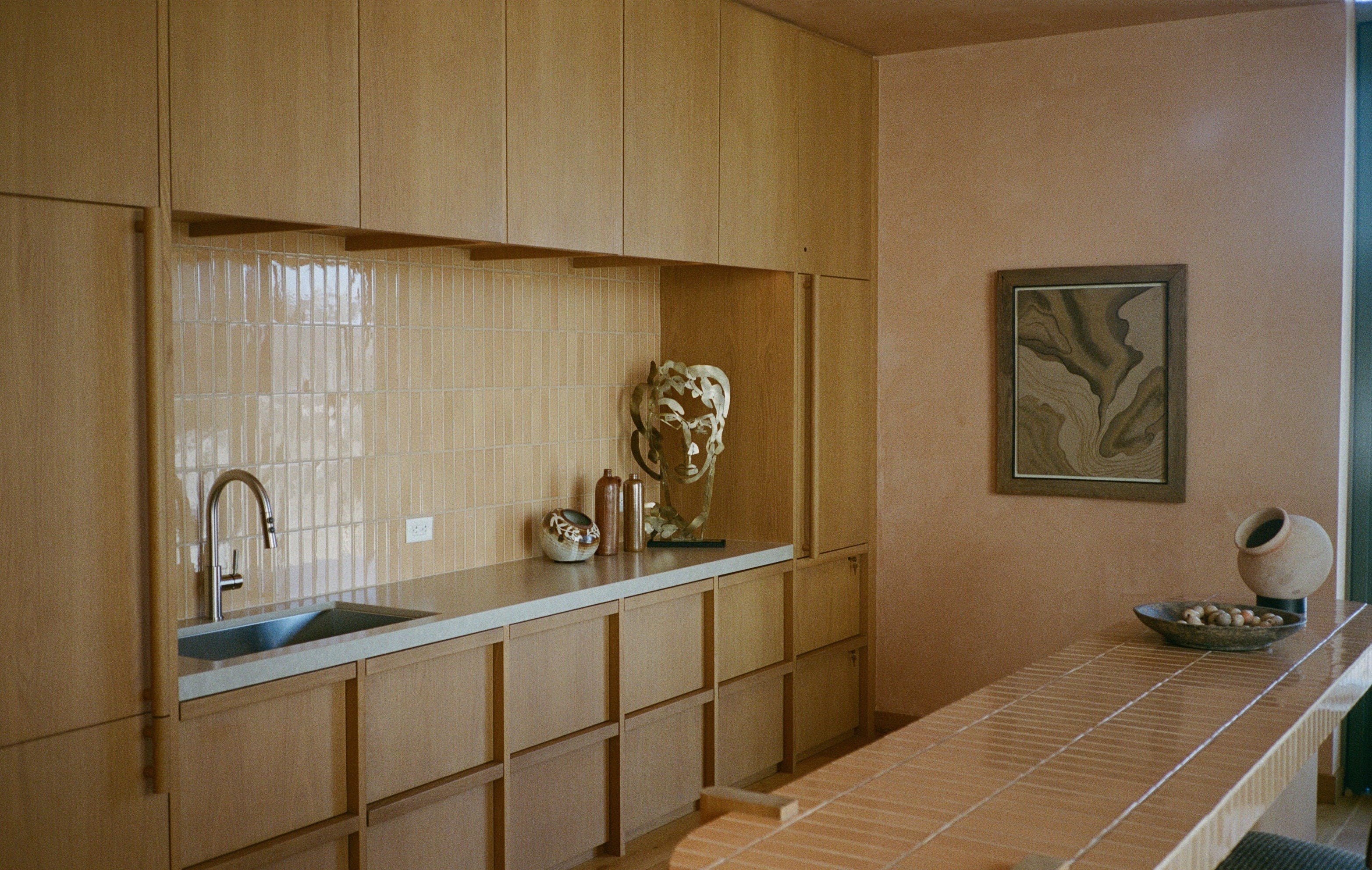
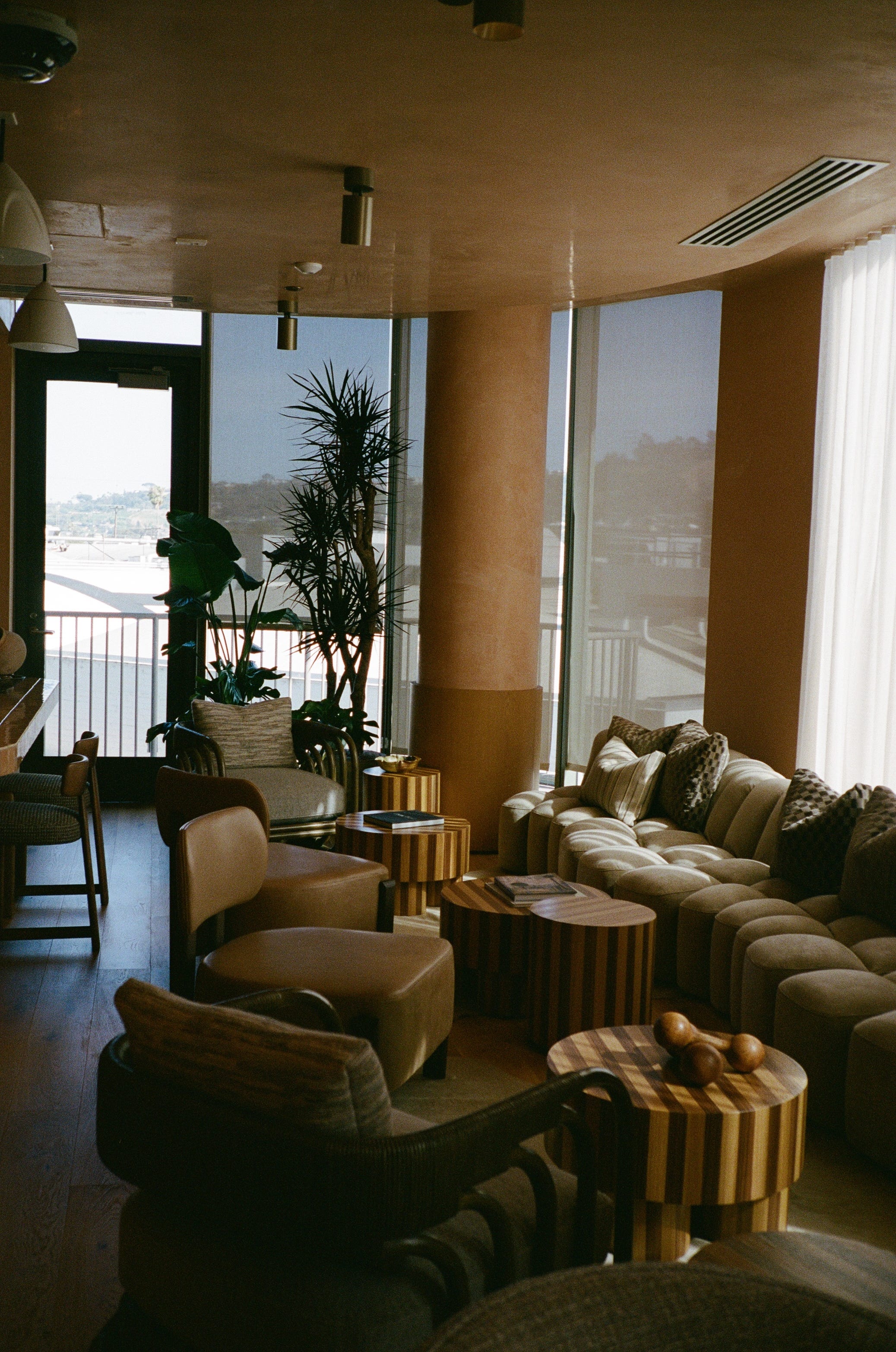
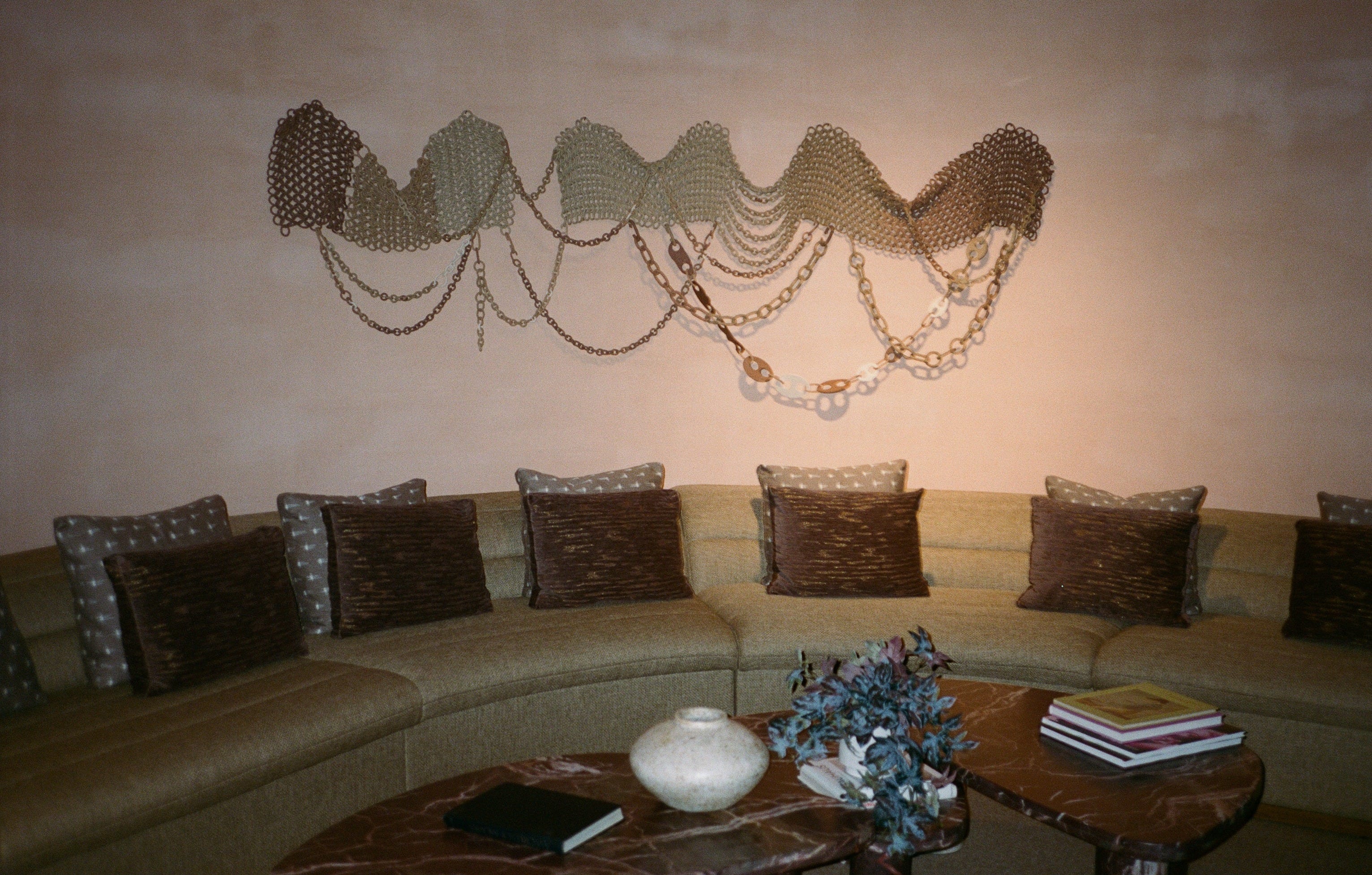
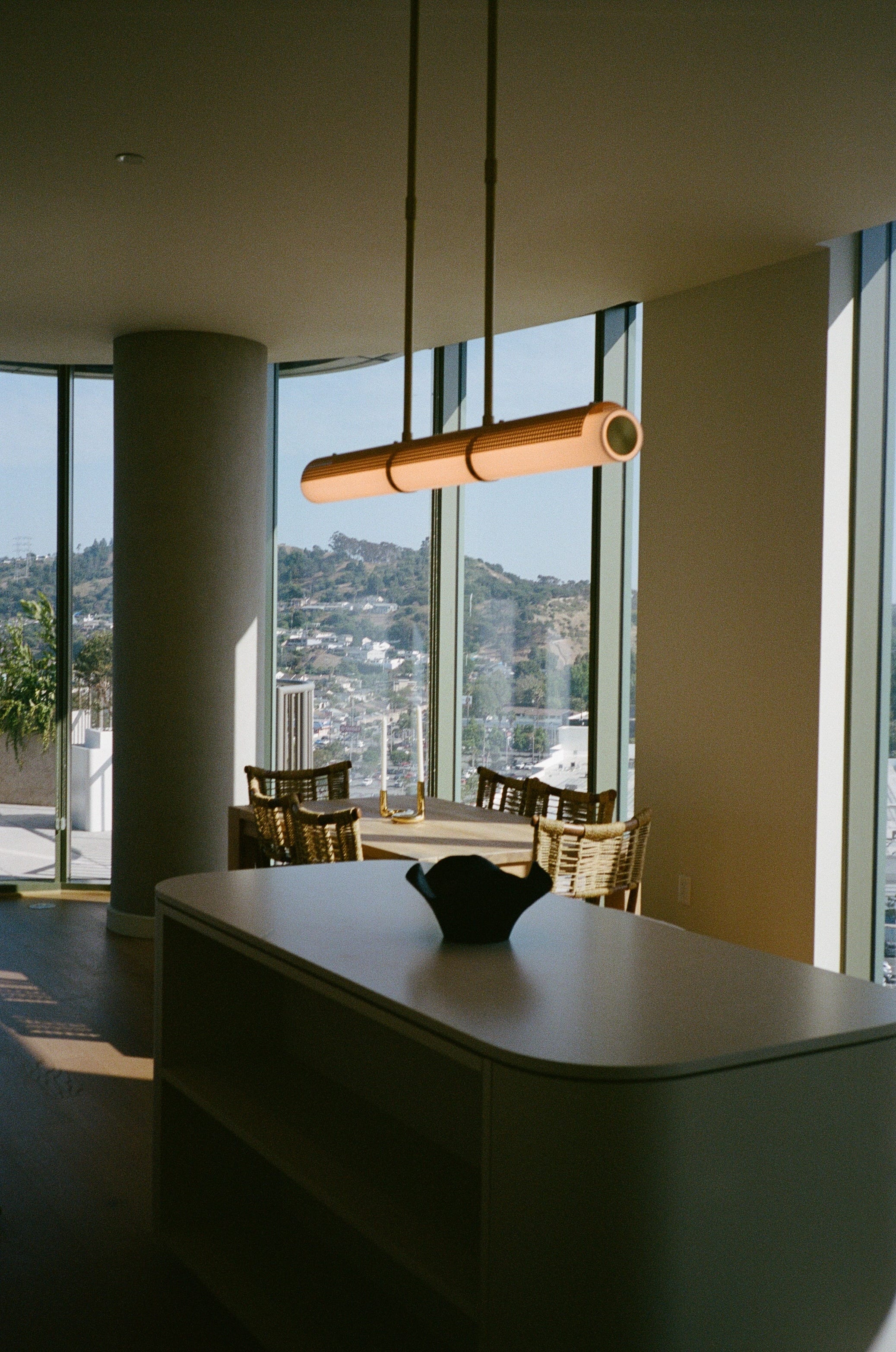
Though step into the units and something shifts: the scale feels off. The whole thing reads as hospitality — a very good hotel, made for someone who splits time between here and New York. The $10k/month unit we toured was underwhelming for the price. For that in this city, you could rent a stunning home with a garden and a garage. I'm clearly not the target demo, but someone is; they'd just raised the market rate on the 11th floor units.
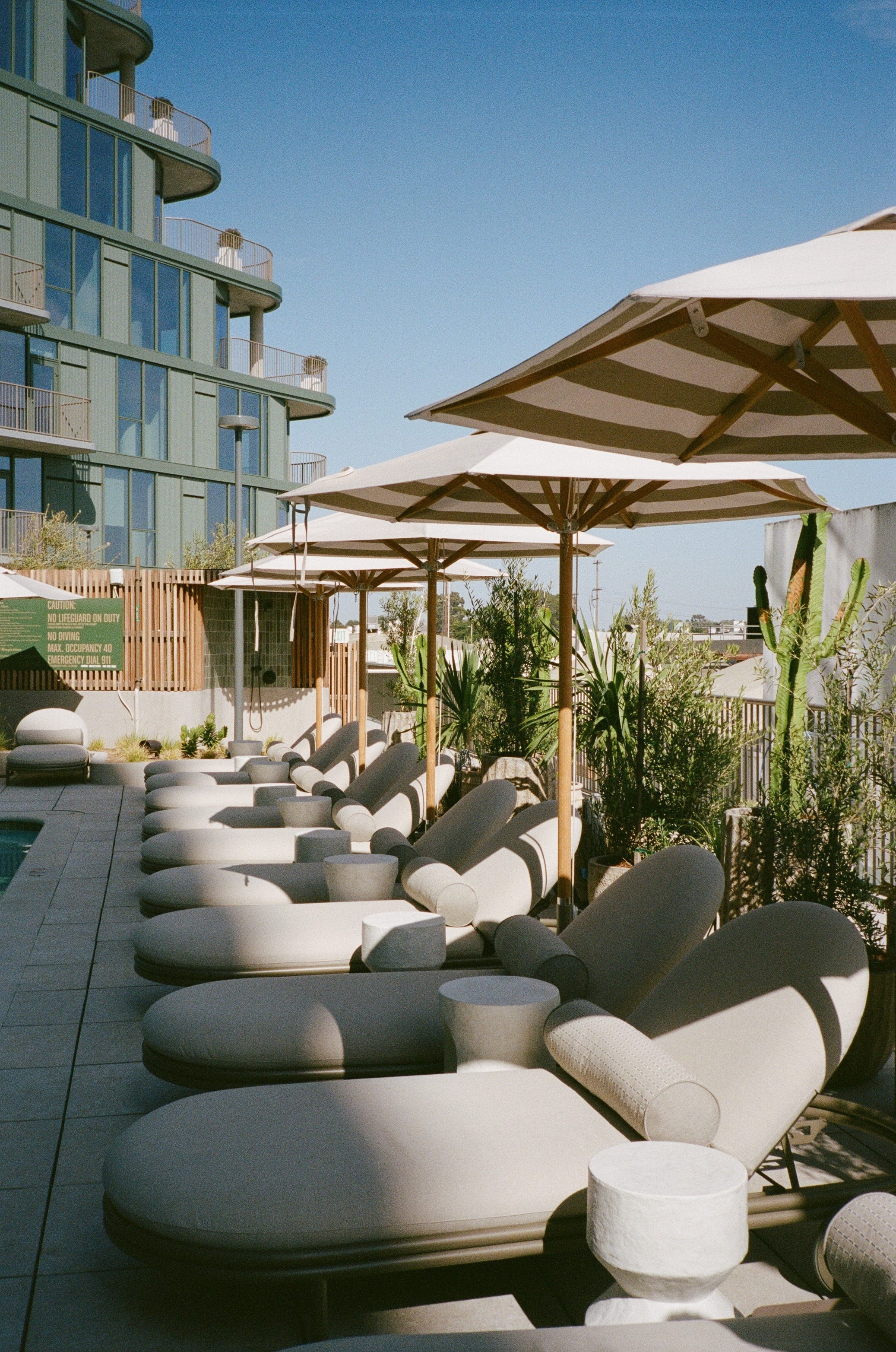
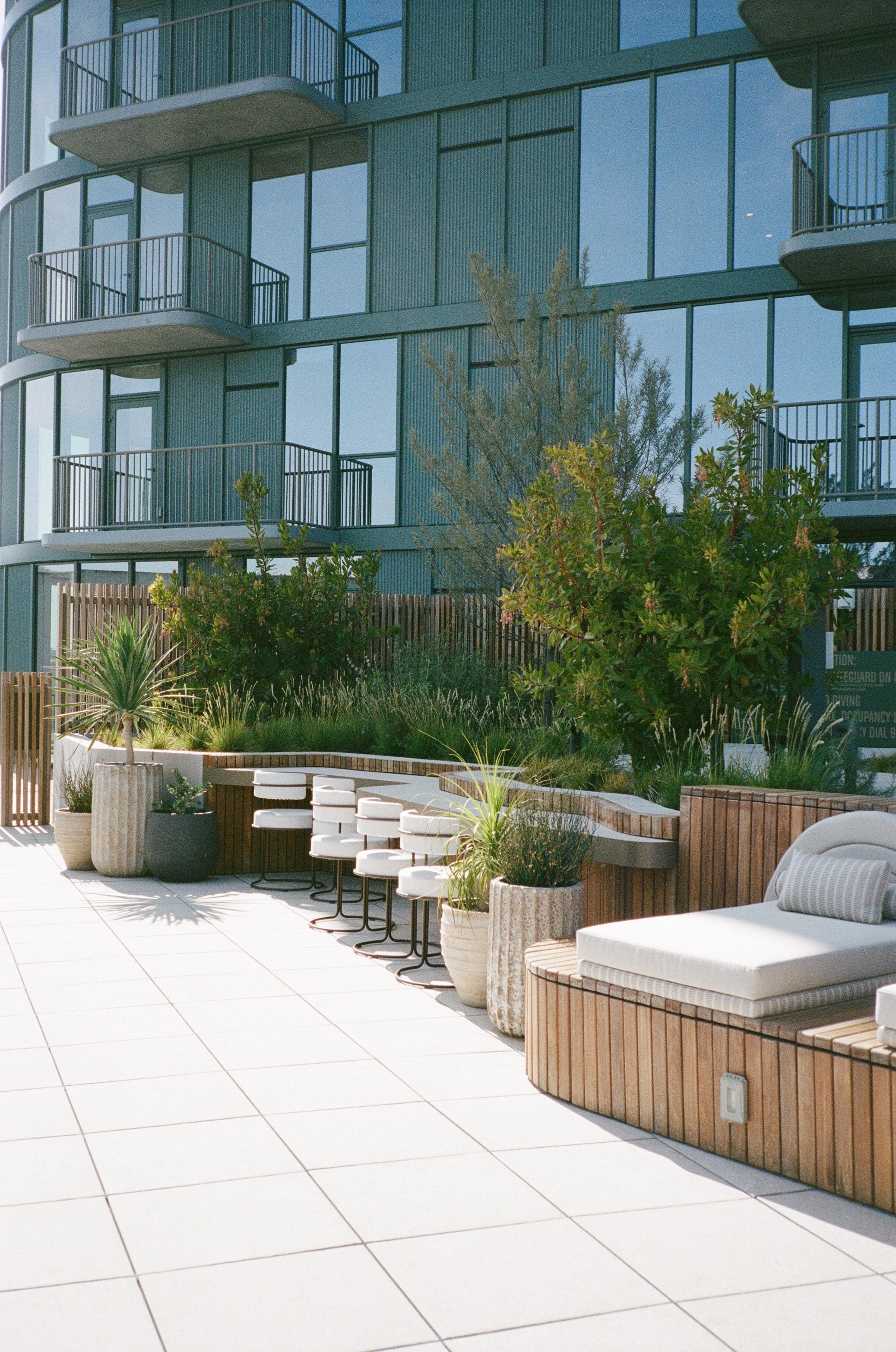
One part I loved: the landscape. Relm, the downtown LA firm behind the outdoor spaces, did something I didn’t expect: large timber bleachers built into the site like three-tier stadium seating, outdoor sculptures, native planting. If the site wasn’t directly next to the noisy, rumbling metro, the ground-level park would have been a peaceful outdoor corridor in a busy part of town.
During the Q&A, SB 79 came up, the transit-oriented housing bill, now signed into law I mentioned in April, and it was interesting to hear it referenced out in the field rather than in a policy meeting. The developers chose to include parking anyway. Parking for 700 vehicles, because they know their tenants drive. A part that I loved and want to take away for future visioning: all of it is excavated below grade, so you never feel it at the surface. Expensive, but worth the effort.
Here's what I keep coming back to: Habitat is well-made. Parts of the design are thoughtful and downright beautiful. The sustainability credentials are real. But even the most considered version of this development model is still cutting from the same playbook — density, amenity, market rate, repeat. It answers the question of how to build beautifully and sustainably without asking the harder one: for whom, and toward what kind of city?
What would it look like to actually start over? To decide that luxury isn't a hotel lobby and a $4k studio rental unit. To redefine luxury. As real community. Neighbors who know each other. Childcare that doesn't bankrupt you. Elder care folded into daily life instead of shipped offsite. Green space that belongs to everyone. Architecture that's beautiful, yes — but also mixed, and weird, and built over time by people who actually live there. Ownership structures that let more people have a stake in the place they call home.
A city where the creative class isn't just the aesthetic, it's the actual population, with the actual resources to stay. We keep building for the global high-earner who could live anywhere. I want to live somewhere that was built for the people who chose here.
Habitat is now open for leasing at 3401 S. La Cienega Boulevard, Baldwin Hills. Units range from studios to two-bedrooms. If you read this and thought: actually, this is exactly for me.
Great read! Totally thought this was in Brooklyn based on the exterior. The interiors are so signature Kelly Weastler (aka swoon-worthy!)