


SANCTUARIES LA EXPLORES THE QUIETER SIDE OF LOS ANGELES THROUGH DESIGN.
ROOTED IN THE BELIEF THAT SANCTUARY EXISTS EVERYWHERE, OFTEN HIDDEN IN PLAIN SIGHT.
IF YOU ENJOY THIS PUBLICATION, CONSIDER SUBSCRIBING OR SHARING IT WITH A FRIEND.
PHOTOGRAPHY BY MATTHEW POTHIER AND HARTWICK HANSON
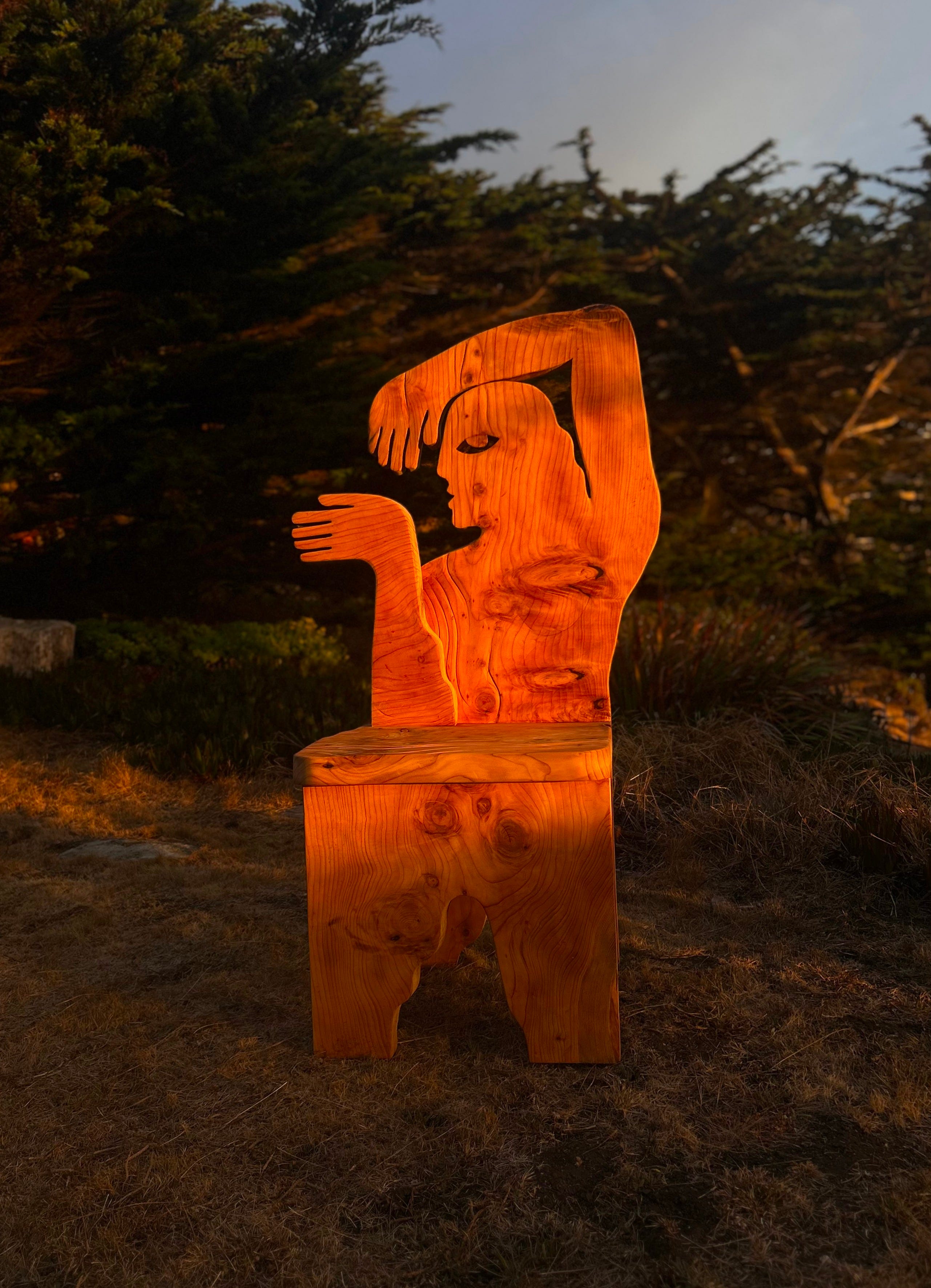
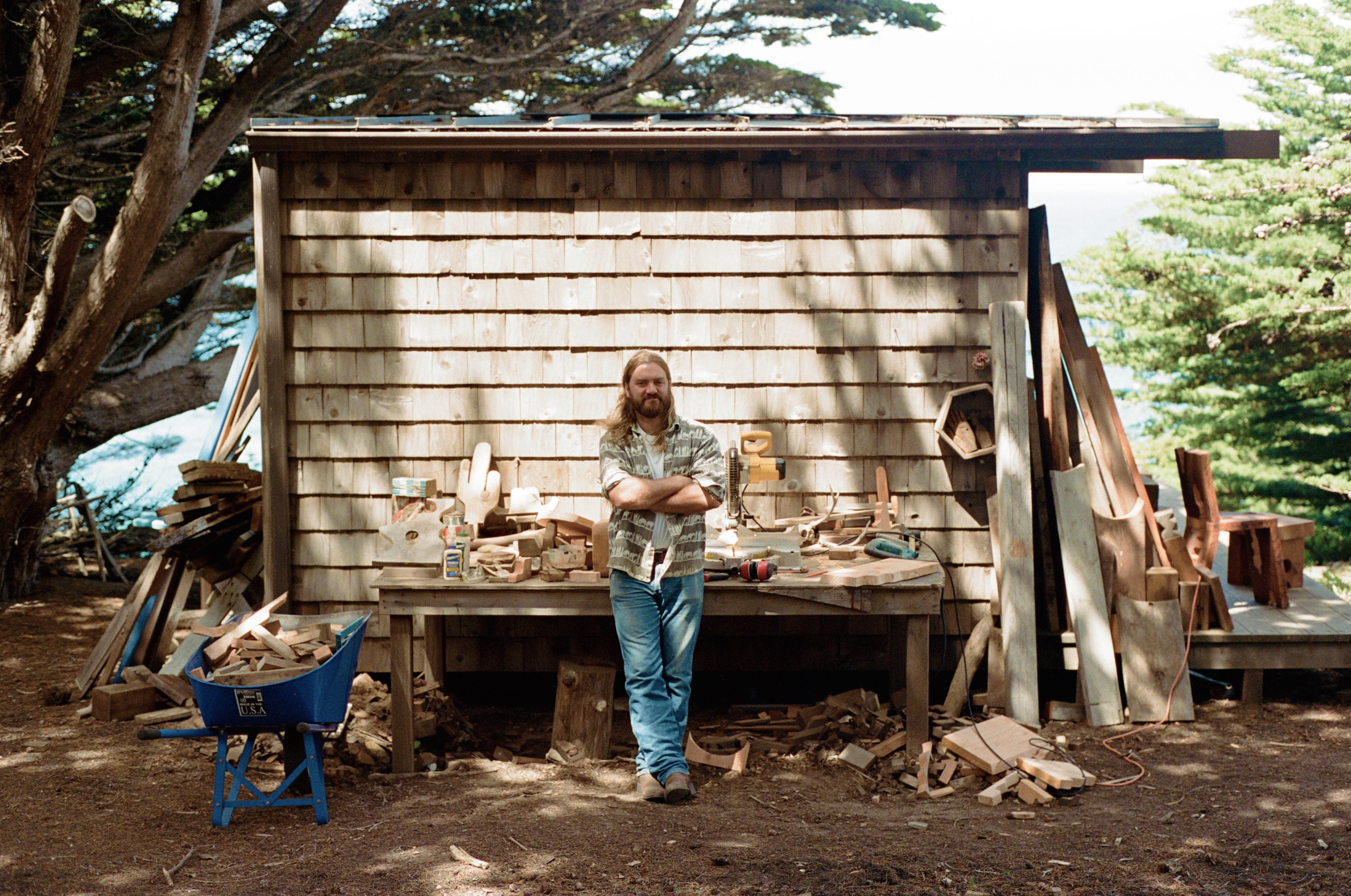
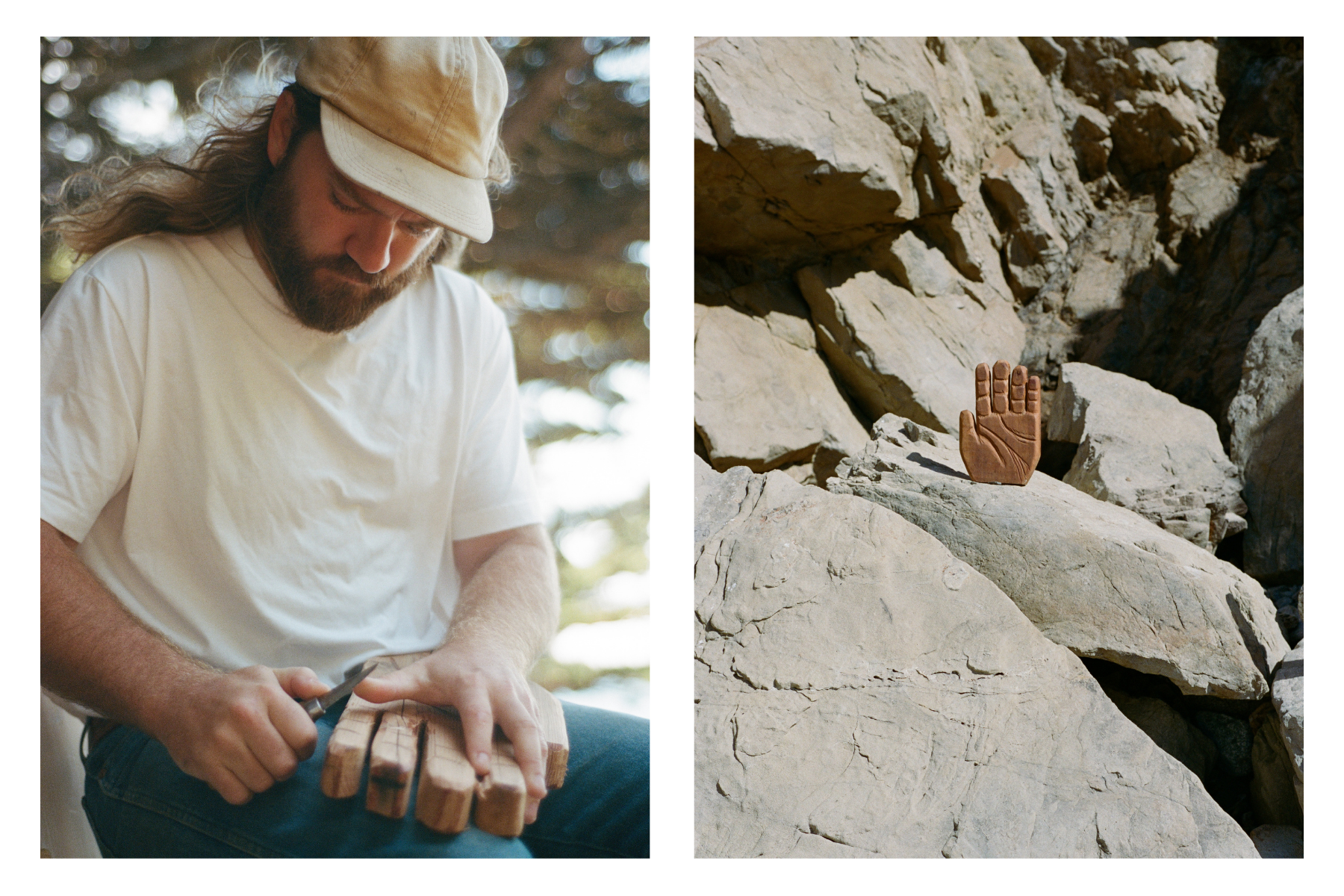
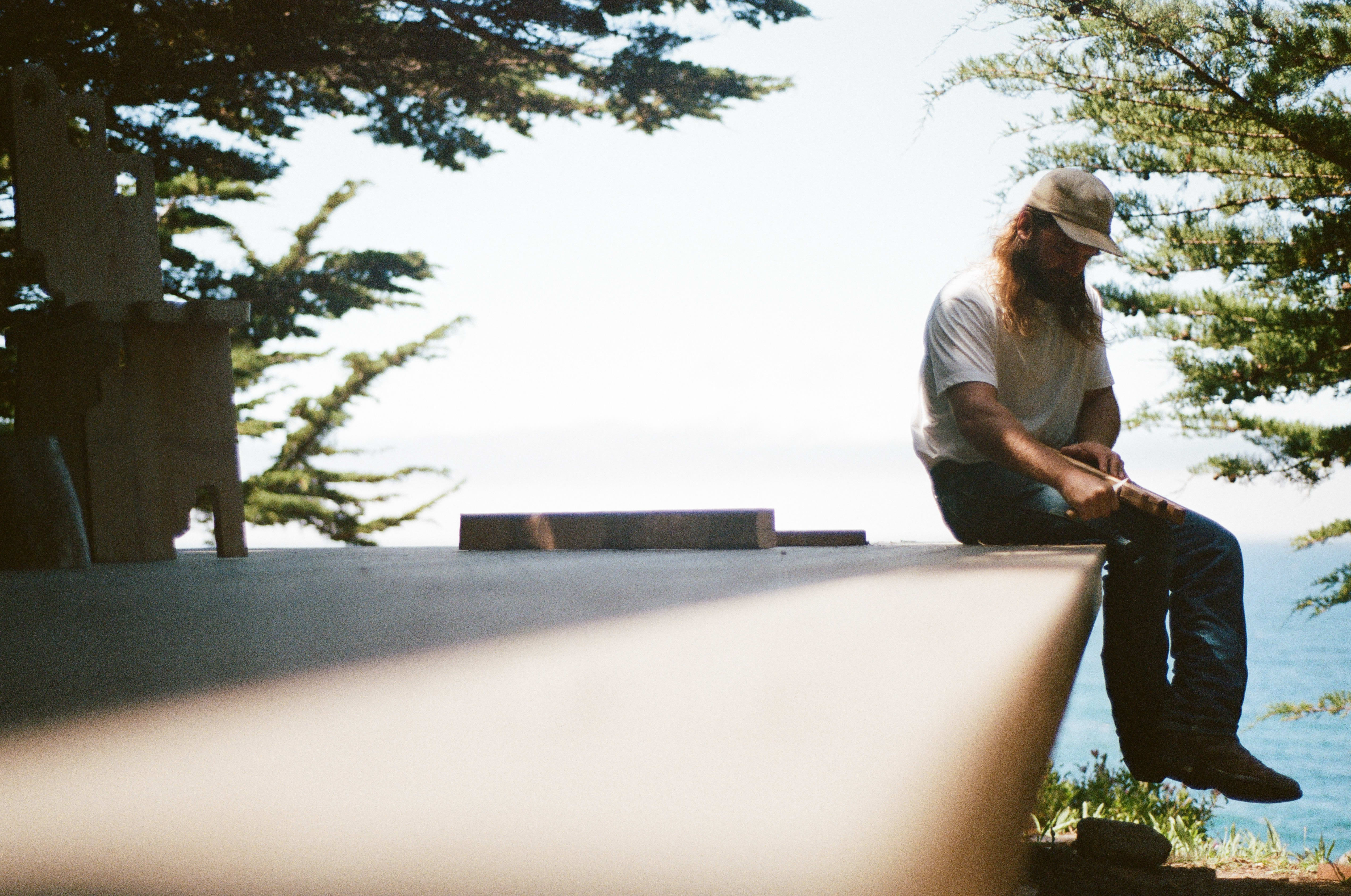
There are practical reasons Venice-and-Big-Sur-based Hartwick Hanson likes working outside: a long piece of lumber can move through space without smashing into a wall; the light is better; he doesn’t have to sweep up.
“Being outside completely changed my approach to making work. There’s something about moving around in the sun and wind that cuts down to the point. Mostly it just feels normal, which is nice because I never feel normal.”
Outside, the conditions are always changing. The sun moves. The wind picks up. The body has to participate. “It puts you in the world,” Hartwick says. “Gets you out of your head and into your body. It makes you sweat and feel like the animal that you are. You get cold and hot and itchy and pissed off and it’s invigorating and you feel satisfyingly spent at the end of the day.”
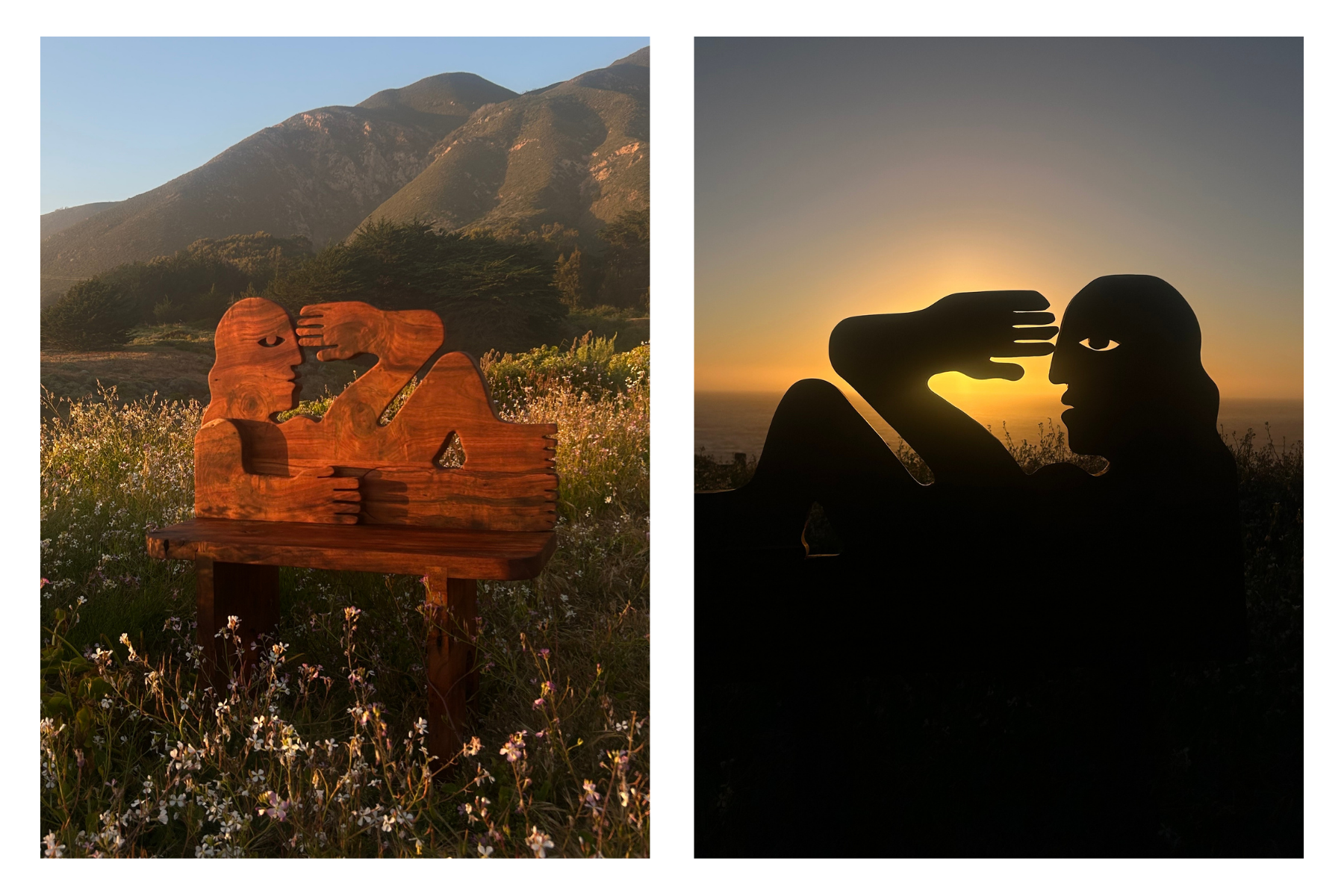
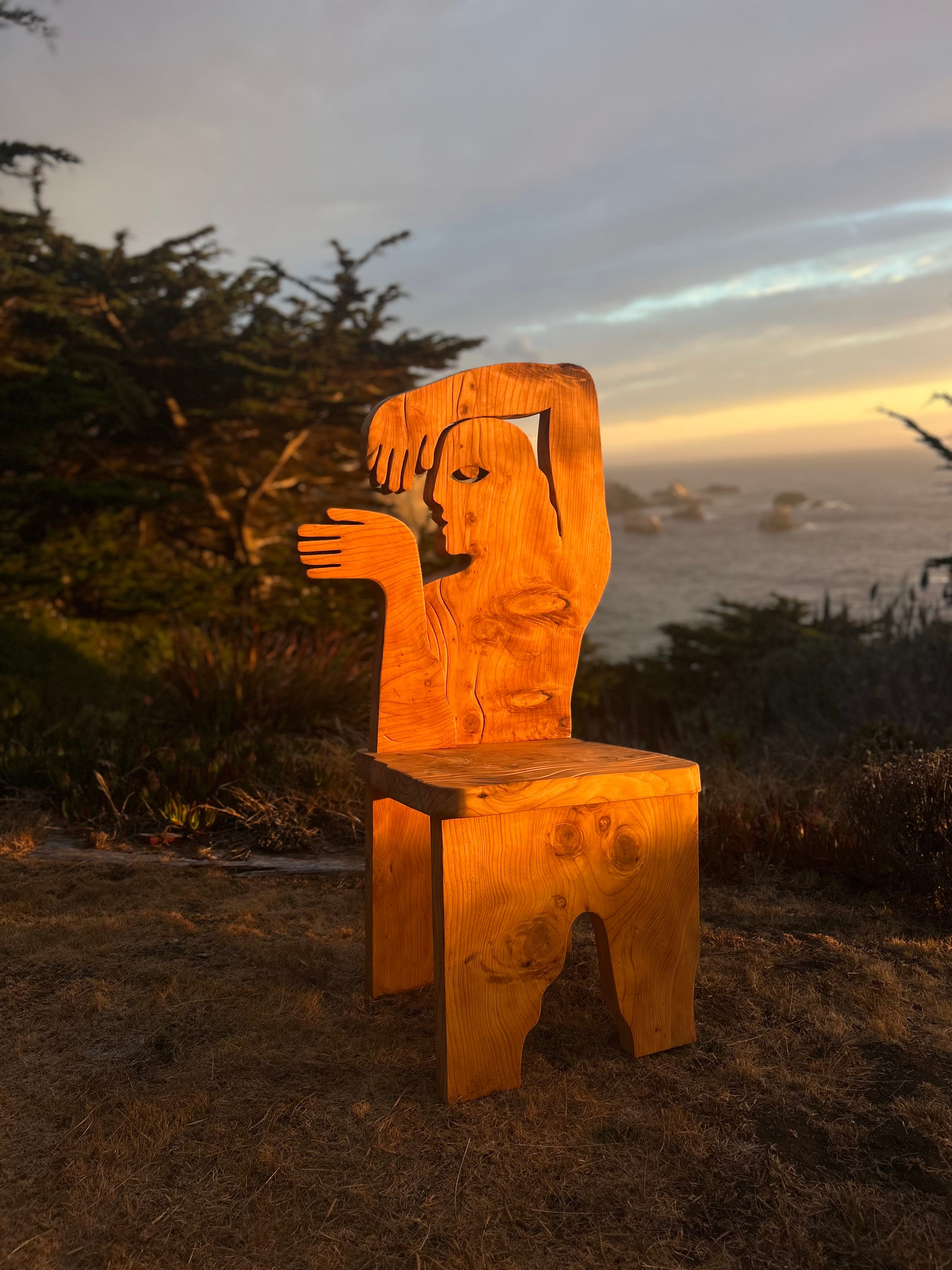
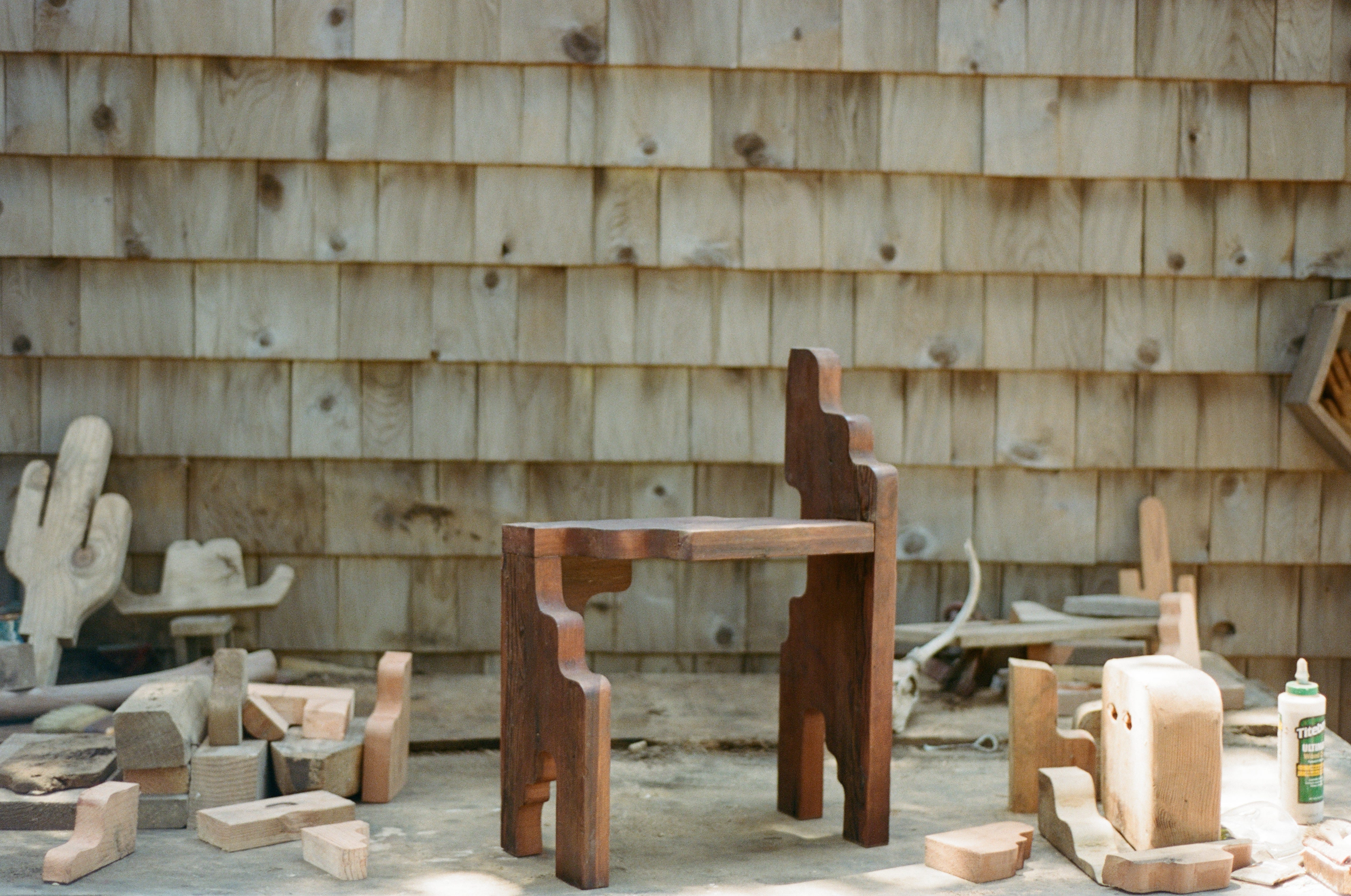
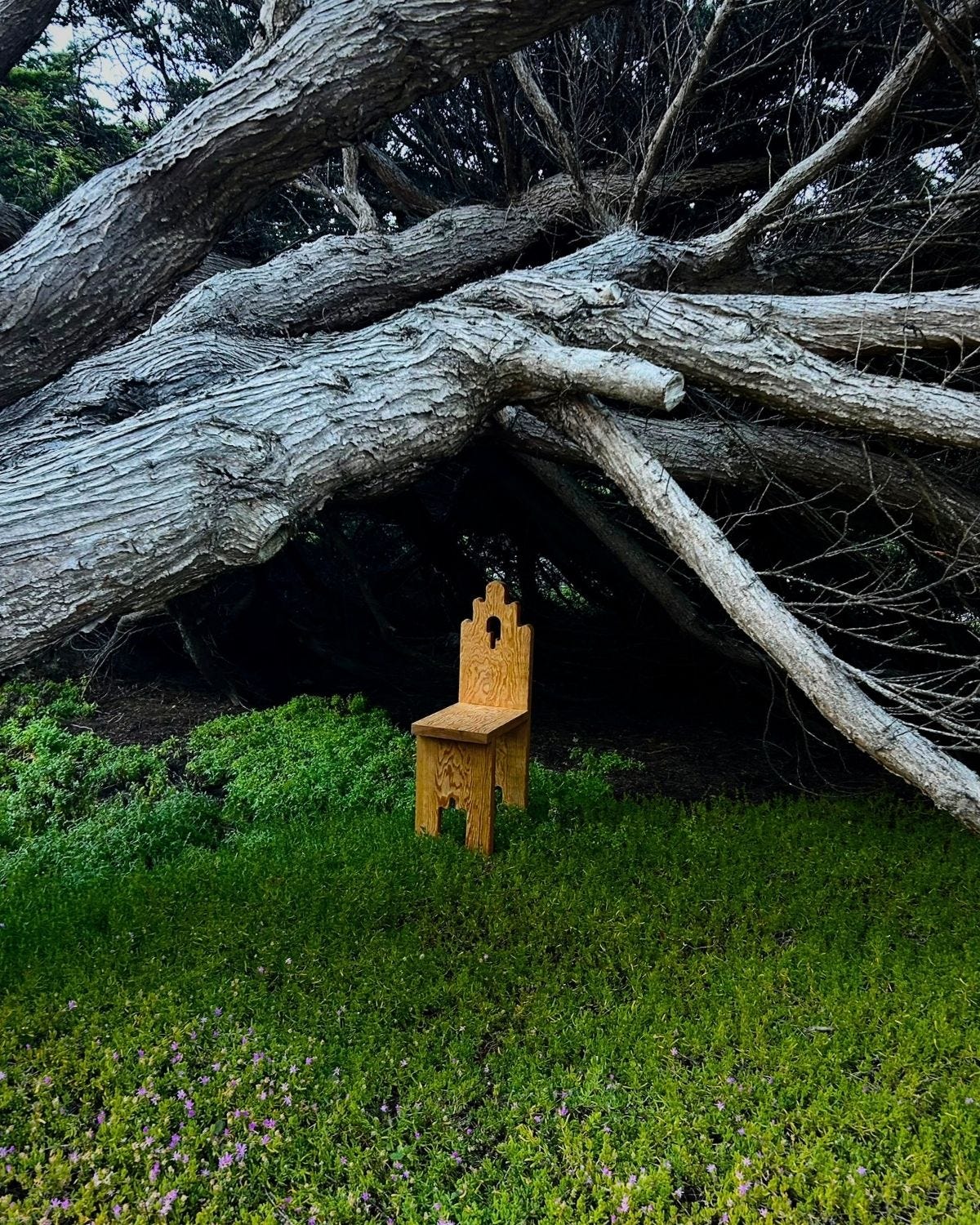
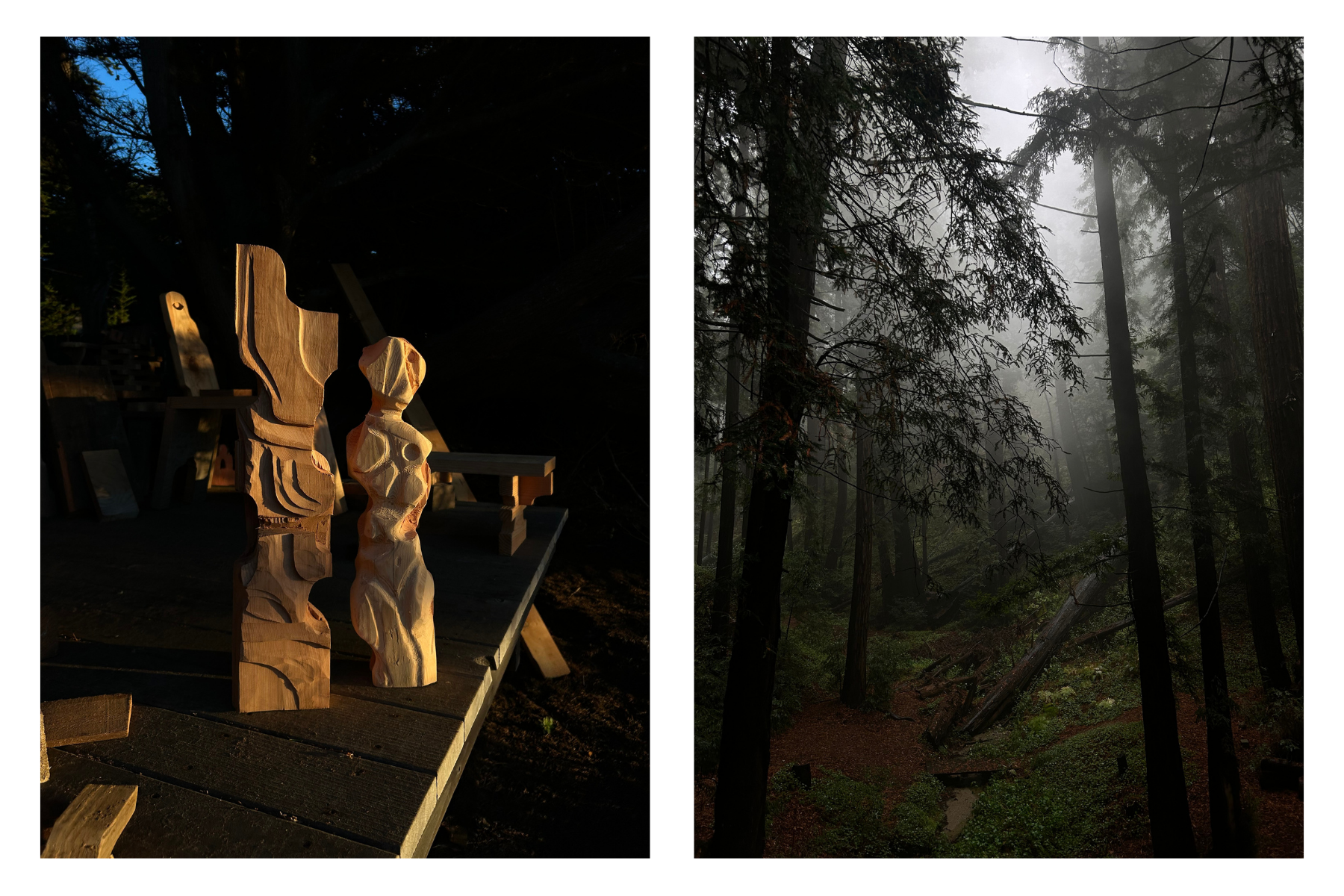
This is how much of his work takes shape: outdoors in Big Sur, surrounded by redwood and Monterey cypress, turning salvaged wood into chairs, tables, lamps, and sculptural forms that seem to be from another world.
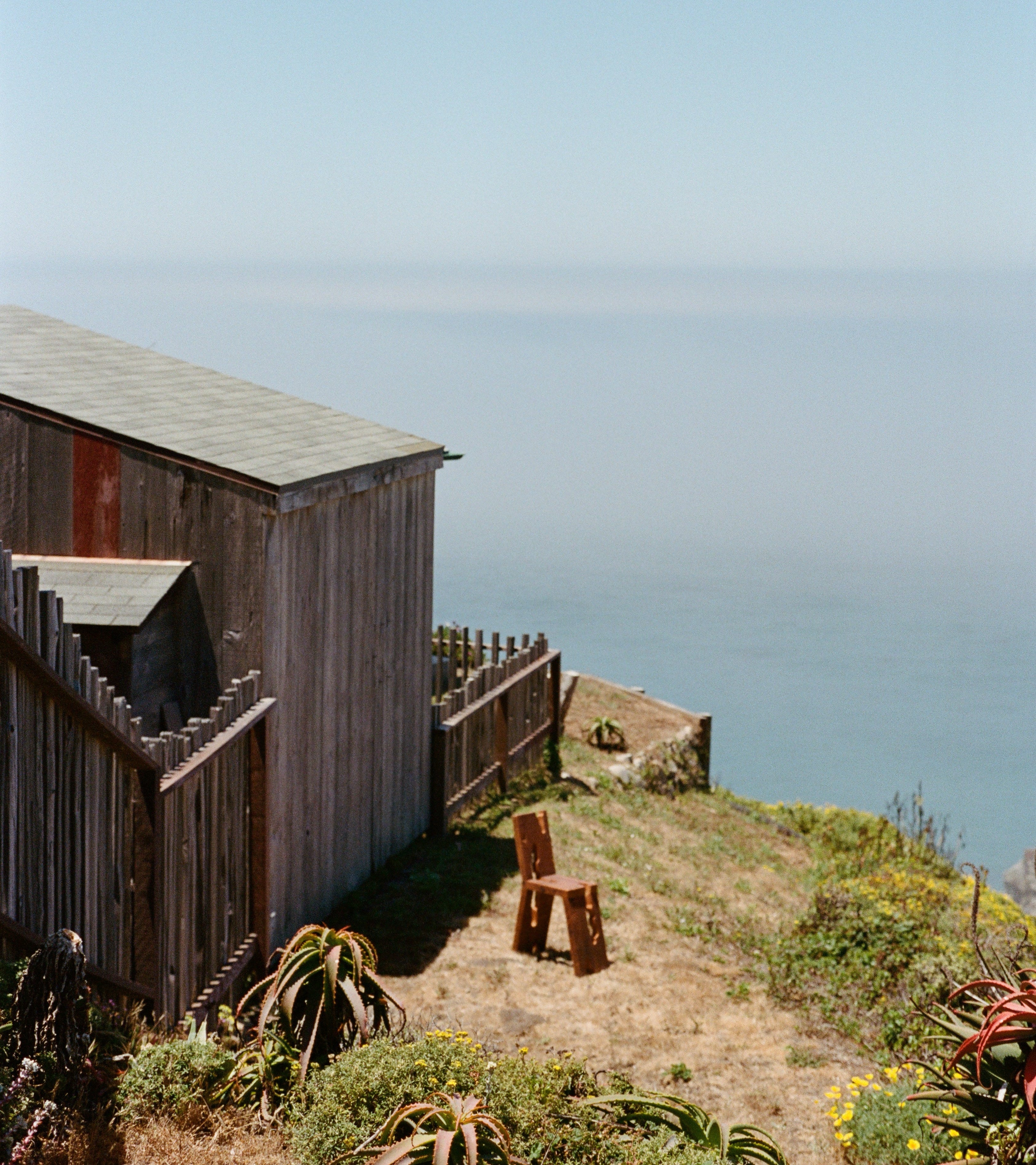
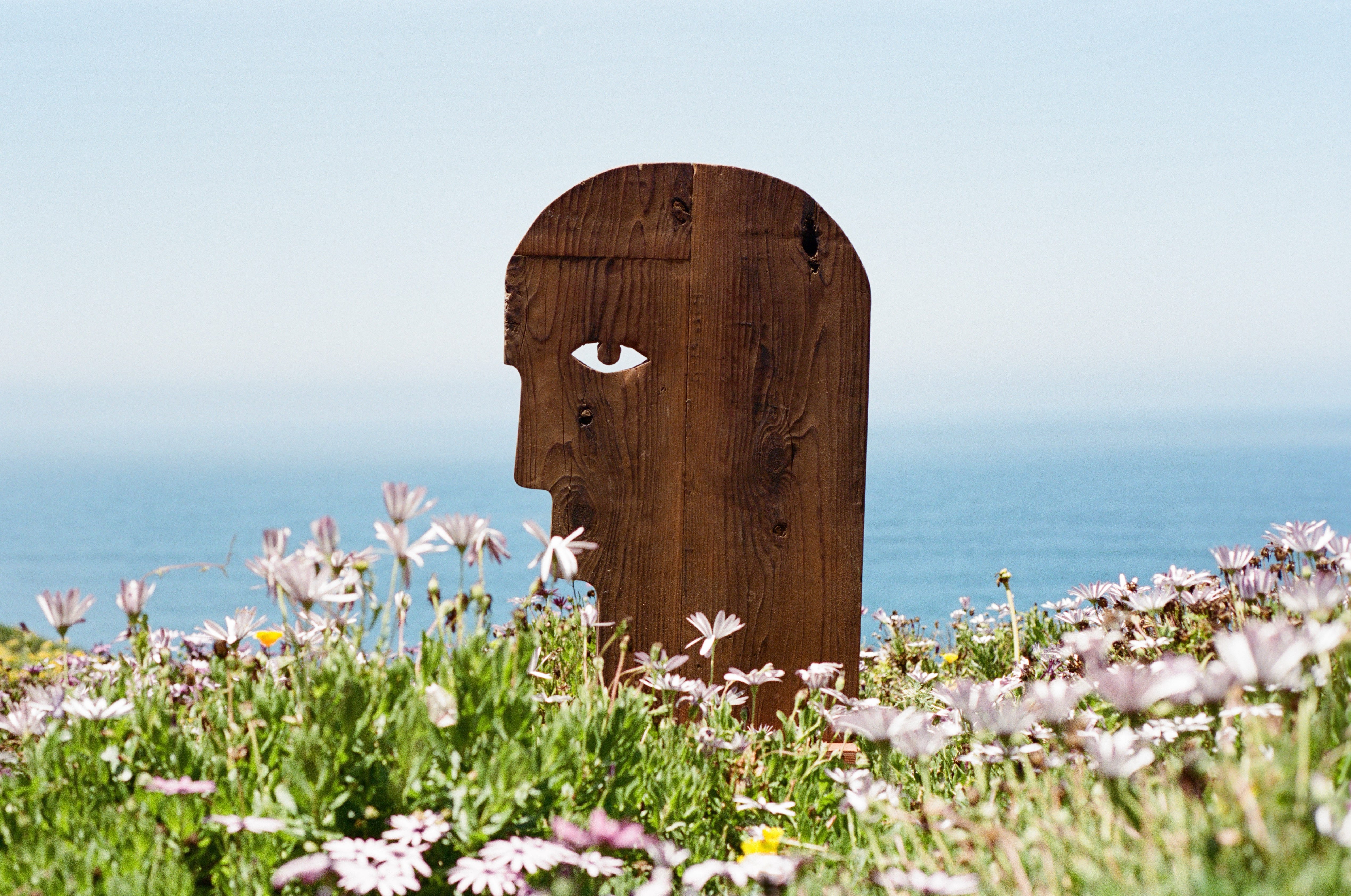
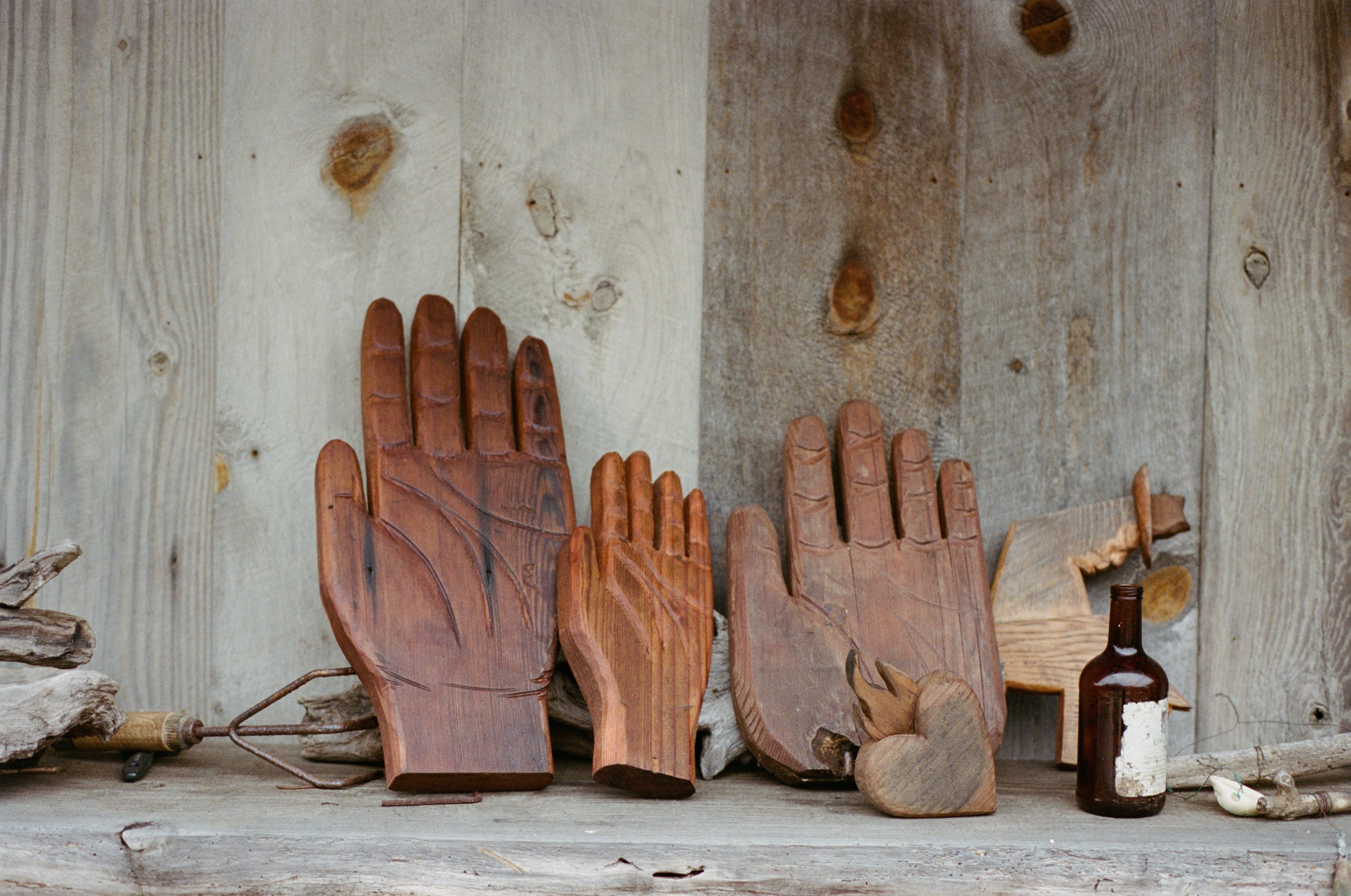
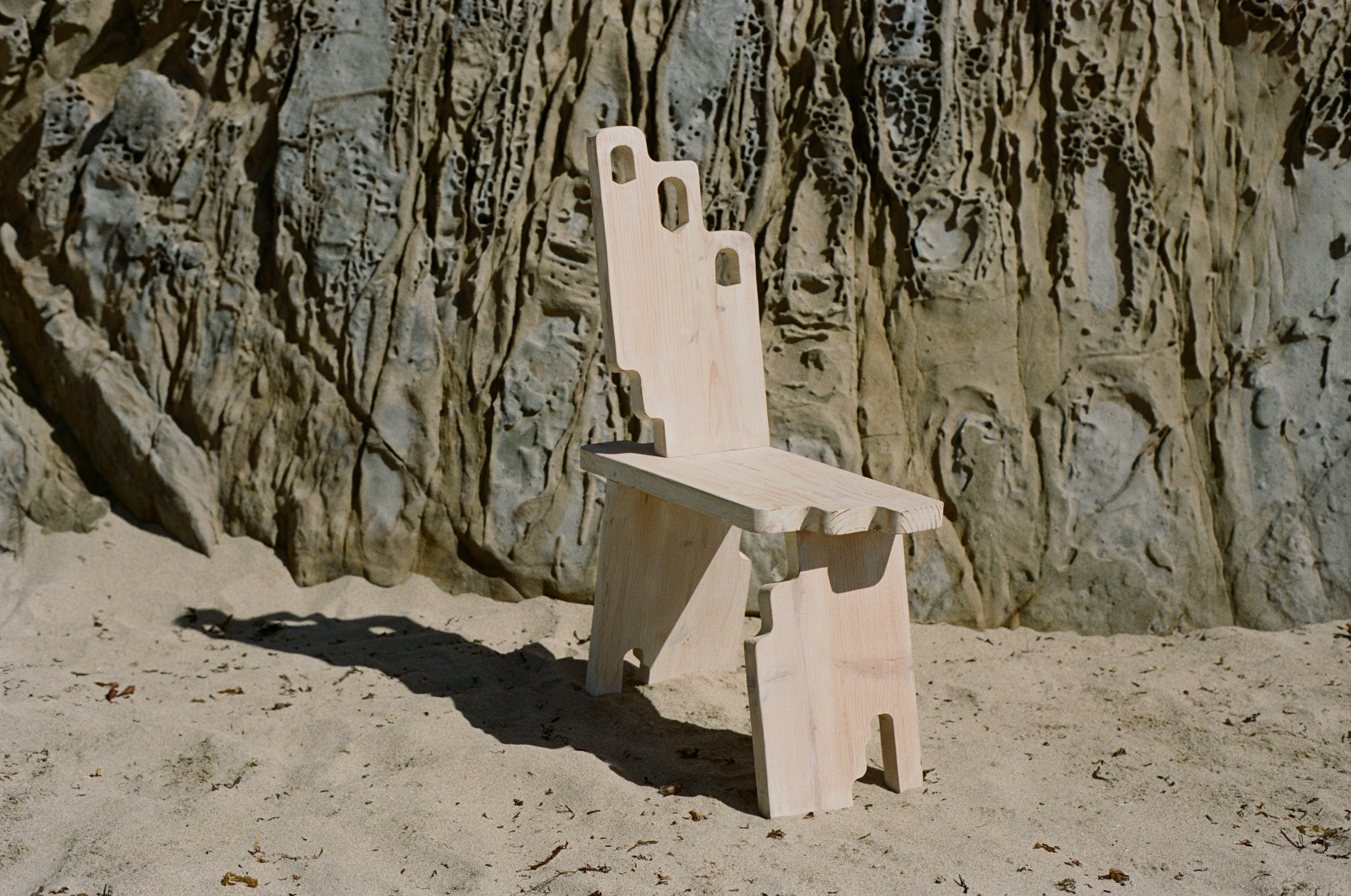
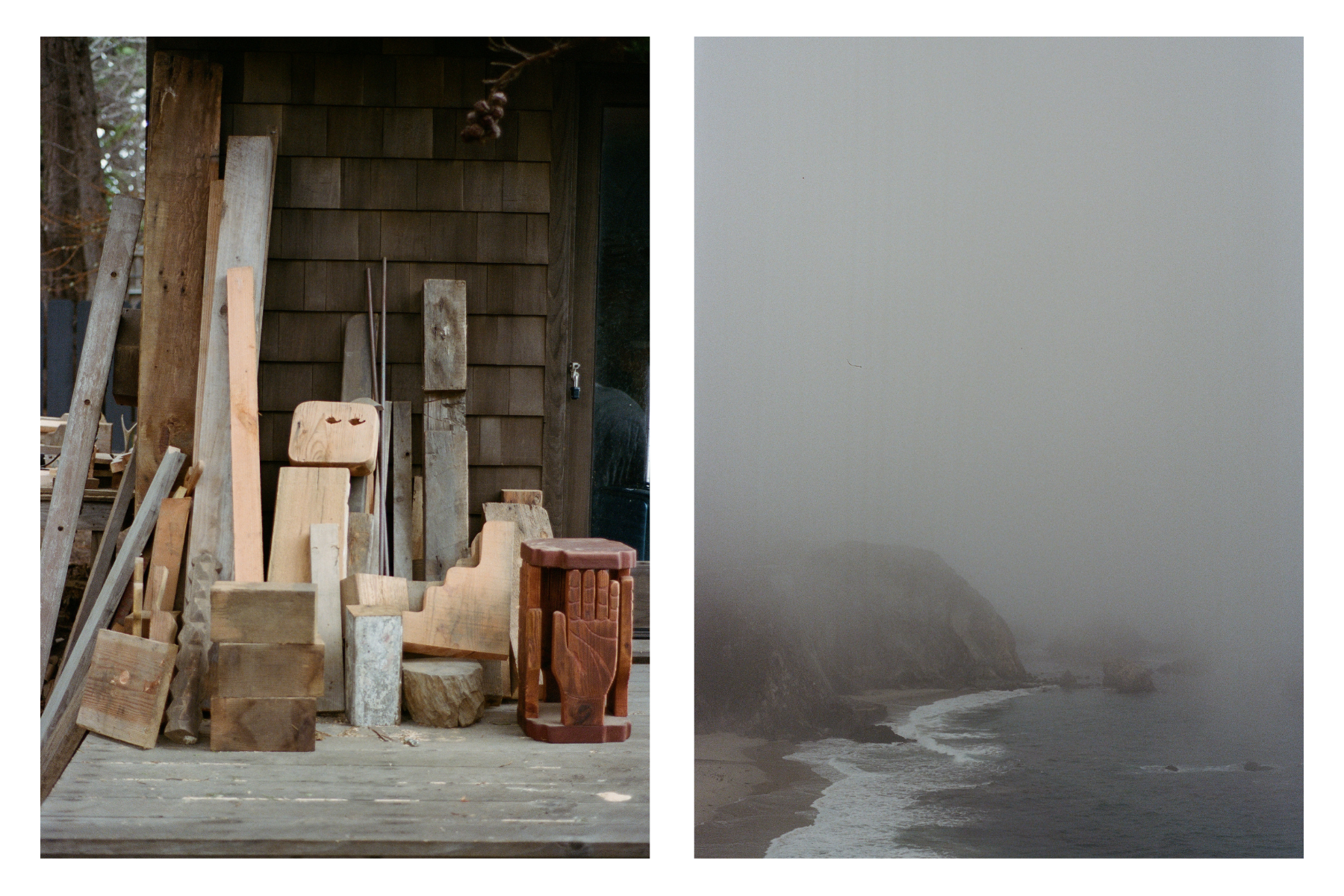
Hartwick’s work is mystical, reminiscent of folk art sculptures. Pieces that become centerpieces of rooms. They are sturdy but rarely orderly. Familiar, until they aren’t. A chair might suggest a sunburst, a hand, a face. A wooden figure appears caught somewhere between dancing and transforming.
Hartwick hopes the work feels warm. He also hopes it frightens you a little in the middle of the night.
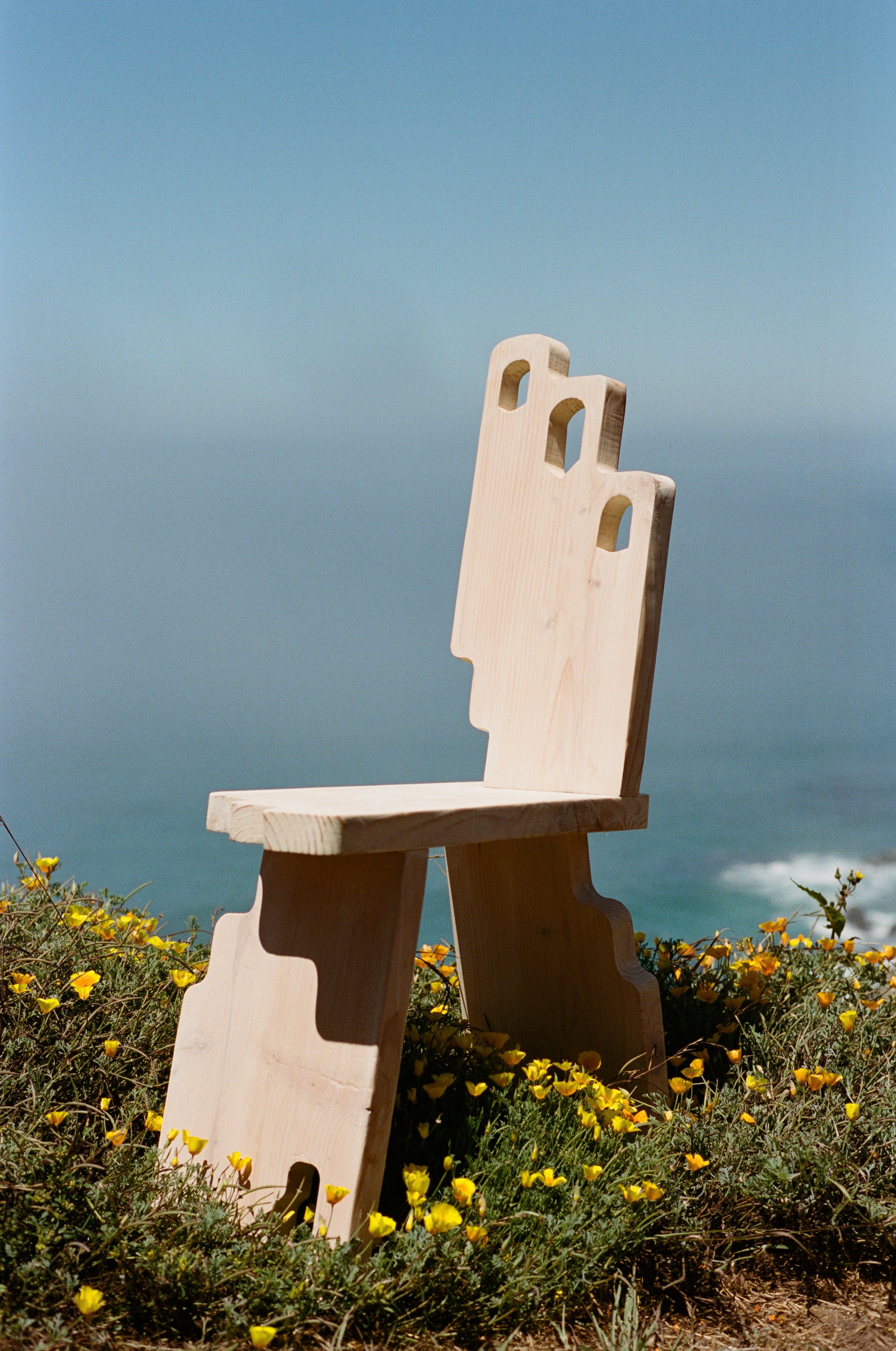
Hartwick was born on the west coast of Canada and now splits his time between Big Sur and Los Angeles. He started as a printmaker, and spent years making relief woodcuts before the flatness of paper felt too limiting.
The physicality of working with wood was already there — carving into a block, working backward, pulling an image from pressure — but he wanted to make something he could walk around. A 3D object to interact with and use.
During the pandemic, Hartwick moved home to Big Sur. “I was privileged to have parents who are not only both very creative people themselves but during that time allowed me to use their space to learn how to build things.” He started with lamps, small sculptures, and what he calls “tiny little stools that you could put a beer on.” From there, the objects took on new scale.
So did his experimentation with form and a willingness to let them get strange.
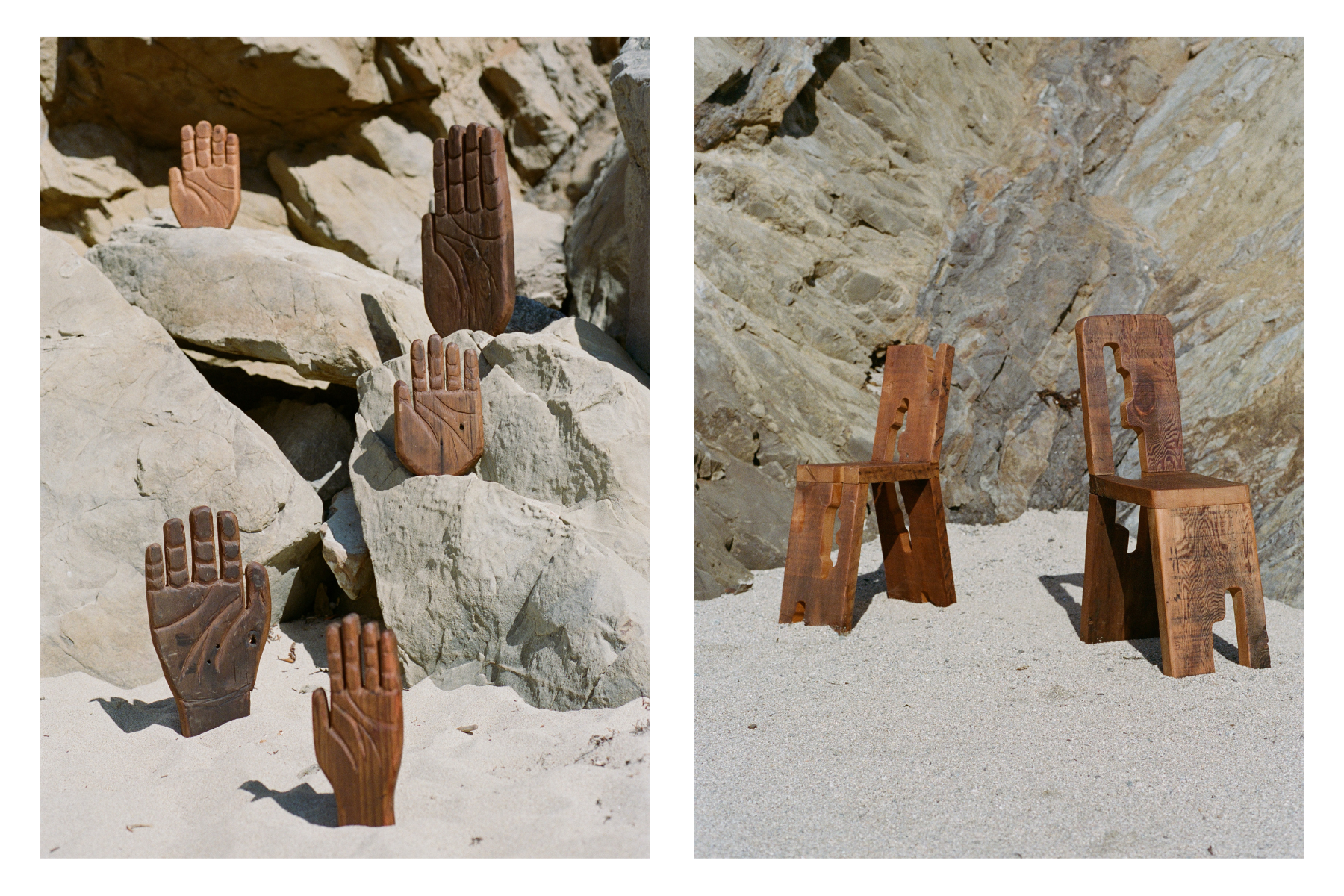
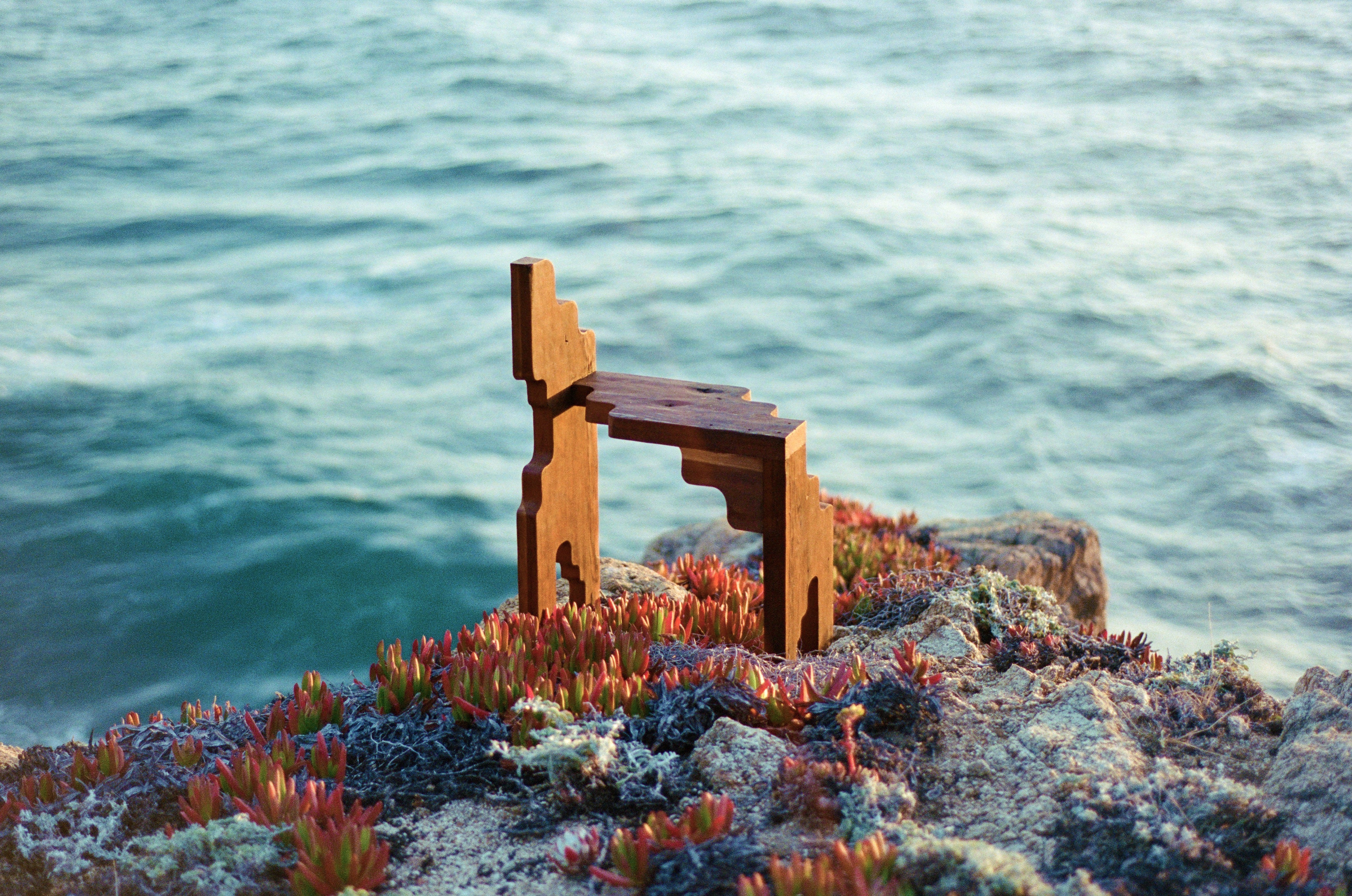
Big Sur and Los Angeles exert different pressures on the work. Hartwick thinks of them almost as opposing formal languages.
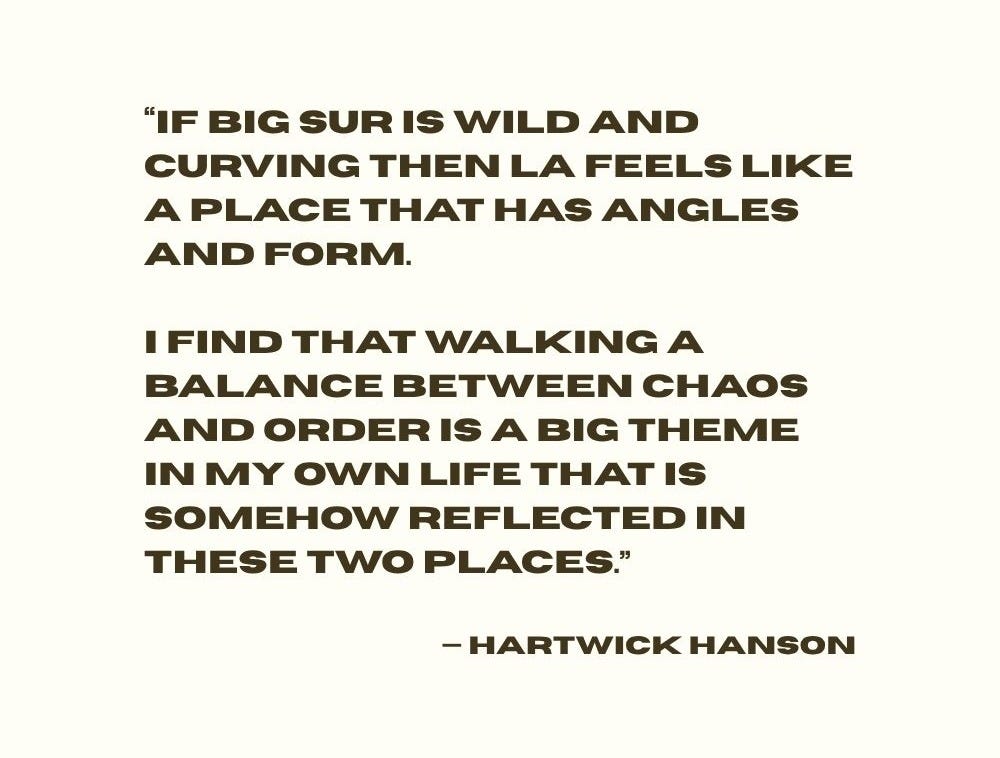
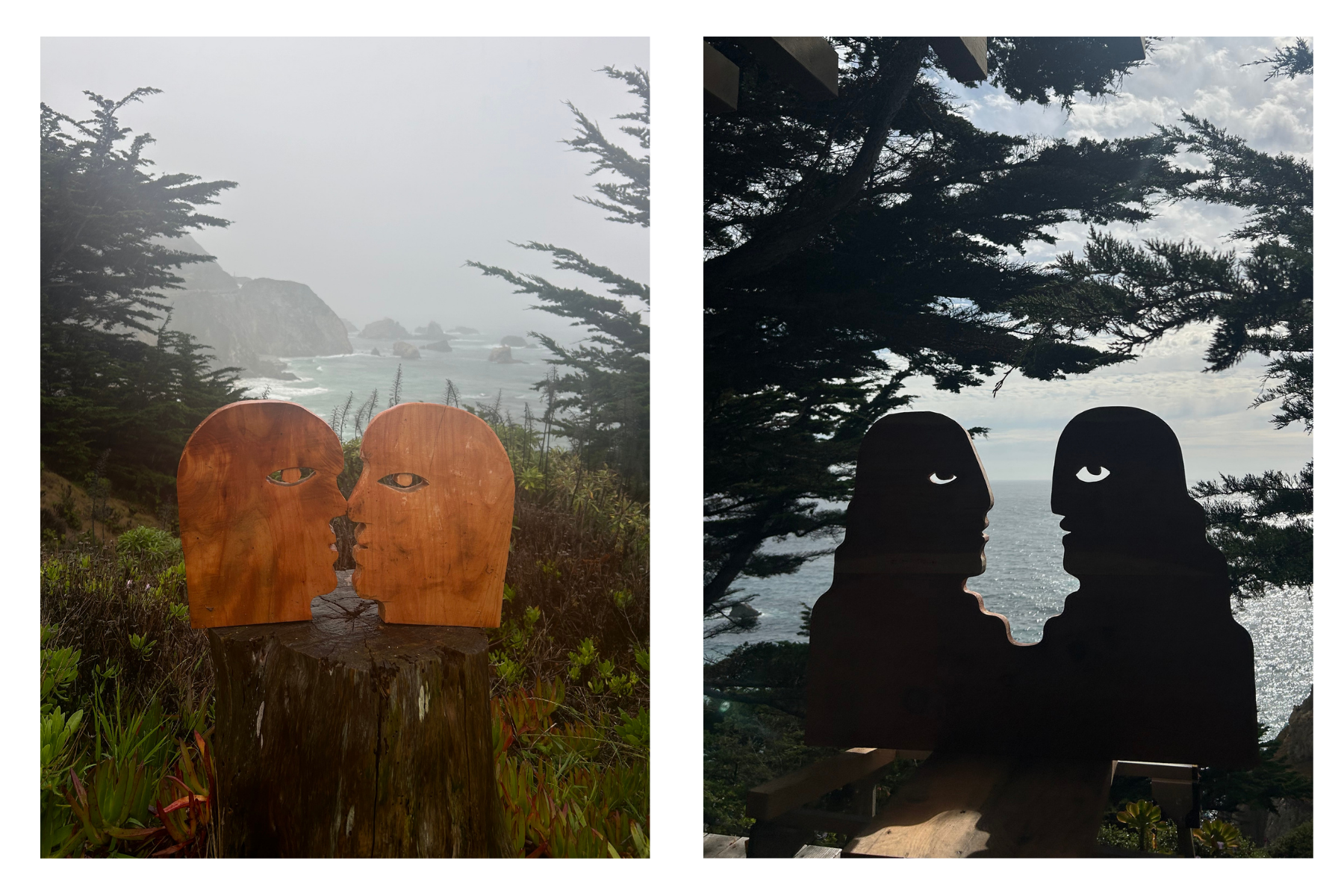
Big Sur is escape: hills folding into one another, the shoreline breaking into pieces, the sky changing by the minute. Los Angeles offers proximity—to other artists, to work, to the kind of talented people who make him want to return to the studio. His Venice shop is a hot box filled with tools and dust, but its limitations produce discipline.
LA traffic also helps. “I get a lot of ideas while being angry and sitting in traffic.”
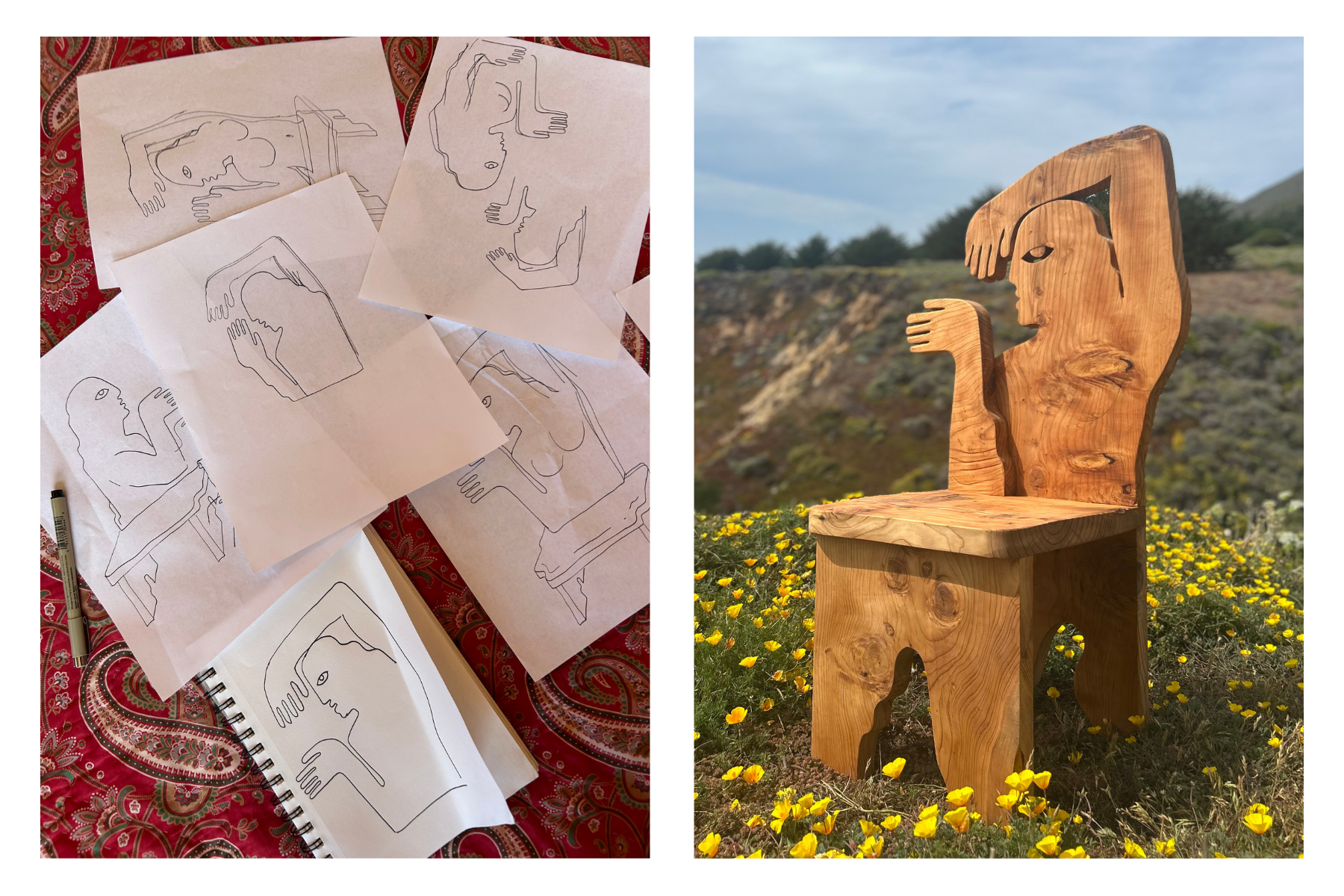
The more enjoyable part of Hartwick’s Los Angeles process happens at a bar. Solo with his sketchbook, he orders a beer, and draws until the ideas get bad or the lines get sloppy. Later, he returns to the drawings and chooses the ones worth keeping. Those forms are drawn again, refined, and eventually transferred directly onto the wood.
The wood itself usually has a previous life.
In the early years, Hartwick sourced material through a process that could generously be described as informal reclamation. He would venture into oil fields off Routes 33 and 46, trespassing through forgotten sites where collapsed pump sheds yielded old-growth lumber. An act of reuse.
He now visits salvage yards throughout California and uses wood from fallen trees in the Central Valley, often Redwood and Monterey cypress because they belong to the landscape where he works.
At a salvage yard, Hartwick is looking for what he calls Good Wood. The category is not especially technical. It means a board with a strong, dry structure and some evidence of the time it has already lived through. “Sometimes a board just jumps out at you and demands to be something else.”
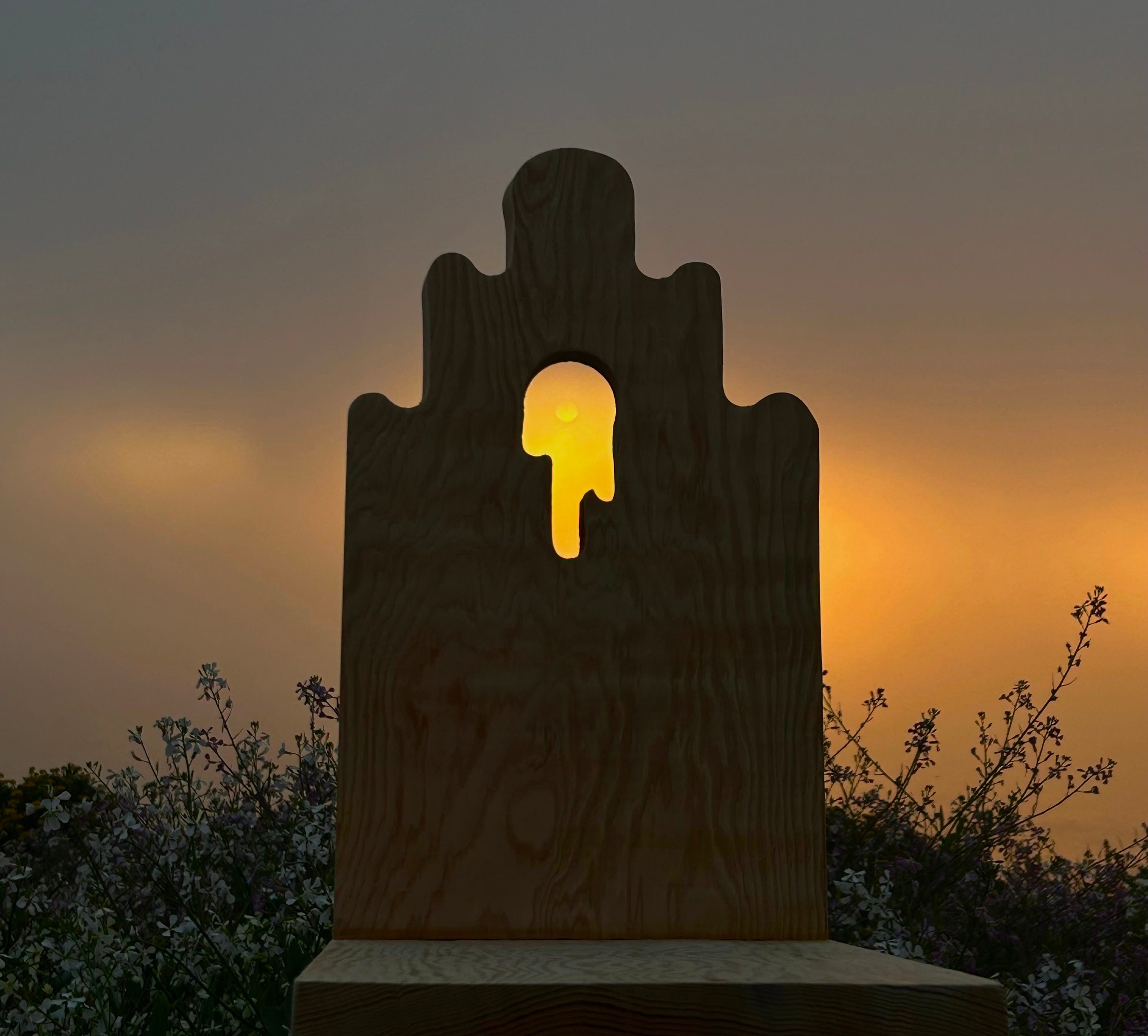
Salvaged material does not behave like a blank sheet. It splits, twists, conceals damage, and reveals variations at inconvenient moments. Hartwick works around these irregularities or allows them to become part of the piece.
He cares deeply about structural integrity. Perfection is less interesting. “I feel like an irregular, imperfect person in general, so that aspect is pretty baked in.”
Usefulness remains intentionally beside the point.
Hartwick’s work often sits between furniture, sculpture, and artifact. His chairs maintain enough of a chair’s basic framework to support a body, but function rarely matters. “Function usually follows form for me. If the chair happens to be comfortable, great. If it’s not, oh well. Stand up. Go to IKEA or get an Eames or something.”
What he wants is for an object to look as though it has come from another time—or another dimension. Not completely alien necessarily, but with enough familiarity so that the strangeness of the form translates to the viewer.
Recently, he has been creating larger works derived from drawings of early modern dancers, including Margaret Morris, Hélène Vanel, and Loïs Hutton. The work came to be after a period of what he describes as “absolute inspirational desolation.” Finding the figures felt like a door opening into a new motif.
These feminine forms stretch, bend, and gather themselves into the wood, as if an image has been excavated from the material rather than imposed upon it.
His stylistic references are all over the map — from Brazilian modernism’s combination of elegance, earthiness, curved space, and human form to Godard’s Pierrot le Fou and Herzog’s Lessons of Darkness.
“I tend to be obsessed and get a lot of inspiration from ecotones between human civilization and nature, places of decay and regrowth… I find places like forgotten structures and rusting hulks to be fascinating for unclear psychic reasons, Pre-apocalyptic zones of reclamation, Ballardian wastelands, dreamlike spaces of unclear purpose.”
The point is not to translate any of these references directly into furniture. It is to keep enough strange material circulating through the subconscious that, eventually, a new form emerges.
In Big Sur, the lesson is repeated everywhere.
The landscape is growing, eroding, and becoming something else all the time. Hills rise and fall; the coast breaks into chunks with rocks jutting from the sea; fires leave scars and then the plants return.
Hartwick compares it to the mutable landscape of Area X in VanderMeer’s novels: entropy running rampant, swallowing the distinction between destruction and creation.
California’s fires have turned scarred land and destruction into part of the ordinary background. Hartwick is interested in what it means to remain a person in a world moving away from what we have traditionally considered habitable—and how to make something hopeful without pretending that the shadow is not there.
“How do you create light in the shadow?” he asks. “People have always managed to do it in far bleaker circumstances, so I try to carry a sense of optimism.”
Everything will eventually collapse into earth and sea — and there’s something beautiful about that. “If I can capture even a minuscule amount of that feeling in what I’m making, then I’m happy.”
When Hartwick talks about sanctuary, he does not describe peace so much as freedom.
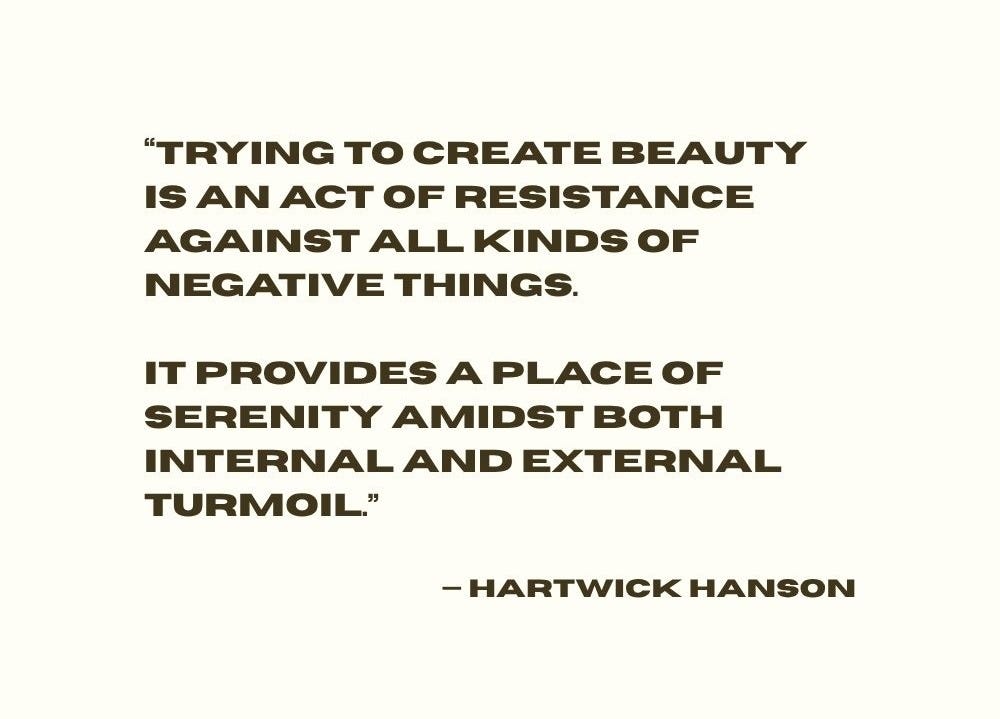
A sanctuary is a place free from judgment, fear, and anxiety—a place where it is possible to be genuinely alone, act like yourself, and play. Making offers access to that place even when the rest of life does not.
He would eventually like to return to Chile’s Atacama Desert, where he once made a small installation during a residency. He wants to see if it is still there. More than that, he wants to make something larger in that vast, harsh, unearthly landscape—another handprint left in a place where human presence can feel improbable.
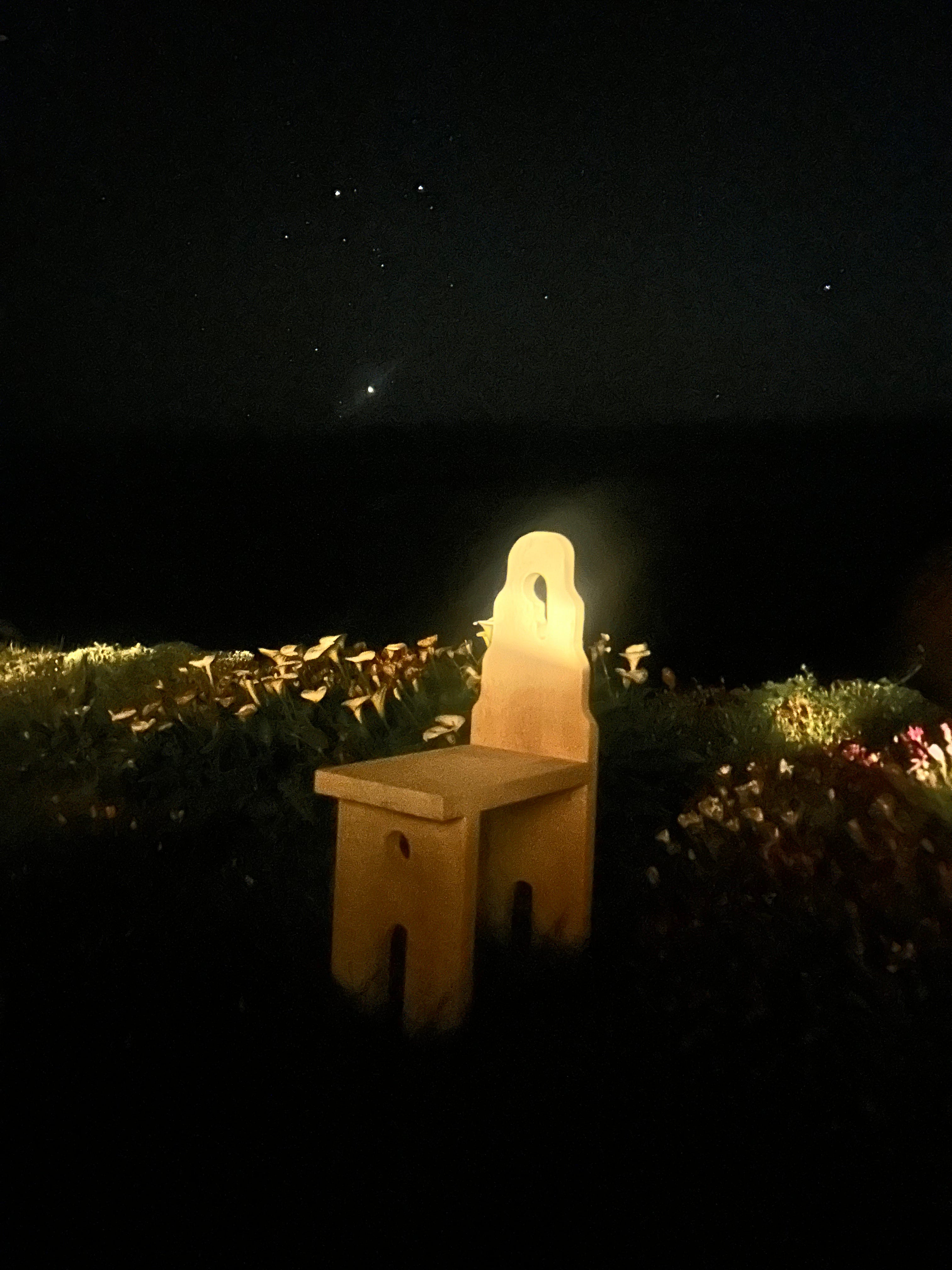
For now, the work moves between the curves of Big Sur and the angles of Los Angeles. Between the lumber’s old life and its next one. Between structural soundness and a line drawn after one beer too many.
Warm, familiar, a little weird. And, if everything goes well, just haunted enough.
Follow Hartwick Hanson on Instagram at @hartwickhanson
Work inquiries at hartwickhansonstudio@gmail.com
This interview has been edited and condensed for clarity and length.
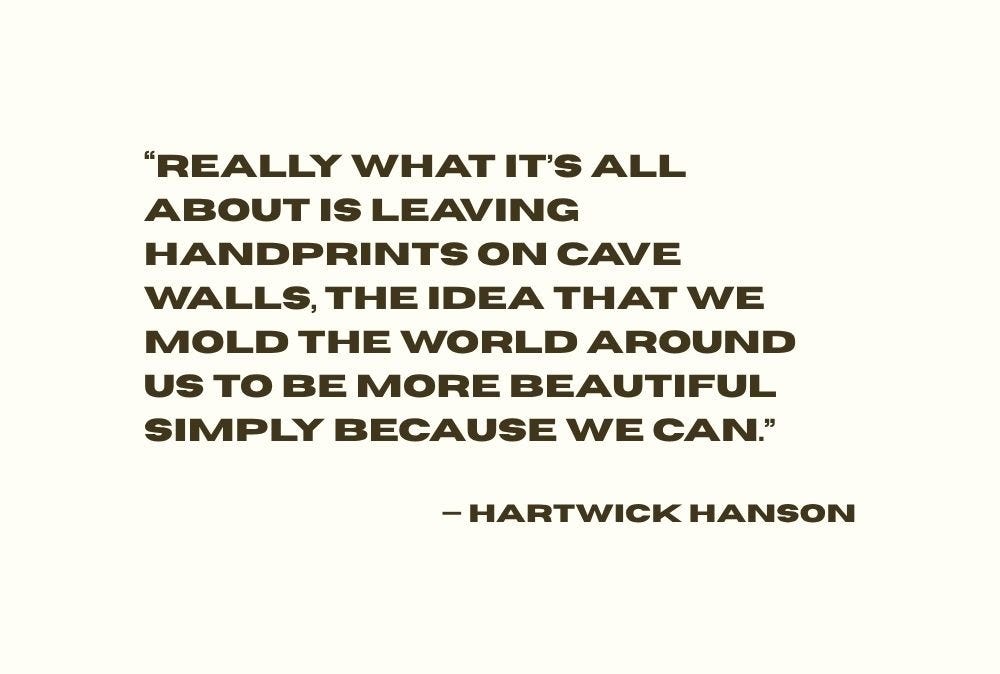
These are so fucking cool