


SANCTUARIES LA EXPLORES THE QUIETER SIDE OF LOS ANGELES THROUGH DESIGN.
ROOTED IN THE BELIEF THAT SANCTUARY EXISTS EVERYWHERE, OFTEN HIDDEN IN PLAIN SIGHT.
IF YOU ENJOY THIS PUBLICATION, CONSIDER SUBSCRIBING OR SHARING IT WITH A FRIEND.
PHOTOGRAPHY BY SHELBY NICO DIAMOND
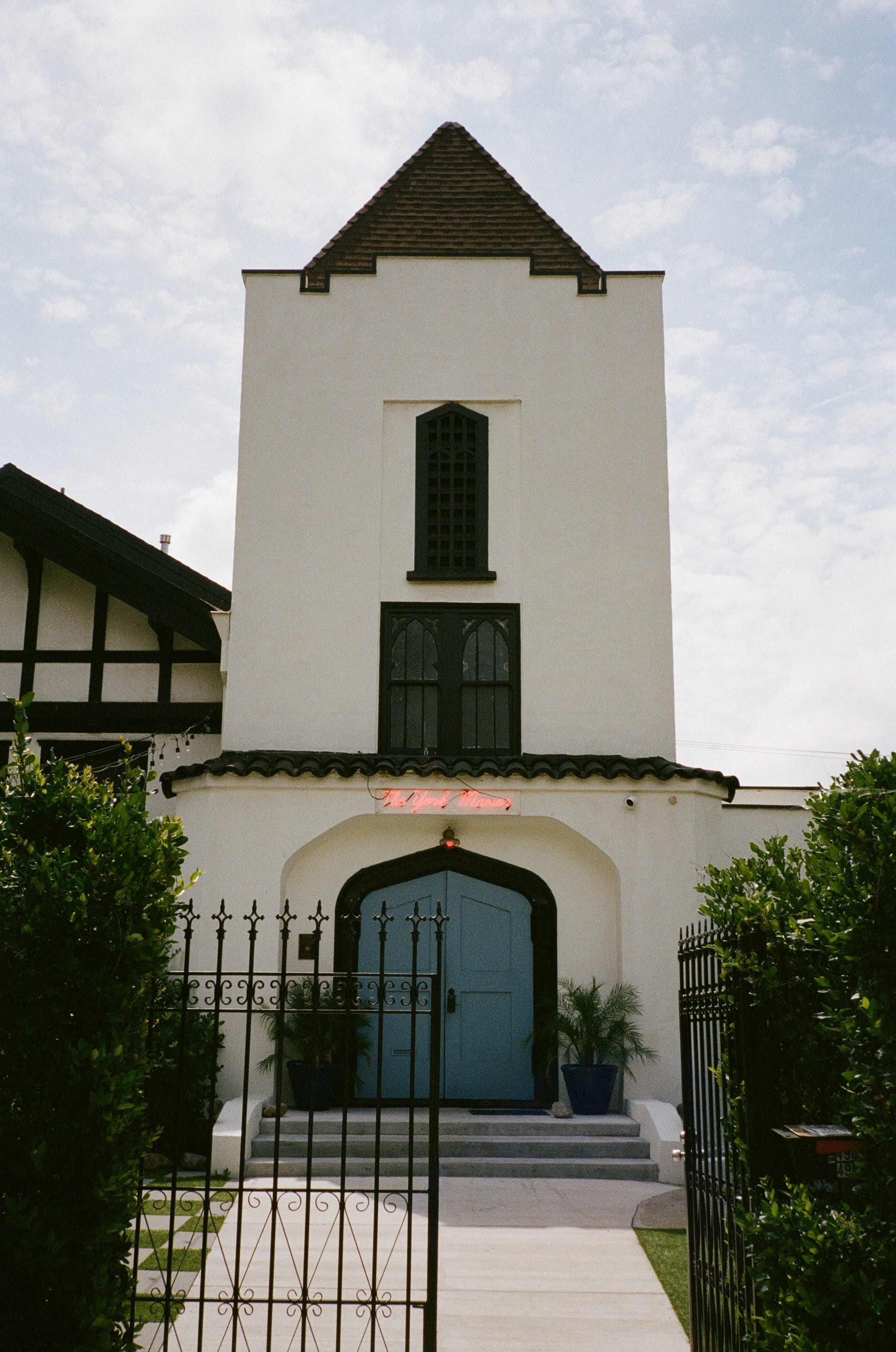
This month, I started the LA Conservancy’s Community Leadership Boot Camp, a six-week course centered on historic preservation. I joined partly because progress on the Sparkletts project is feeling stalled; we succeeded in designating the former factory as a Historic-Cultural Monument, a major win, for sure; but now it feels like we keep hitting wall after wall in creating the future of the former factory.
When you are trying to protect a building, designation can feel like the finish line. Once you get there, you realize it is only the beginning. Now, what comes next? To try to find the answer of how we make the community bathhouse vision a reality, I wanted to learn from the LA Conservancy, experts in the realm of not just preservation but also adaptive reuse.
Adaptive reuse is when a historic space is reimagined and rezoned for a new purpose. There are fantastic examples of this being executed successfully across LA: the Meadow York Manor, a turn-of-the-century church with HCM designation is now a co-working space down the street from me in Highland Park; the 28th Street YMCA became affordable and supportive housing for low-income adults and formerly unhoused youth; Beverly Hills Waterworks, a former water-treatment plant, was adapted into the Academy’s film library and archive; the Santa Fe Freight Depot was converted into Sci-Arc, an architecture school; the DTLA art gallery Hauser & Wirth lives in a former flour mill. The list goes on.
To me, adaptive reuse is the most beautiful and effective way to create layered history: preserving what already exists while imagining better, more sustainable infrastructure for our city and for today’s needs.
And we need more citizens dreaming up what that future could look like, so that we’re not all at the mercy of unimaginative development bros in boardrooms with their spreadsheets and more-often-than-not mediocre to bad taste. With that in mind, I present to you: a beginner’s guide to what I have learned so far through the LA Conservancy.
1. FIND YOUR WHY — IDEALLY BEFORE A CRISIS
Is there a place you want to preserve? Ask yourself why. Is it the architecture, cultural history, or some combination? What could its continued existence mean to the neighborhood?
The best time to designate? An ordinary day. And the worst time to notice that a building matters? When a demolition notice goes up, or when it’s put on the market and rumors begin to swirl of an impending Erewhon or Uber depot. Speaking from experience here.
If you’re in a time crunch, act quickly. Often demolitions pause or listings become stagnant if an HCM nomination is in process.
2. GATHER DETAILS
Then begin documenting everything. Find the address, original owner, architect or builder, construction date, permit history, past uses, and the people or communities connected to it. Find historical photos and go to photograph the site’s current state. Save stories you find online. Talk to people who have spent time there and collect oral histories.
The strongest cases pair physical evidence with human meaning; both permit records and personal stories will tell you about the building, and sometimes even the land underneath it. With Sparkletts we found in research that wooly mammoth fossils were found on the site. Written records tell you building history; oral records tell you living history. Both matter.
USEFUL RESEARCH TOOLS:
For properties inside the City of Los Angeles, ZIMAS can tell you whether a property is already designated or has been identified as potentially eligible. HistoricPlacesLA includes designated landmarks as well as properties identified through SurveyLA, the citywide historic-resources survey. Building permits, Sanborn maps, assessor records, newspaper archives, census records, photographs, and oral histories can help reconstruct what happened there.
Also confirm the jurisdiction. “Los Angeles” may mean the City of Los Angeles, another incorporated city, or unincorporated Los Angeles County, each with its own process and protections.
3. WRITE THE NOMINATION, THEN SHOW UP
Then all that research has to become an actual nomination. In Los Angeles, that means completing the Historic-Cultural Monument application and assembling supporting evidence including: permits, a bibliography, historic and current photographs, and a ZIMAS parcel report. The LA Conservancy’s Landmark THIS! guide is a useful toolkit for writing your nomination.
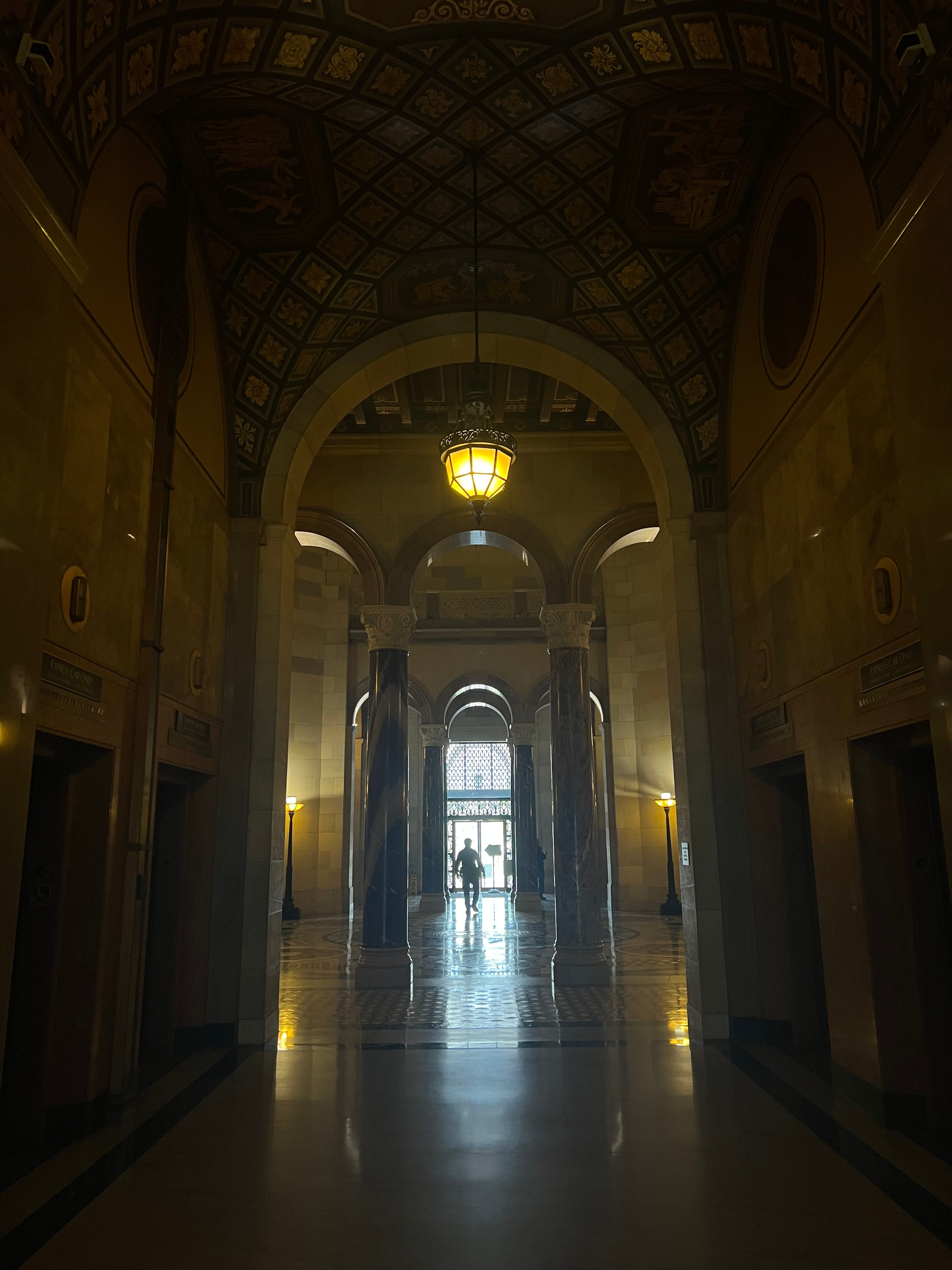
If the your application moves forward, the nomination will pass through the Office of Historic Resources, the Cultural Heritage Commission, P.L.U.M., and finally City Council. There will be multiple hearings, a site visit, staff reports, letters of support, and public comment. Go to City Hall and bring your neighbors. Speak, even if you feel under-qualified.
And schedule a lot of time. When I went to City Hall? Sparkletts was the very last item on the docket, four hours into the meeting. The preceding nomination discussions were interesting to witness, but I wasn’t expecting to be there so long. I wrote about this before but the arguments for/against each designation were very GOT-coded and the whole experience was significantly more entertaining and exciting than I anticipated. Turns out going to City Hall is… kind of fun?
4. FUTURE VISION
Preservation is often framed as a fight between history and progress. I think the better question is: How can the past influence the future?
Good rehabilitation does not pretend that time stopped; it honors a place’s layered history while allowing it to evolve. With Sparkletts the most compelling possibility is not simply saving an old industrial complex because it has 1920s Moorish architecture, or is the last remaining uncapped spring in Northeast Los Angeles, but it is imagining how it might become useful again: as a public bathhouse.
The idea is ambitious and still taking shape, but working on this project with many stakeholders has taught me something essential: nostalgia may begin a preservation effort, but practicality and vision write the next chapter.
5. CREATE A PRESERVATION CAMPAIGN
When we started working on Sparkletts we didn’t have this written framework, though learning it in the boot camp confirmed our instincts that led us haphazardly to the below were correct.
The campaign framework taught by the LA Conservancy is simple:
IDENTIFY THE STAKEHOLDERS
These might include neighbors, neighborhood councils, local historical societies, the current owner, a developer or buyer, City representatives, and even the LA Conservancy.BUILD COMMUNITY SUPPORT
This can happen through surveys, meetings, individual conversations, and trusted community organizations. Not everyone needs to share the same motivation; some people may care about history or cultural memory; others about housing, sustainability, beauty, neighborhood identity, or the possibility of a new use.SHAPE THE MESSAGE
What is at risk, why does it matter, and what future are you proposing? Consider which local publications, Substacks, social platforms, or community voices could help make the case for both protecting the place and reimagining its future.TARGET THE DECISION-MAKER
This might be an investor, the owner or seller, a developer, or your City Council representative. Identify who actually has the power to affect the outcome, then make the case difficult to ignore. Each case will be different here. Some sites are city-owned and developers respond to adaptive reuse RFPs; some are simply on the market and require an investor with an aligned vision, like Sparkletts.
6. FIND INVESTMENT
In time, in effort, in actual dollars. Saving a place is never a solo act. Depending on the situation and site, you may need to partner with a preservation consultant, architect, historian, structural engineer, land-use attorney, planner, fundraiser, organizer, elected official, or simply a well-connected neighbor.
The financials matter, too, obviously. Redeveloping a historic site is complicated and costly, in the tens-of-millions of dollars. Los Angeles has preservation tools including rehabilitation tax credits, the California Historical Building Code, adaptive-reuse provisions, conservation easements, legacy-business programs, and the Mills Act, which can exchange property-tax savings for a long-term commitment to restoration and maintenance.
The Los Angeles Conservancy’s preservation resources and the City’s Office of Historic Resources are good places to begin. More importantly, begin speaking to people before you think you have the perfect case. Someone else may have the missing photograph, memory, expertise, use, or relationship needed to take your project to the next phase.
7. BE PATIENT, AND KEEP MOVING
I entered the LAC boot camp thinking preservation was primarily a designation process. I am learning that it is closer to a mix of community organizing, a political campaign, and even a large-scale production.
Required for success are a combination of evidence, narrative, coalition, political strategy, financing, and a future people can believe in. And projects take years. Some of the LA Conservancy adaptive reuse projects can take decades.
And when you hit a wall? Step away long enough to recharge, then come back and try another approach. I’m writing this as much for myself as for anyone else. It is hard to keep pushing when you feel like a random citizen with no relevant experience. But one of the most valuable lessons I’ve learned from the LA Conservancy is that you do not need to begin as an expert. Sometimes the most important things you can bring are a vision, genuine passion, and the willingness to keep going.
The goal with preservation is not to freeze Los Angeles in time; cities change. The goal is to influence that change with greater discernment, to take lessons from history, restore what we’ve destroyed over the years, to preserve what’s still here, and to dream up a more communal infrastructure that honors history.
A city without memory eventually becomes interchangeable. The places we choose to carry forward are part of how we decide who we are.
Is there a building in Los Angeles you believe deserves a future? Send it my way. I would love to know what place you cannot stop thinking about—and why.
If you’re interested in participating in the LA Conservancy Boot Camp, consider becoming an LA Conservancy member.
Super interesting! Great work.
This is awesome