


SANCTUARIES LA EXPLORES THE QUIETER SIDE OF LOS ANGELES THROUGH DESIGN.
ROOTED IN THE BELIEF THAT SANCTUARY EXISTS EVERYWHERE, OFTEN HIDDEN IN PLAIN SIGHT.
IF YOU ENJOY THIS PUBLICATION, CONSIDER SUBSCRIBING OR SHARING IT WITH A FRIEND.
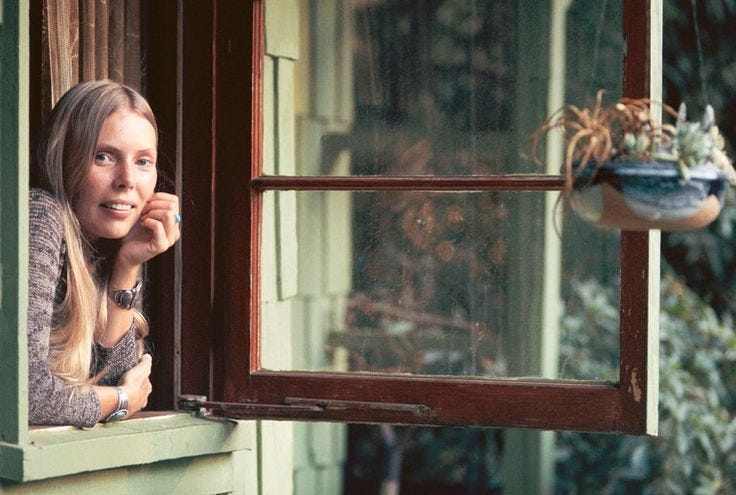
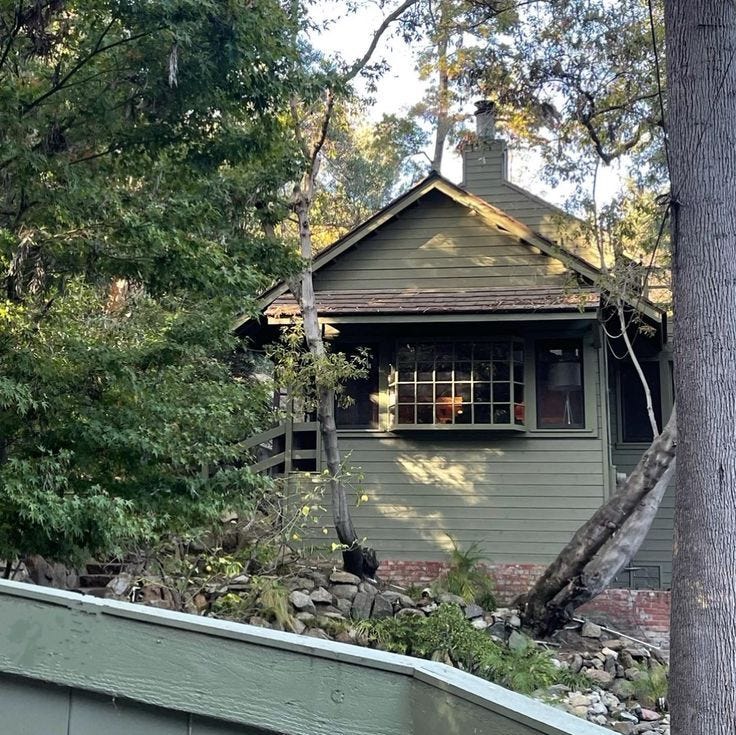
The house behind the Crosby, Stills, and Nash song “Our House” wasn’t any of their houses at all. It was Joni Mitchell’s Laurel Canyon home. She shared it for a time with Graham Nash where he wrote the song one afternoon on her piano.
Though Nash immortalized it, Mitchell was the one who breathed life into it; she bought it, filled it with colorful objects, and nurtured the community of musicians who were responsible for so much of the music from the 1970s.
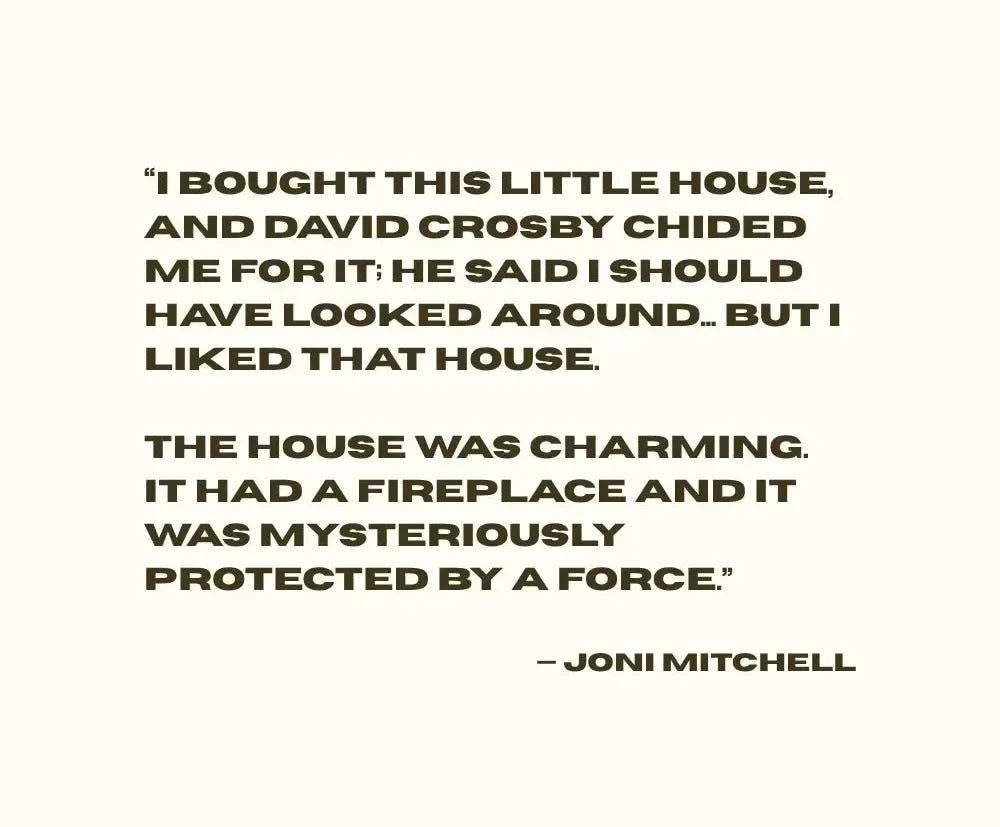
Mitchell purchased the small cottage on Lookout Mountain Avenue in the spring of 1968, near the beginning of her recording career. Public records show the sale on May 20 for $31,000, though Joni Mitchell said, “I paid $36,000 for it, but I paid it off. I probably paid more for it because I paid it off.”
Though biographies differ on whether the money came from royalties or her Reprise advance, the house was an early act of artistic independence: a world of her own, paid for by her work.
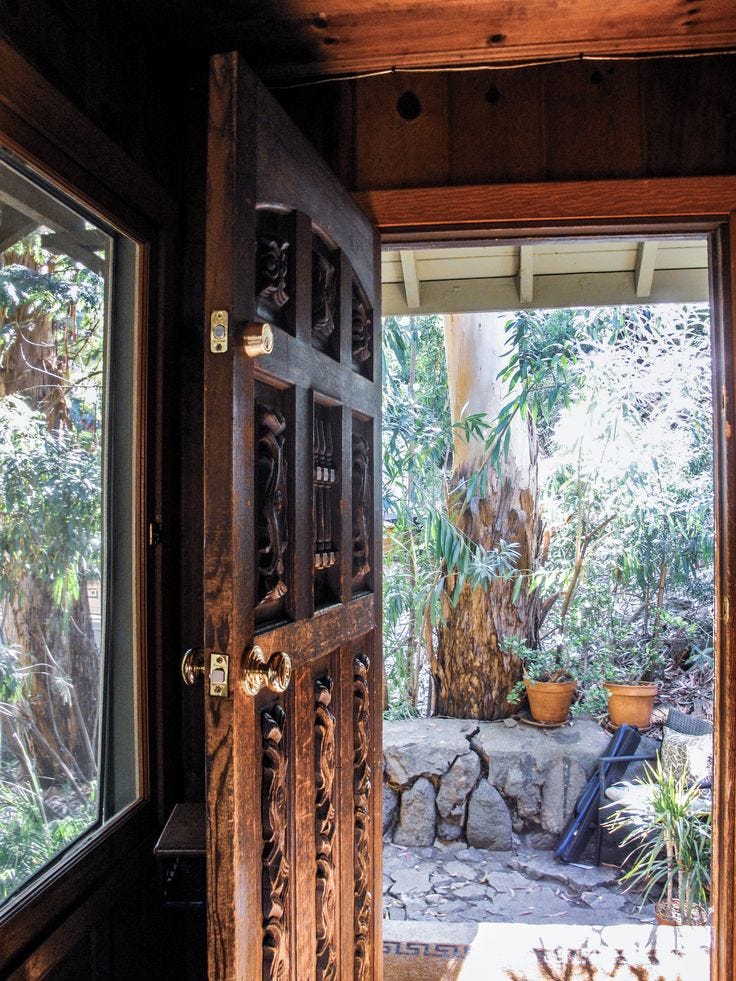
Records describe a 1,830-square-foot, three-bedroom house built into a Laurel Canyon hillside. So much life, creativity, and history fit into a relatively modest footprint.
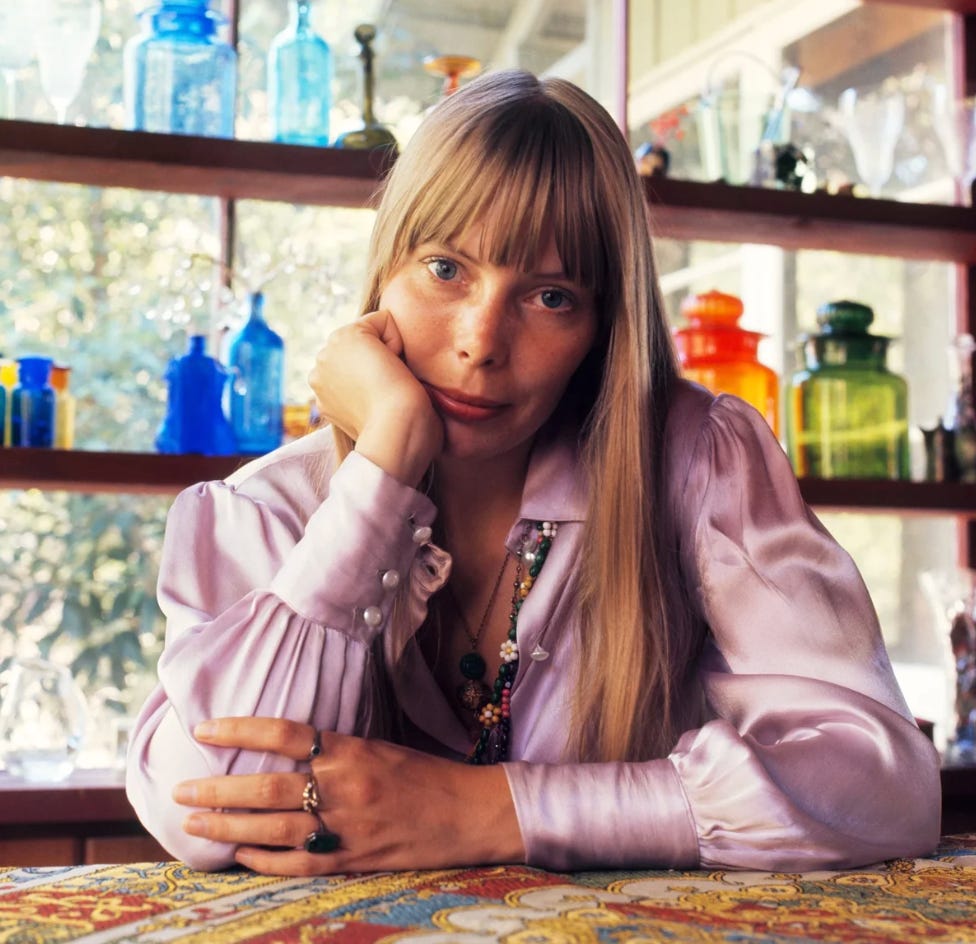
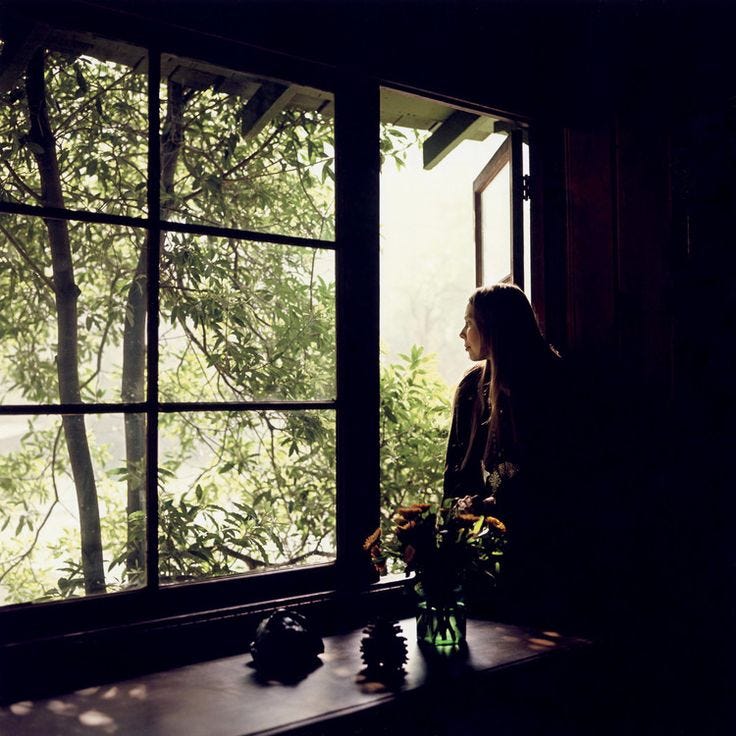
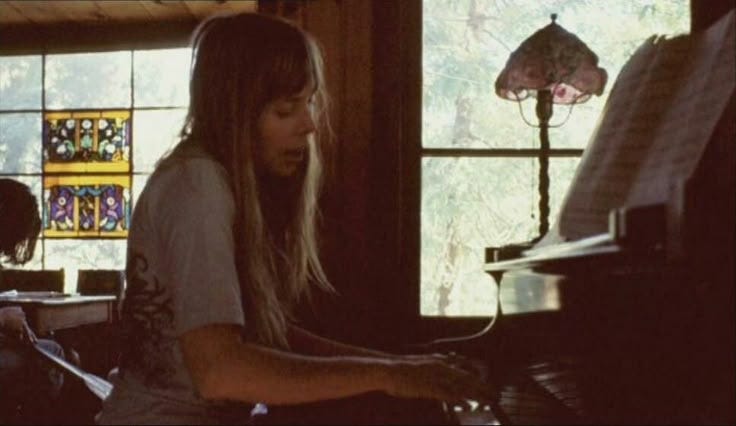
A 1969 profile of the home describes is as a small, pine-paneled structure adorned with stained glass, colored bottles, old dolls, flowers, Victorian shadow boxes and a brick fireplace crowned by a jeweled king’s head. There were guitars, books and a piano; a grandfather clock given to her by Leonard Cohen; and, as we all know, two cats in the yard. Sunlight passed through the various types of collected glass, turning the interior itself into something like a painting.
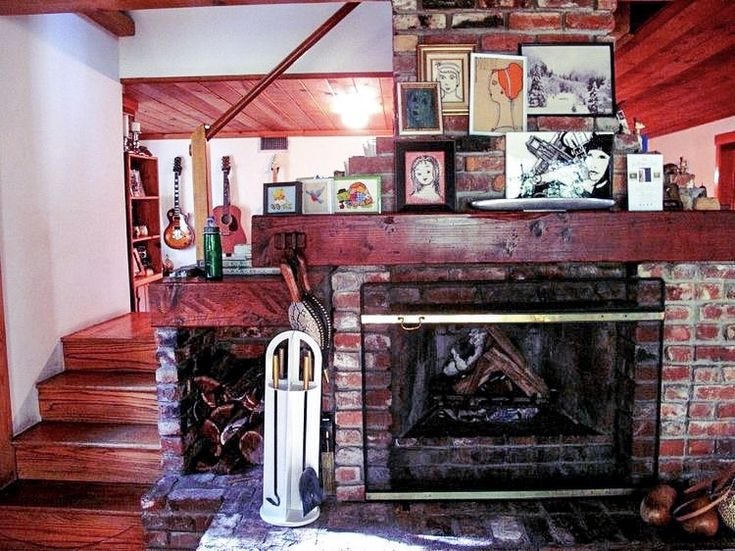
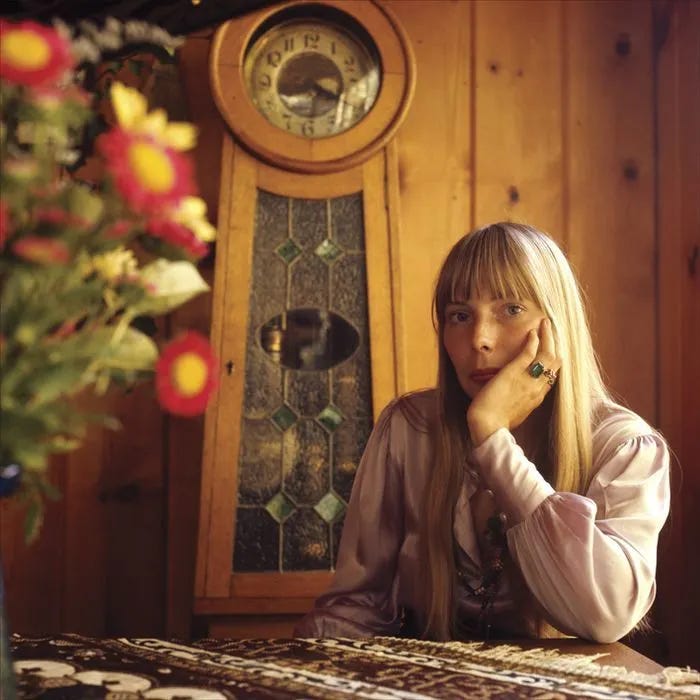
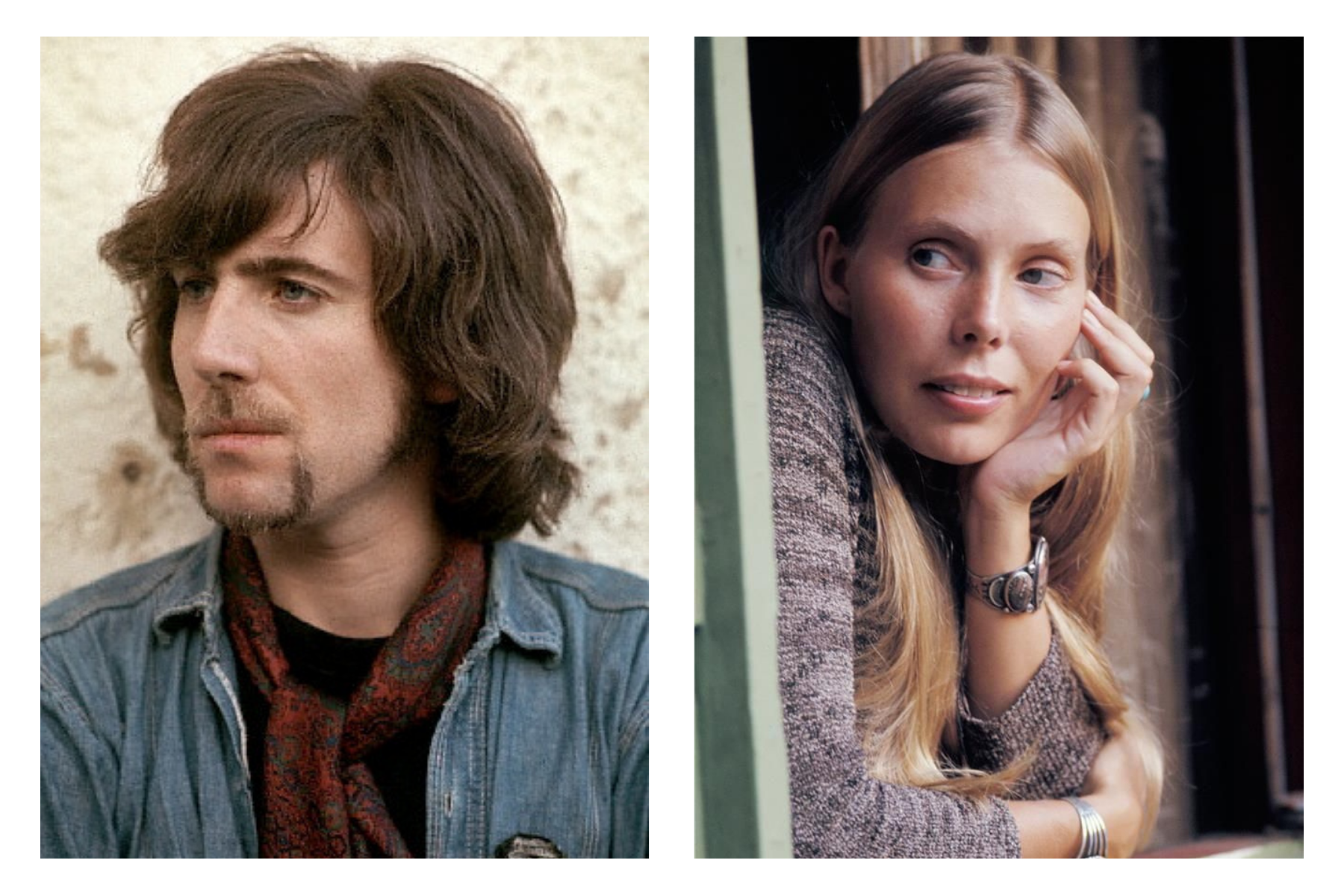
Graham Nash moved in shortly after Mitchell bought the house. As the story goes: one rainy day, after breakfast in the Valley, they stopped at an antique store and Mitchell purchased a vase. Back at the cottage, Nash sat down at her piano while she gathered flowers, and the ordinary afternoon became “Our House.”
That song enshrined the house but the home itself birthed so much other culture and history.
Mitchell wrote much of Ladies of the Canyon there and painted the watercolor of the house that appears on its cover. Friends gathered in the living room to talk, eat and pass around guitars. Joni would host salons there. David Crosby, Stephen Stills, Cass Elliot, Frank Zappa, Judee Sill and Glenn Frey were among those who moved through its rooms. In Nash’s telling, it was there that he first added his voice to Crosby and Stills and the three discovered the harmony that would become Crosby, Stills & Nash.
“For me, it was all a fantasyland… It was a very freeing time in Los Angeles,” Graham Nash recalled.
The relationship between Mitchell and Nash ended. The scene dispersed. Mitchell eventually moved to another home in Bel-Air, where she still resides. But the house appears to have remained hers.
Public records identify that 1968 purchase as its last recorded sale. A 2017 quitclaim deed transferred the title into a trust associated with Mitchell, but there was no sale price or tax reassessment. Nearly sixty years later, public records suggest she has never sold it.
Nash transformed a domestic moment into a song about permanence. Mitchell seems to have practiced it: holding onto the physical place where a life, a body of work and an entire cultural mythology briefly met. Perhaps that is the final chapter of the story.
One day, I hope the house becomes a Historic-Cultural Monument: protected, preserved and occasionally opened to the public, so we can all sit in the living room and sing that long, wordless refrain together. I like to imagine that Mitchell still returns from time to time and does the same, letting the room carry her back into the life once lived there.
This song holds deep meaning for so many people, myself included. I listened to it while buying my first home in the hills of Los Angeles. I thought of it while placing flowers in a vase, watching our two cats in the yard, looking at my husband and, now, our son — tearing up at my own version of the promise contained within “Our House.”
Sometimes a sanctuary is simply a place made distinctly one’s own, then remade by everyone welcomed into it. Each person carries something away while leaving something behind: the accumulated imprint of a particular life, community and moment, held within the walls.
Thank you to Joni Mitchell and Graham Nash for the years they shared in that house — and for a song that has come to mean so much to generations of us.
Shelby, this is just lovely and so beautifully written. A delightful way to begin my Sunday morning. And quite synchronistic too, in that recently I’ve been playing ‘Morning Morgantown’ from the Ladies of the Canyon album almost every day!
Thank you 🩵☀️