


SANCTUARIES LA EXPLORES THE QUIETER SIDE OF LOS ANGELES THROUGH DESIGN.
ROOTED IN THE BELIEF THAT SANCTUARY EXISTS EVERYWHERE, OFTEN HIDDEN IN PLAIN SIGHT.
IF YOU ENJOY THIS PUBLICATION, CONSIDER SUBSCRIBING OR SHARING IT WITH A FRIEND.
PORTRAITS BY DANIEL HOLLIS DIAMOND
INTERIORS BY SHELBY NICO DIAMOND
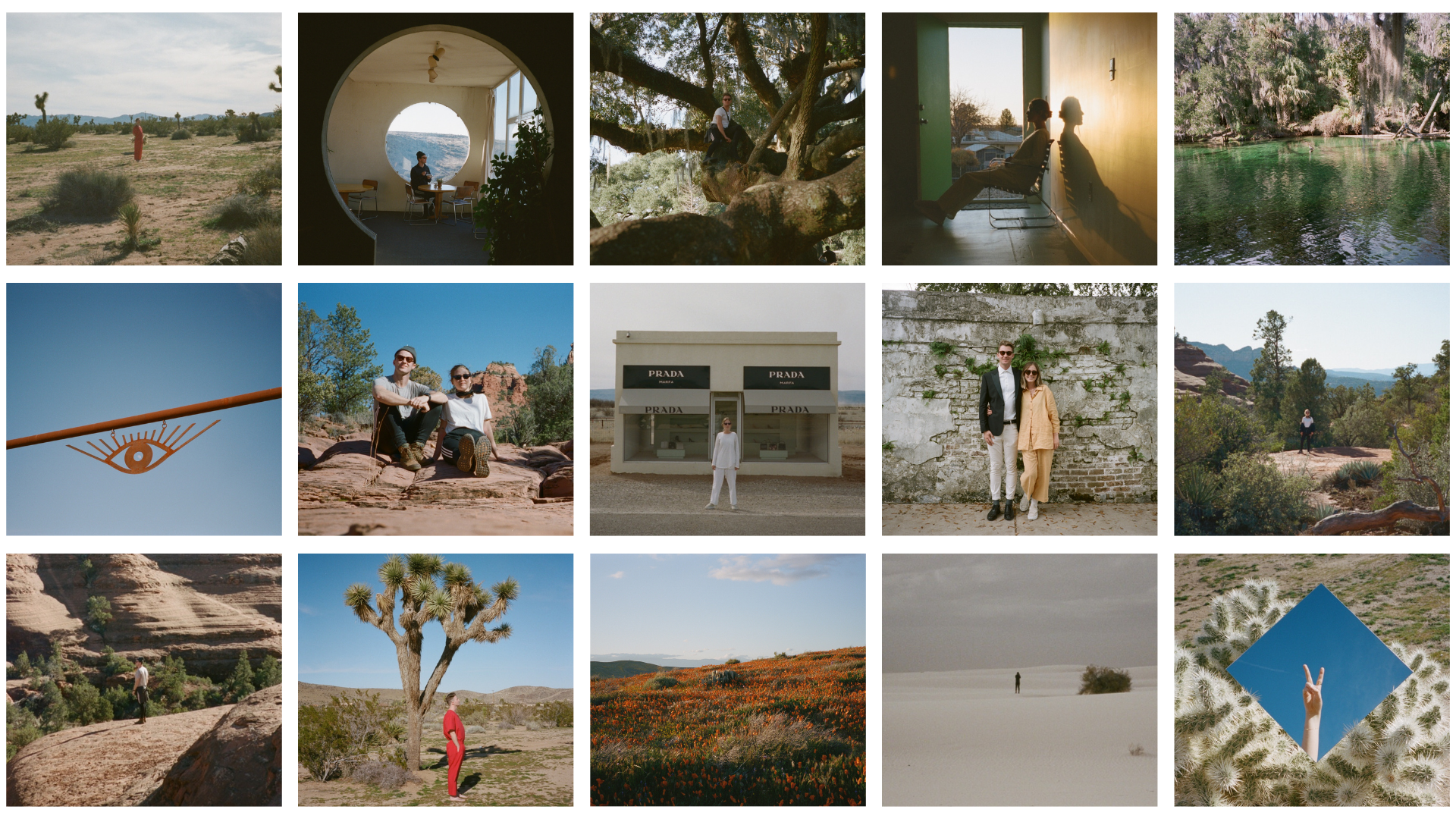
OUT WEST
We moved from New York to Los Angeles in January 2019. At the time, we were preparing to buy an apartment in Brooklyn. On paper, staying in New York made sense. In reality, I had been ready to leave the city for years.
Los Angeles had become familiar through work trips, especially Venice, but it still felt abstract: a city so sprawling it seemed impossible to fully know. My husband, Daniel, who grew up in London, experienced New York as an extension of home. Los Angeles felt different to him: dispersed, car-dependent, less intuitive.
We decided to test it. I found a subletter for our apartment in Brooklyn and we drove west.
We started by living on the Westside for a month; it wasn’t right. Daniel didn’t enjoy this part of LA and frankly neither did I. Most of our friends were east and we felt isolated across town. Moving to a sublet in Highland Park shifted the conversation. The neighborhood felt textured and walkable, creative and trendy but lowkey in a way that felt familiar, like our corner of Brooklyn. Daniel said plainly: if we could find something near Highland Park, he’d consider staying.
We looked for months. At one point we flew back to New York to see an apartment in Bed-Stuy that overlooked an empty lot. After touring hillside homes in Los Angeles, the contrast was stark - not just in scale, but in light and air. New York felt intense, oppressive, chaotic. LA felt vibrant, soft, reconnected to nature.
We made offers across Mount Washington, Highland Park, and Eagle Rock and lost each one. Eventually we went into escrow on a Mount Washington house with a walk-street entrance and expansive views, only to walk away when inspections revealed major foundation issues. At the time it felt devastating; in hindsight, it simply wasn’t the right one and I’m so grateful we closed that door.
THE HOUSE ON THE HILL
Soon after, our agent mentioned an off-market property on Sparkletts Hill, at the border of Eagle Rock and Highland Park. Half an acre. Built in 1922. If we came in at a certain number, it would be ours.
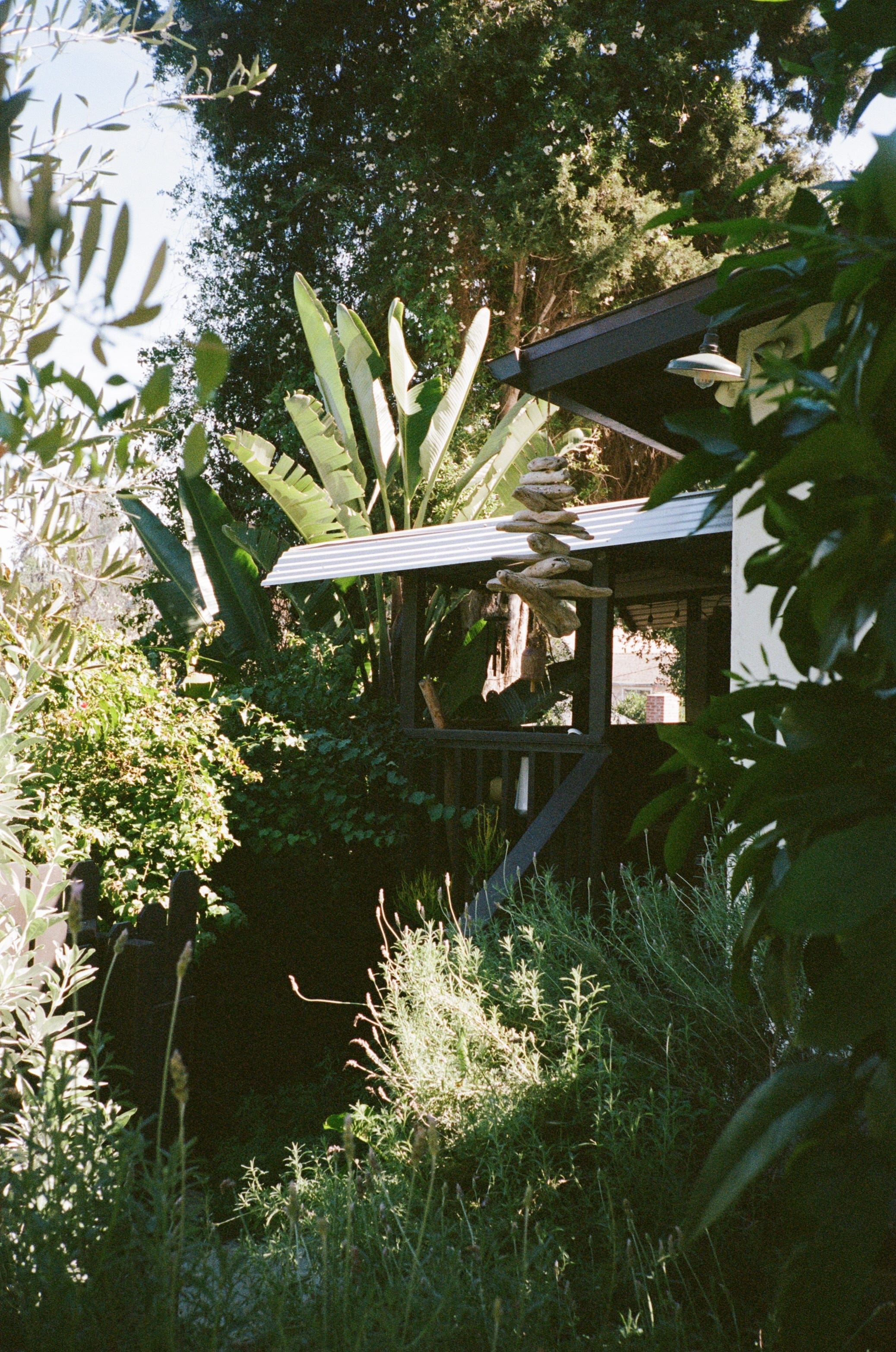
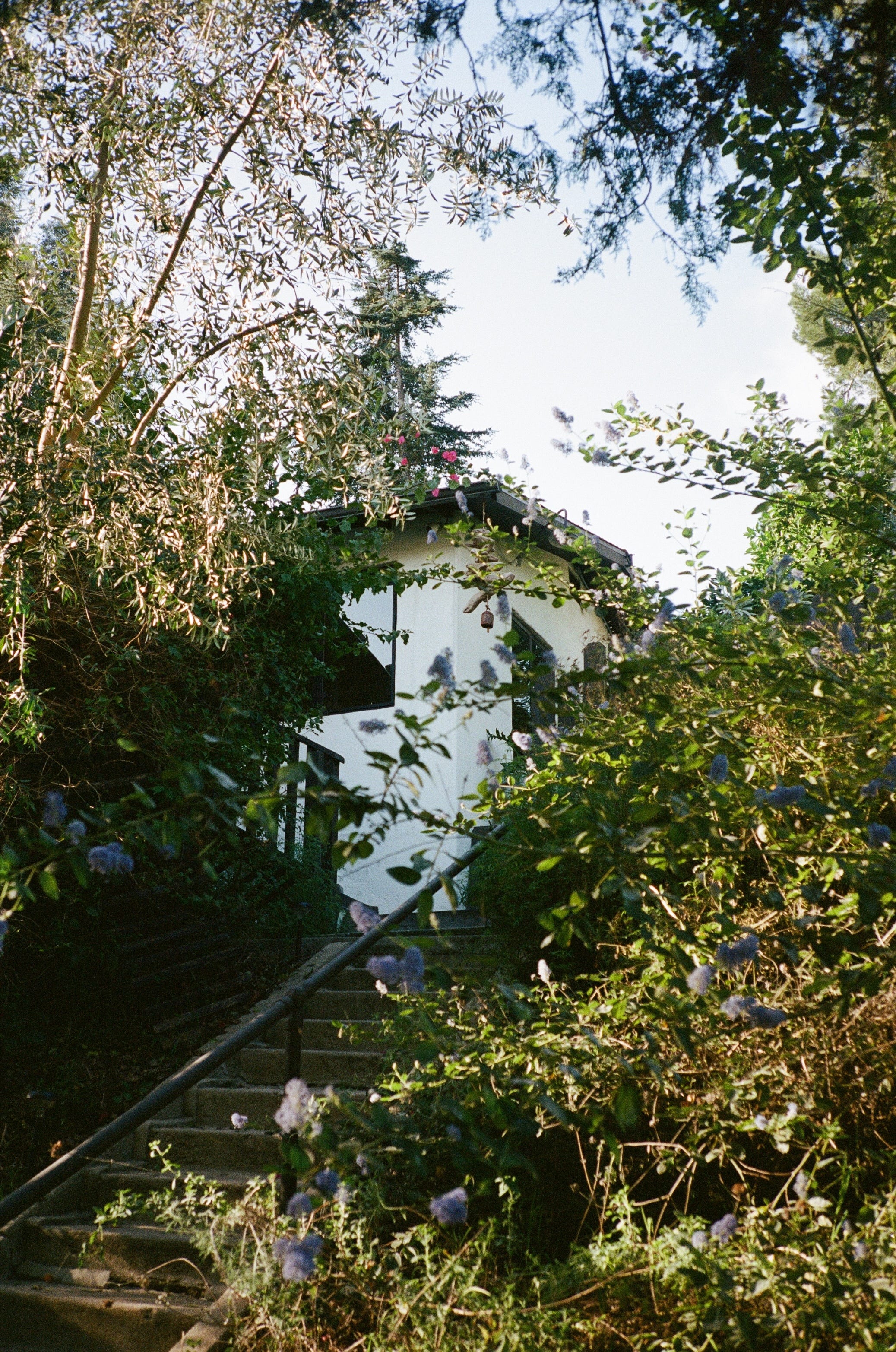
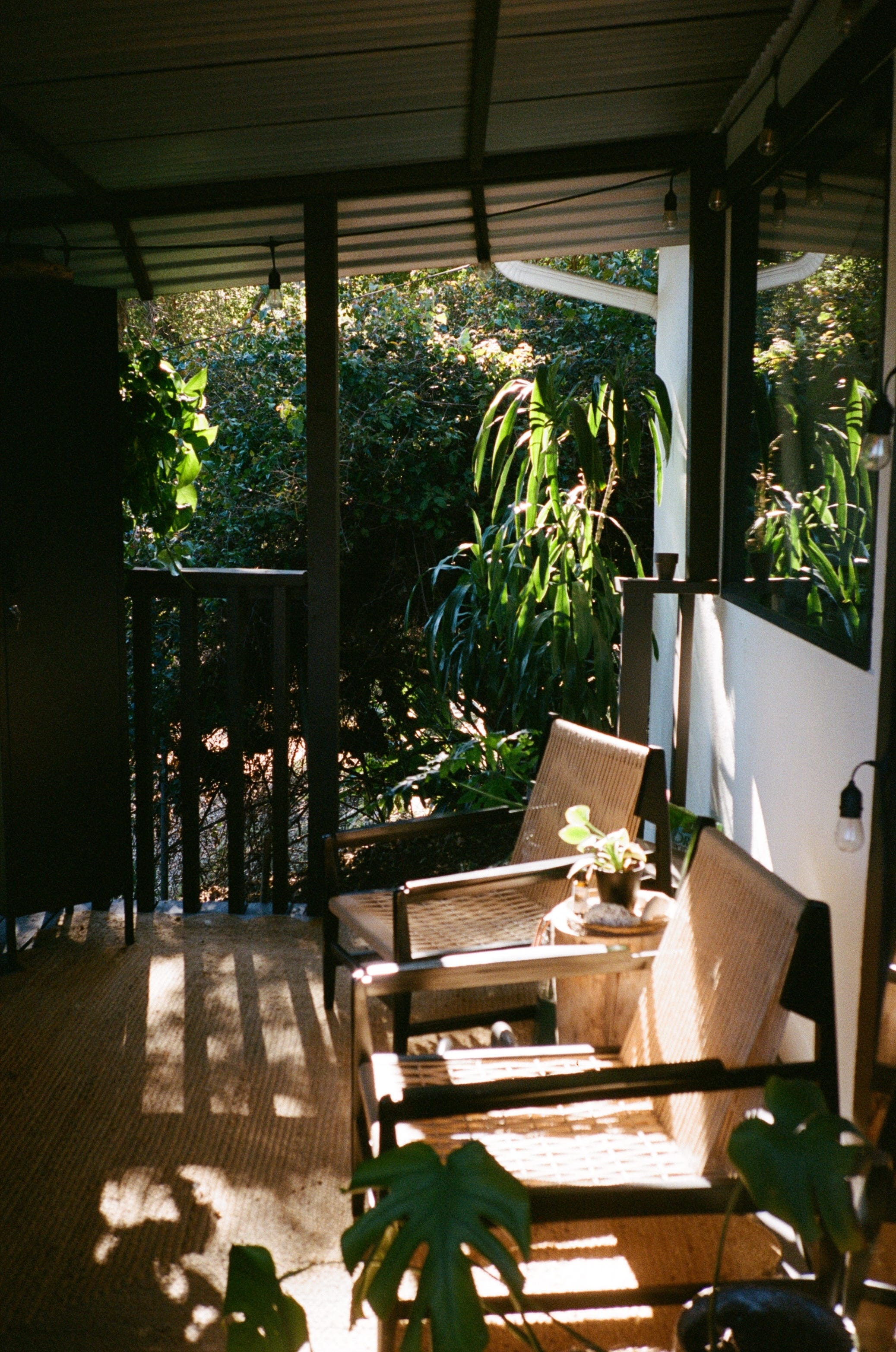
Our house sits midway up the hill, partially concealed by mature trees. The structure is staggered within the topography, creating unusual privacy for Los Angeles with neither neighbor directly adjacent. There’s a flat side yard and a detached studio that now functions as a guest space and screening room. Ahead, the San Gabriel Mountains frame the horizon.
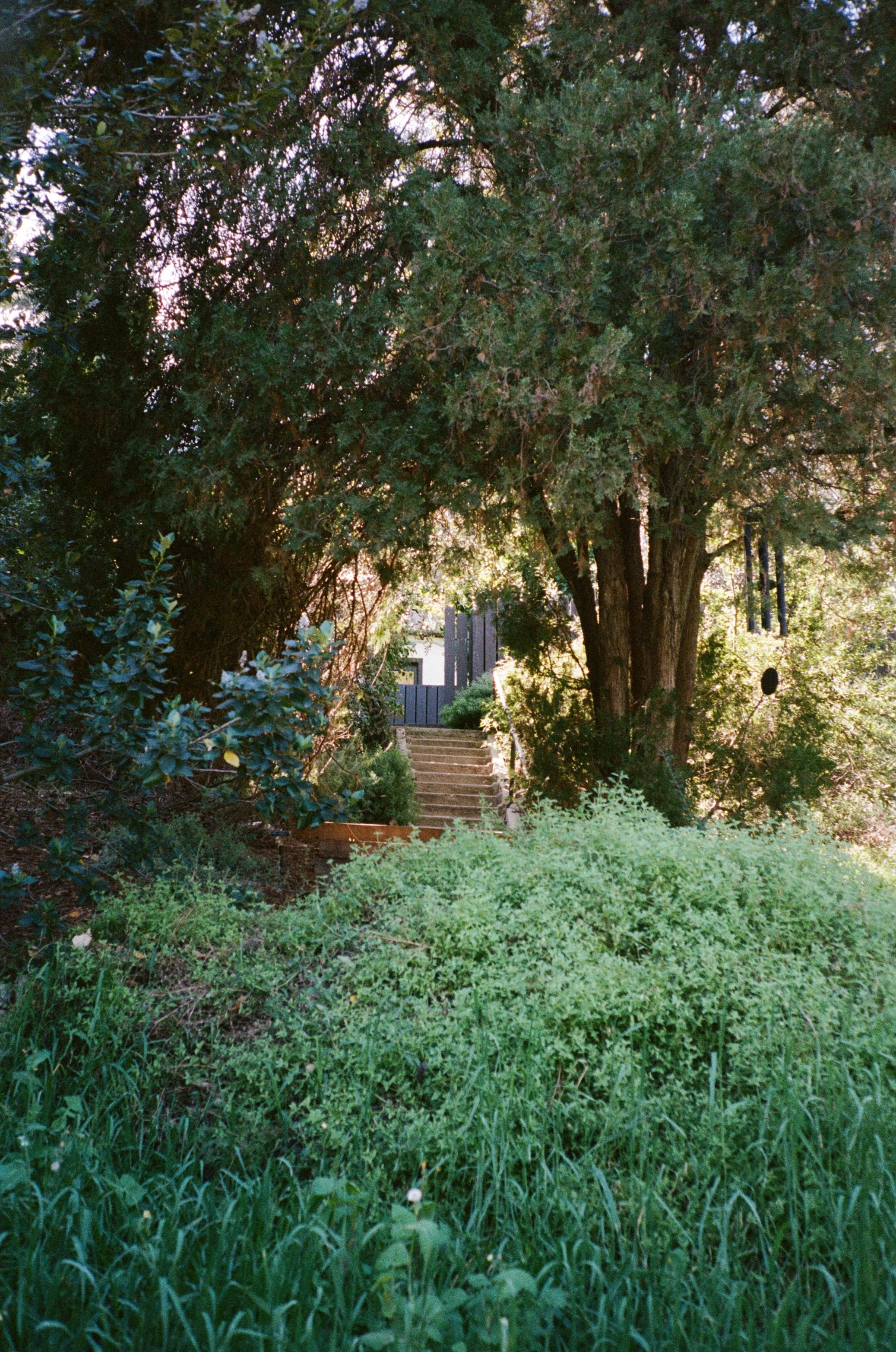
It was described to us as a former hunting cabin: a retreat from early Hollywood. In 1922, Los Angeles had just crossed one million residents. Eagle Rock was still its own incorporated city, annexed to LA the following year. The area was known for citrus groves and hillside homes marketed as healthful alternatives to downtown congestion, connected by streetcar along Colorado Boulevard.
Whether or not it began as a literal hunting cabin, it was the original structure on what later became a subdivided tract. The land has since been parceled, but the hillside retains a sense of separation and quiet.
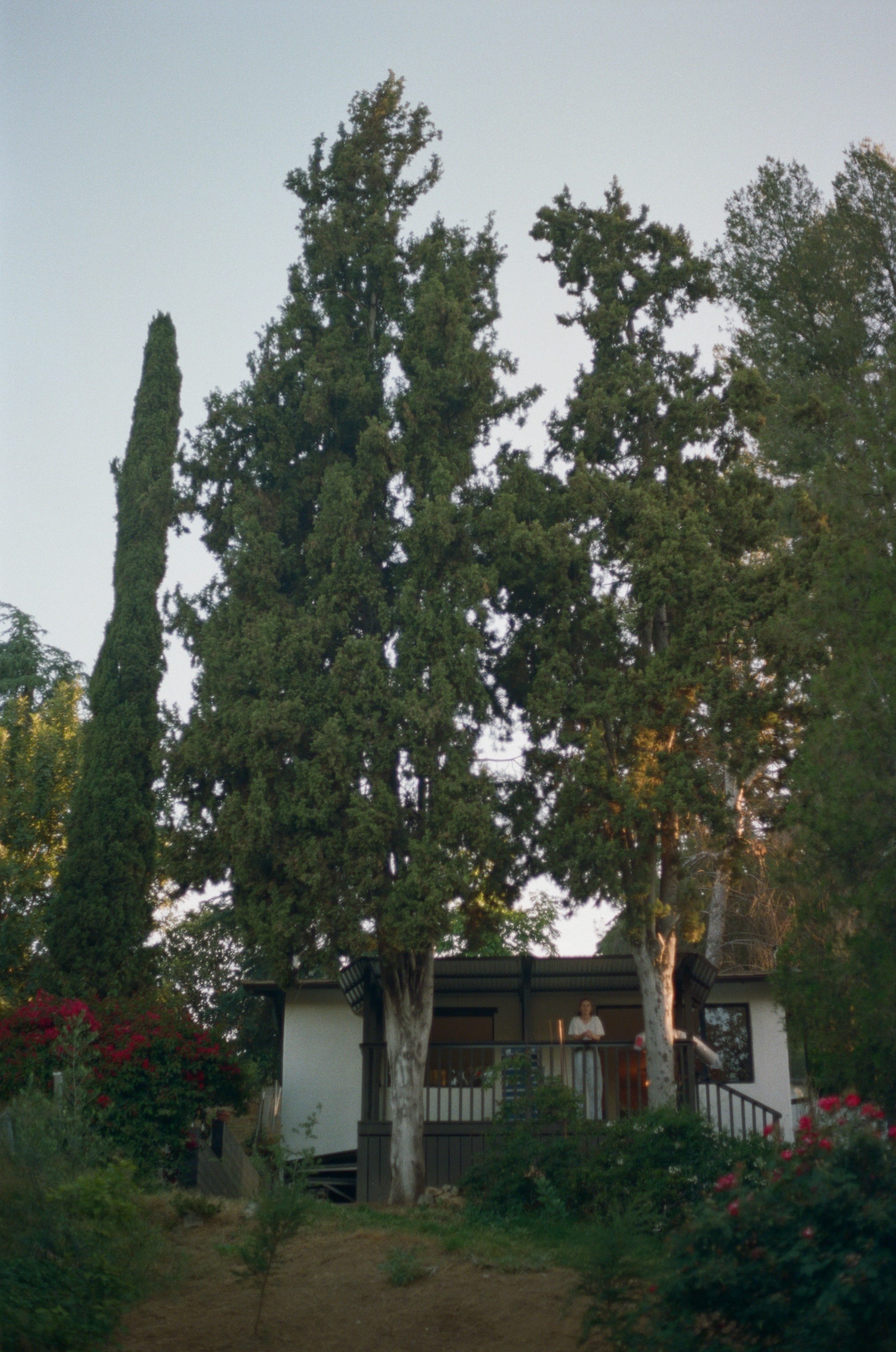
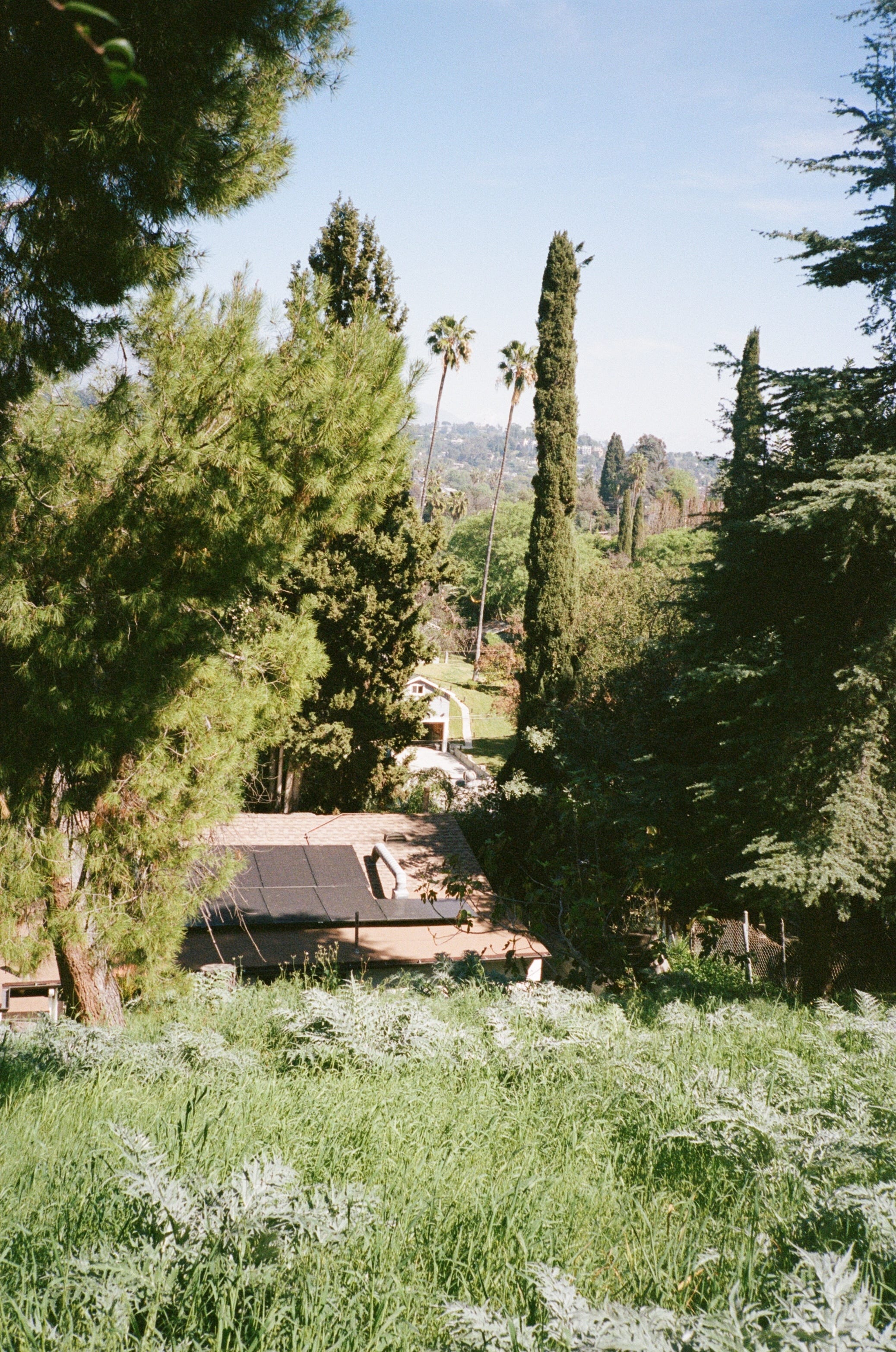
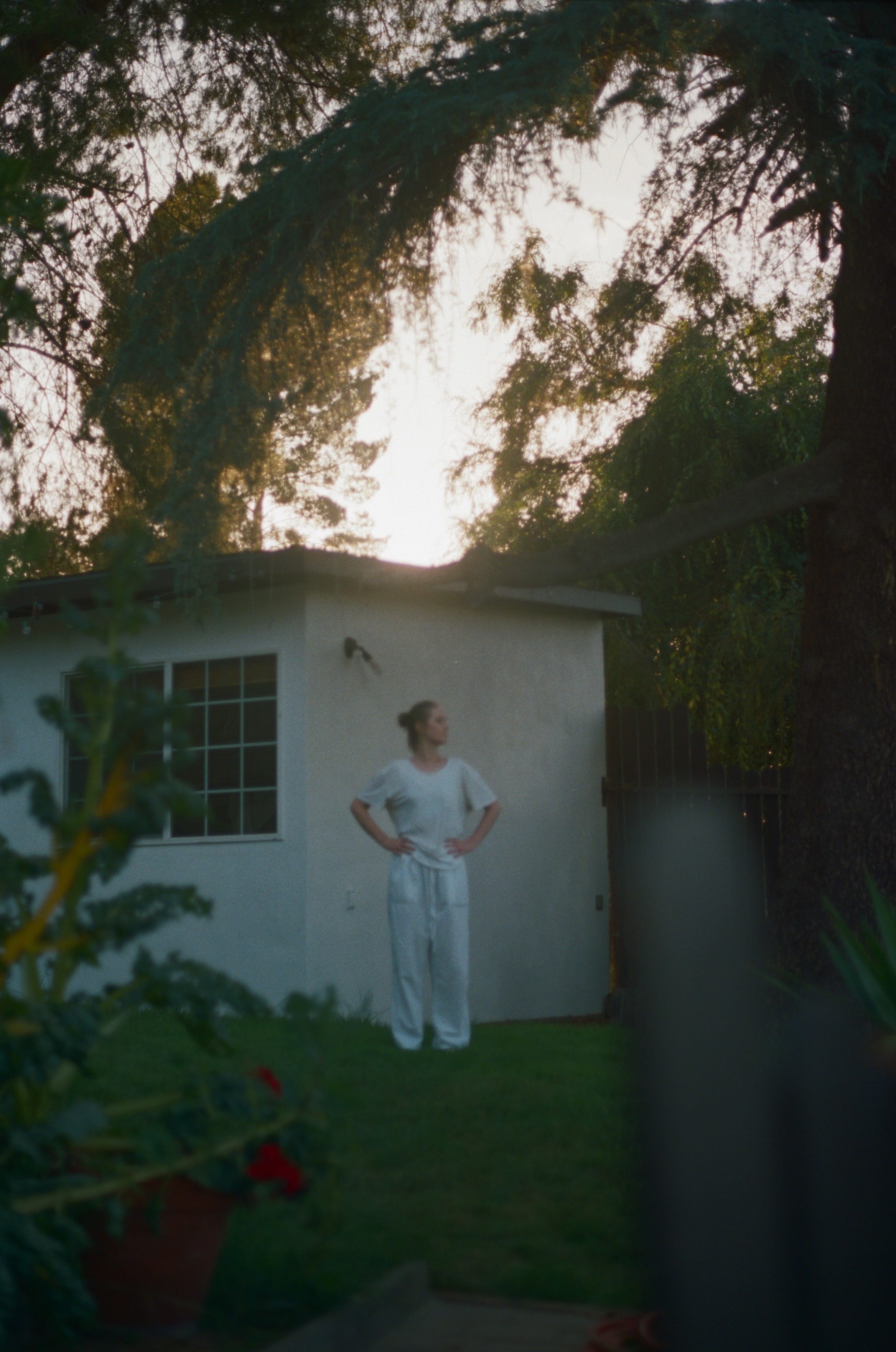
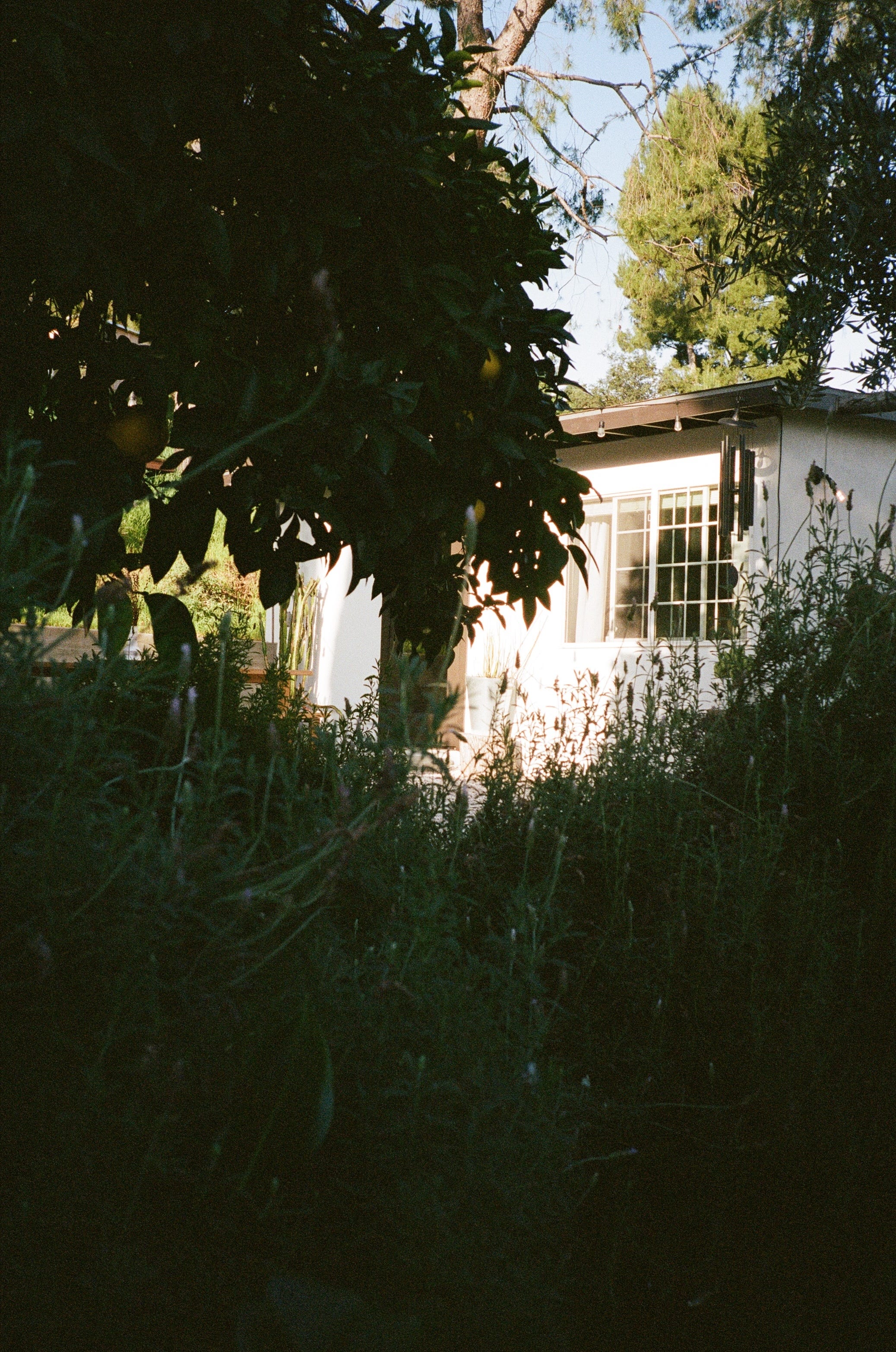
I remember leaving the first showing and returning to our sublet with a clear sense of our future. I had the wildest sense of remembering a future that had not happened yet; I saw us raising our future child here. I knew this was our home.
CARETAKERS
After we closed, I remember wondering if we’d made an enormous mistake. We were suddenly responsible for a century-old house on half an acre with mature trees, shifting soil, and a steady rotation of hawks, crows, coyotes, and skunks. On our first night, a pair of skunks sprayed beneath the house. It felt less romantic than it had in escrow.
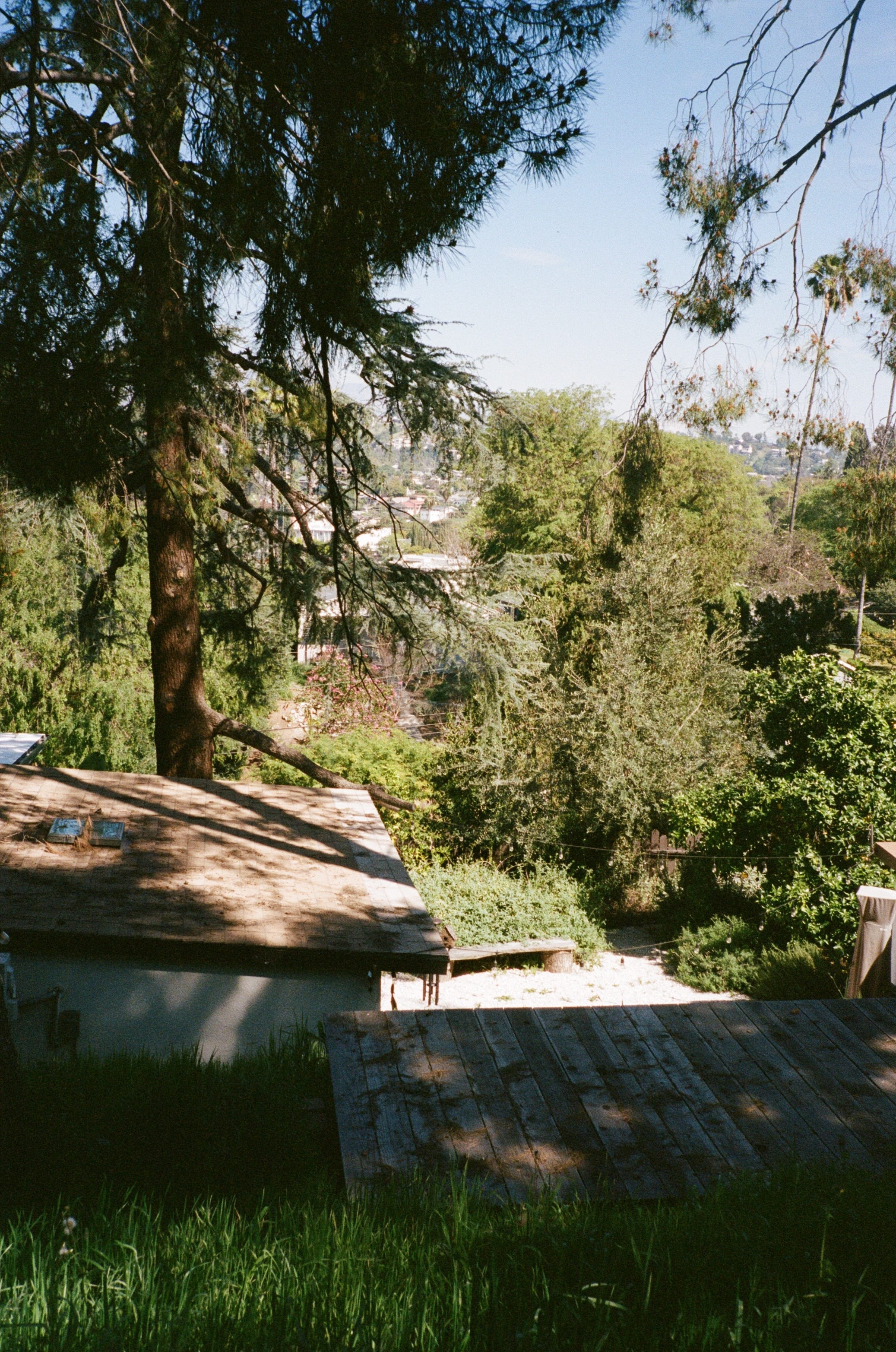
Over time, that anxiety gave way to responsibility. We began the slow work of tending the land, learning its rhythms, and making the house our own.
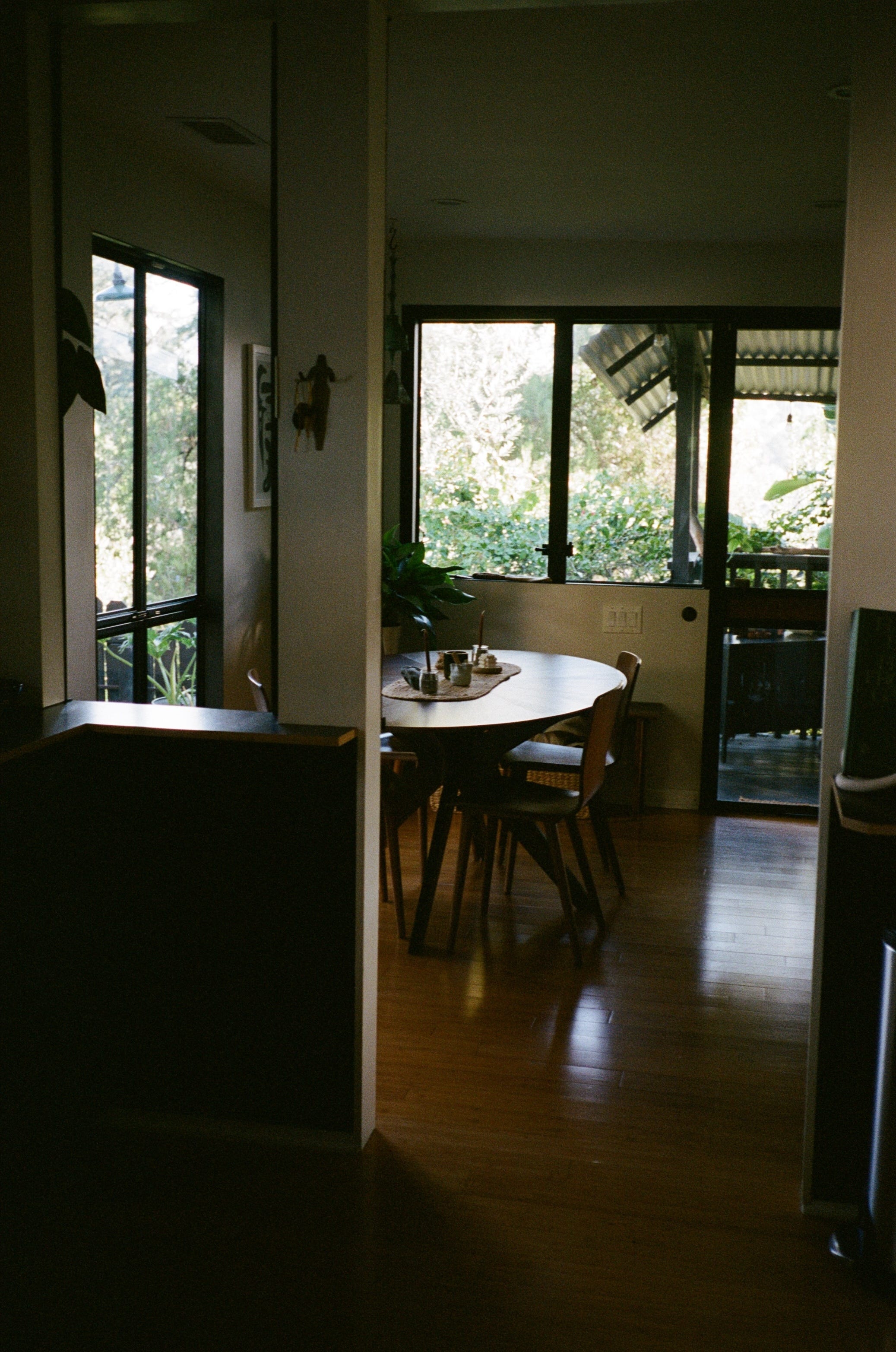
The previous owner was a union set builder and fabricator, and his updates reflect that sensibility - beautiful, practical, and slightly unconventional. A kitchen sink formed from an industrial wok. A custom front door with the lock set into the wall. A small opening cut between the living room and bedroom to pull light deeper into the house. The interventions feel closer to stagecraft than standard renovation.
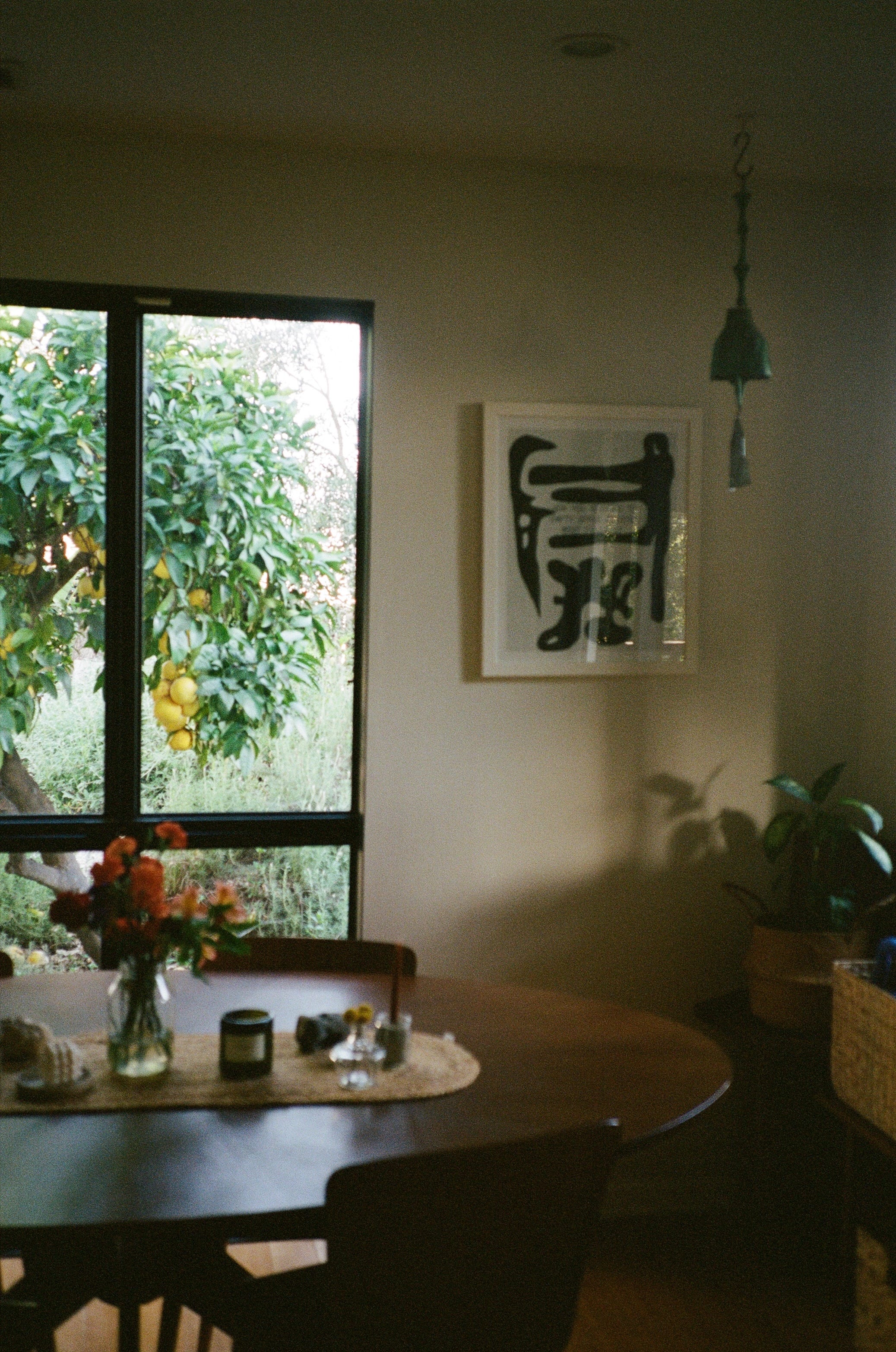
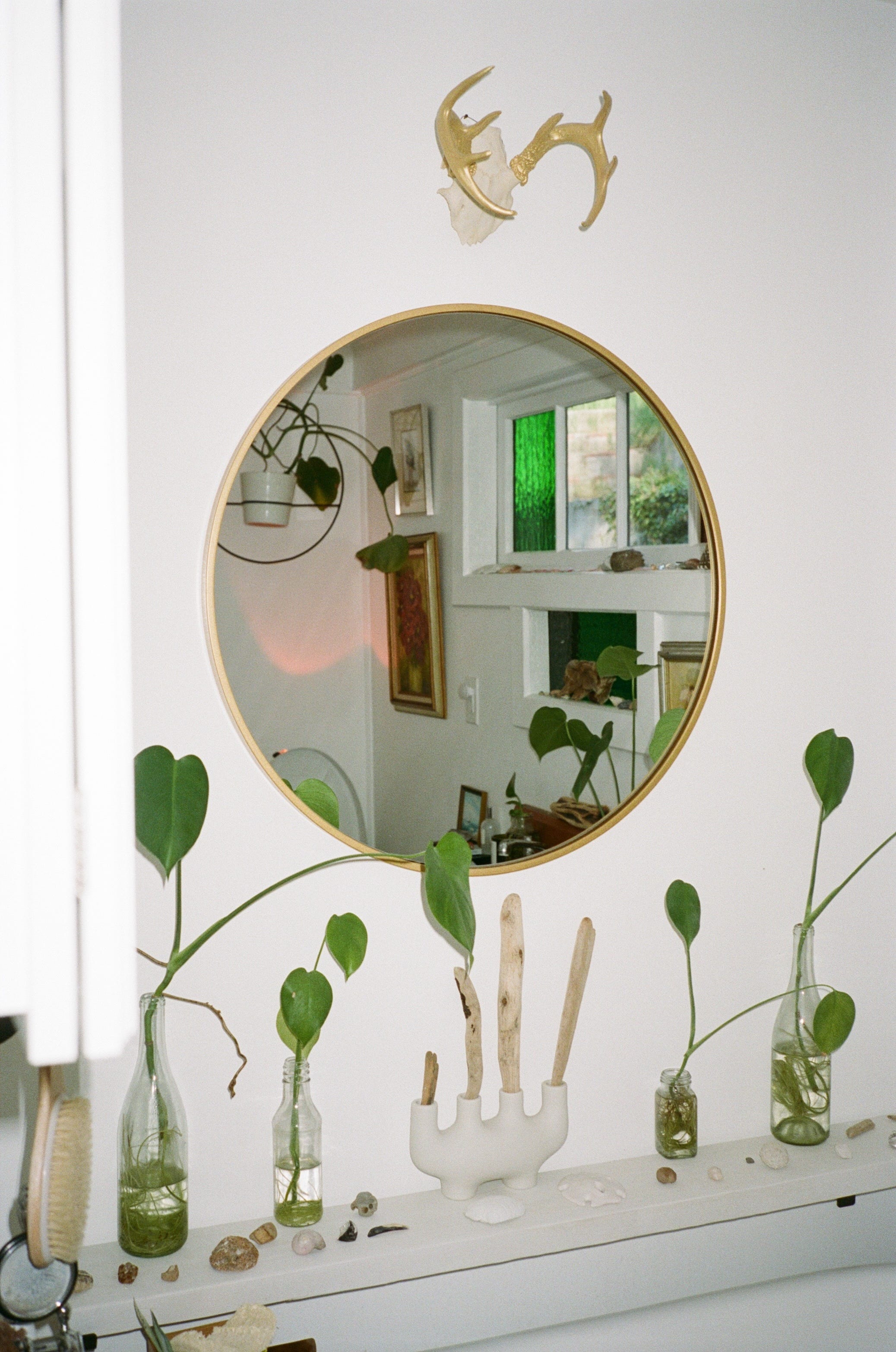
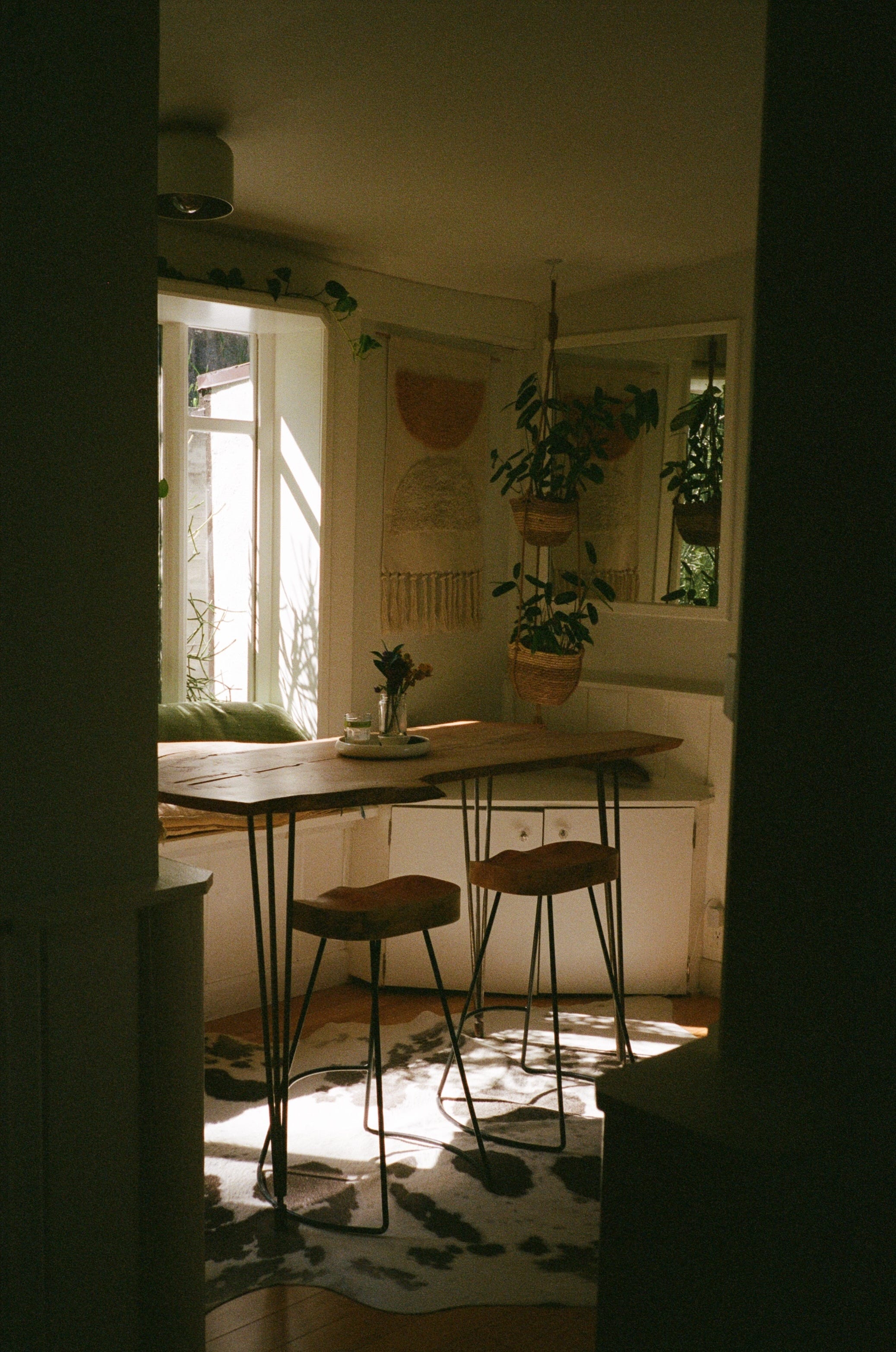
The house carries that layered history. It’s been built, modified, and adapted over time: an old hillside patchwork, as many Los Angeles homes are. That accumulation is part of its character.
I often think about the lives that unfolded within these walls: the children who took their first steps here, the celebrations, the quiet endings. It feels like a privilege to occupy even a small chapter of this history.
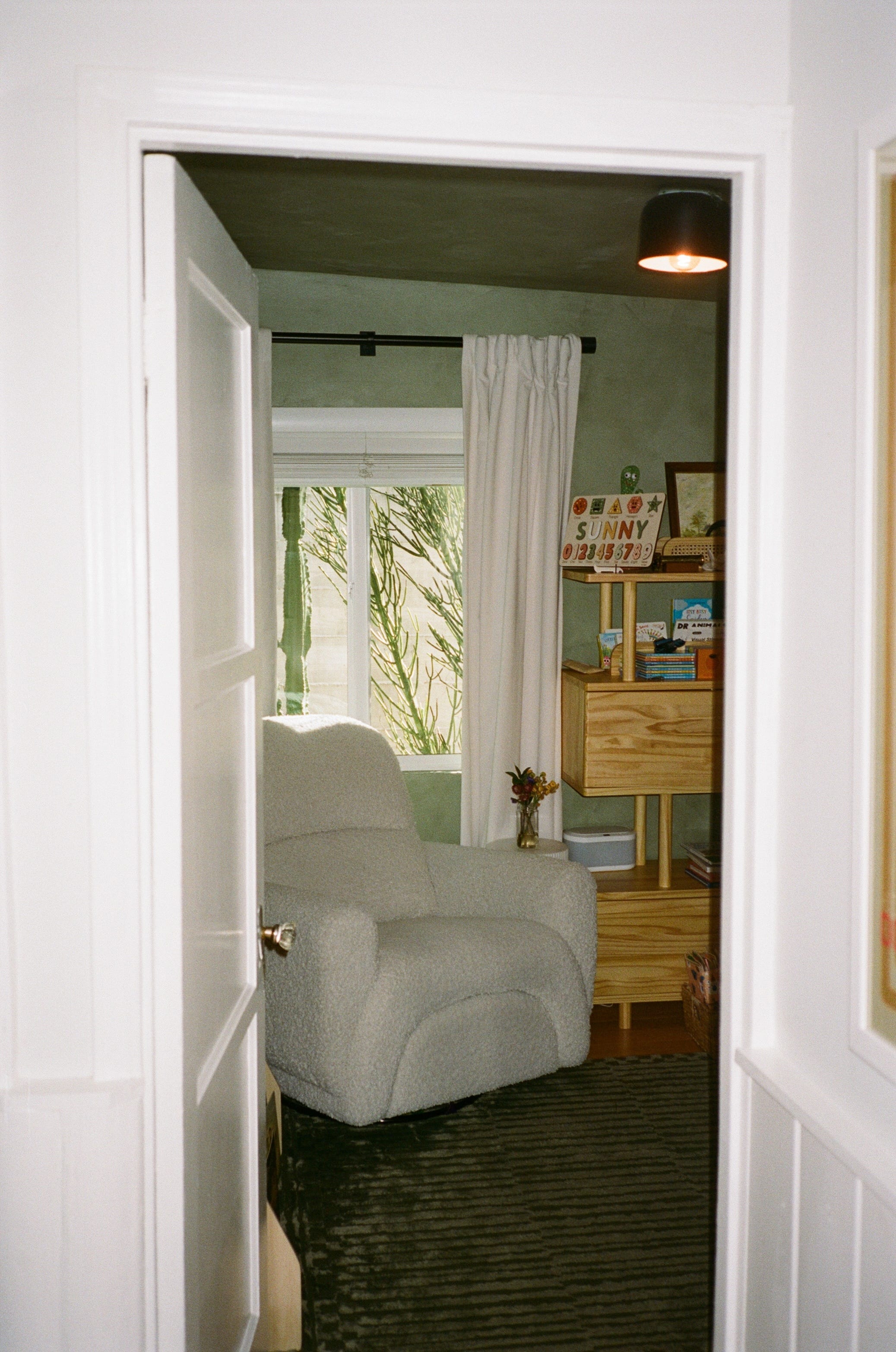
We plan to expand and refine it over time. For now, the value is in its privacy and scale. The distance from the street. The trees. The way sound moves differently here, in our little hillside valley.
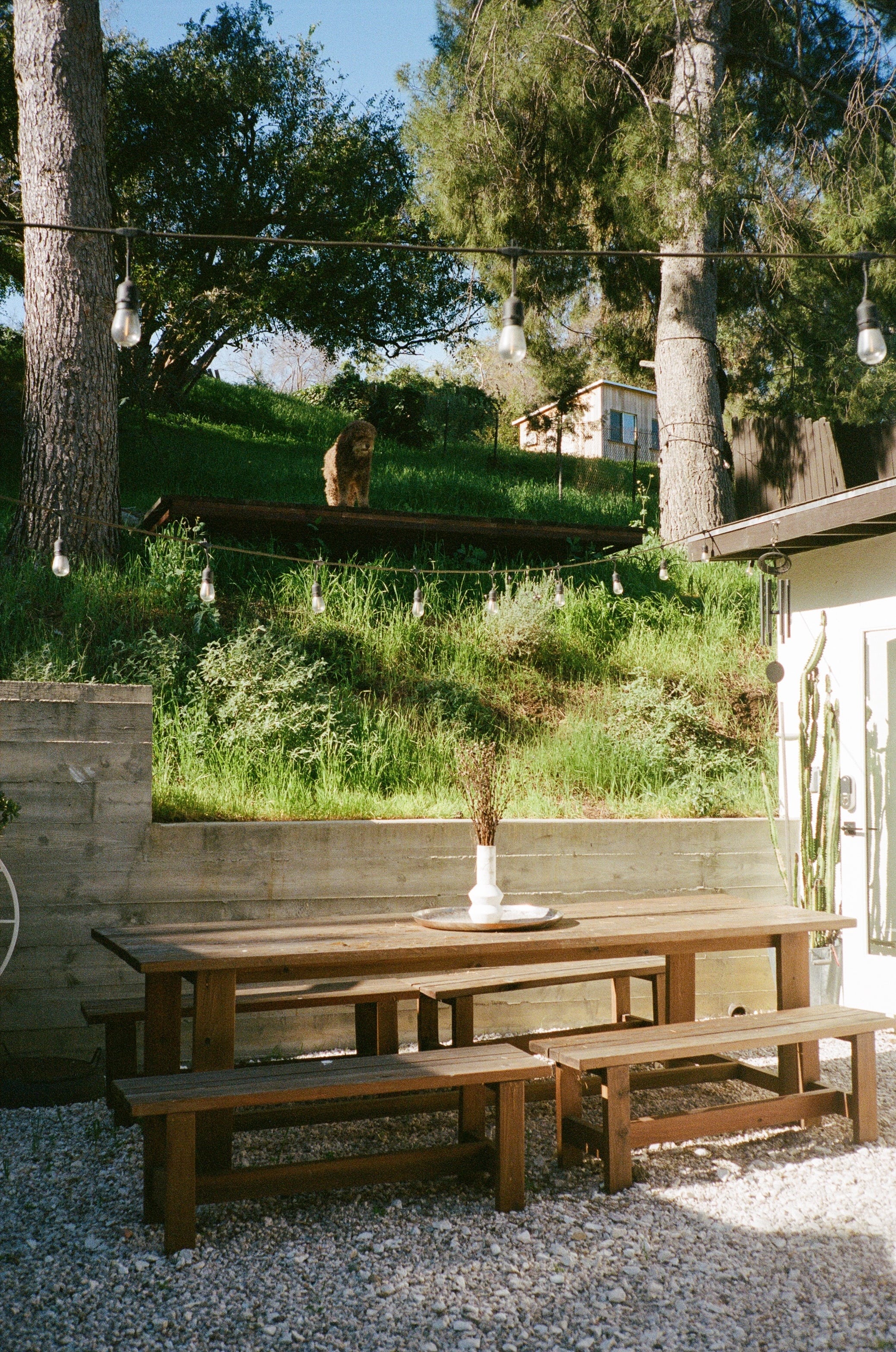
During the pandemic, the house functioned as shelter in the most literal sense. It also introduced us to our immediate community. There’s a group text. We track coyote sightings. We check in during fire season. The neighborhood feels less performative than the cities we’ve lived in before. There are deep friendships. Two of our neighbors are even some of our eleven-month-old son’s godparents.
The land has extended outward. We’ve lent our front yard to Muddy Heaven for cultivation and host beehives on the back hill through Neighborhood Beekeeper. Space, when you have it, invites redistribution. That’s one of my favorite parts of being here in Northeast Los Angeles.
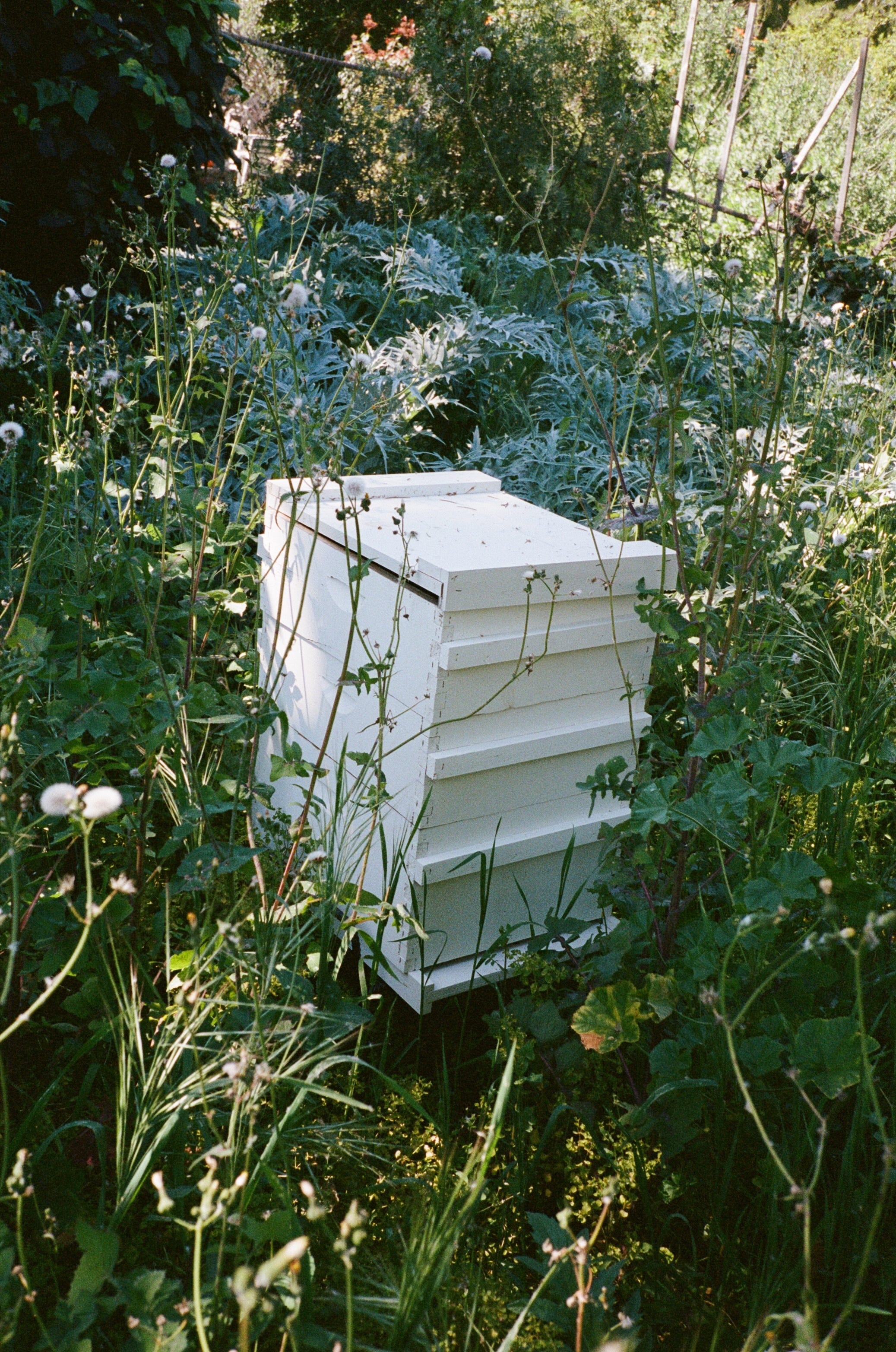
SANCTUARIES LA BEGAN WITH THIS HOME
Living here shifted how I think about space: not as backdrop, but as infrastructure for a life. The privacy changed our pace. The land demanded attention. The neighborhood reshaped our idea of community. Over time, I started noticing how much of what feels stable or generous in a city begins at home.
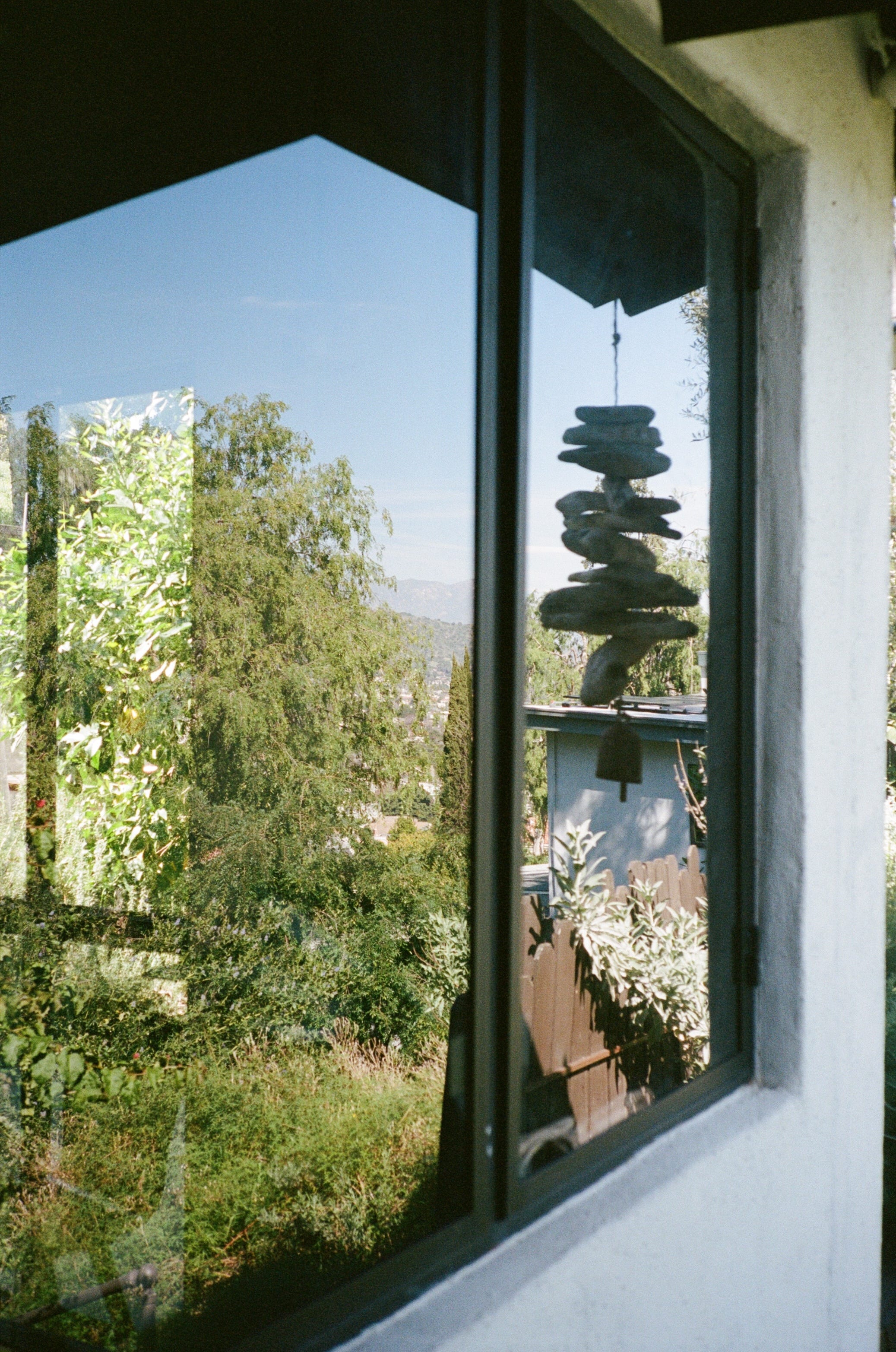
This hillside property, at the edge of Eagle Rock and Highland Park, made that visible. It’s where the idea of sanctuary stopped being abstract and became practical. It’s what led me to seek that in other parts of LA.
This was such a beautiful read! I remember being so sad when you left NY, but in hindsight I think I always knew LA was your true home 💛