


SANCTUARIES LA EXPLORES THE QUIETER SIDE OF LOS ANGELES THROUGH DESIGN.
ROOTED IN THE BELIEF THAT SANCTUARY EXISTS EVERYWHERE, OFTEN HIDDEN IN PLAIN SIGHT.
IF YOU ENJOY THIS PUBLICATION, CONSIDER SUBSCRIBING OR SHARING IT WITH A FRIEND.
Welcome to Detours — a new series on trips, retreats, and sanctuaries within driving distance of LA. While the main publication stays close to home, Detours follows the impulse to leave it: where to go for a weekend, what's worth the drive, and the places I want to return to.
PHOTOGRAPHY BY SHELBY NICO DIAMOND
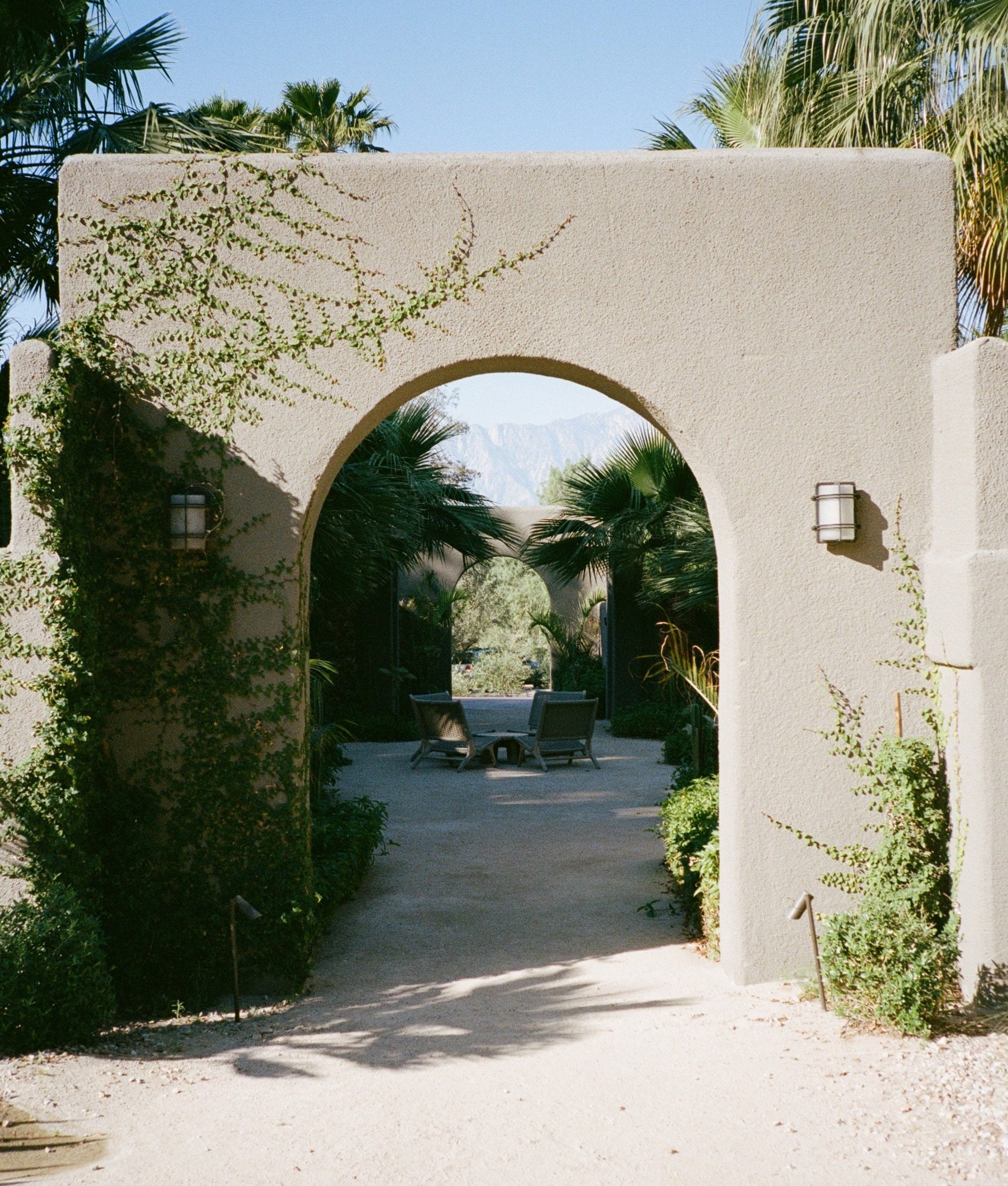
Two weeks ago I booked myself a solo retreat at Two Bunch Palms — a retreat I’d had on my list forever.
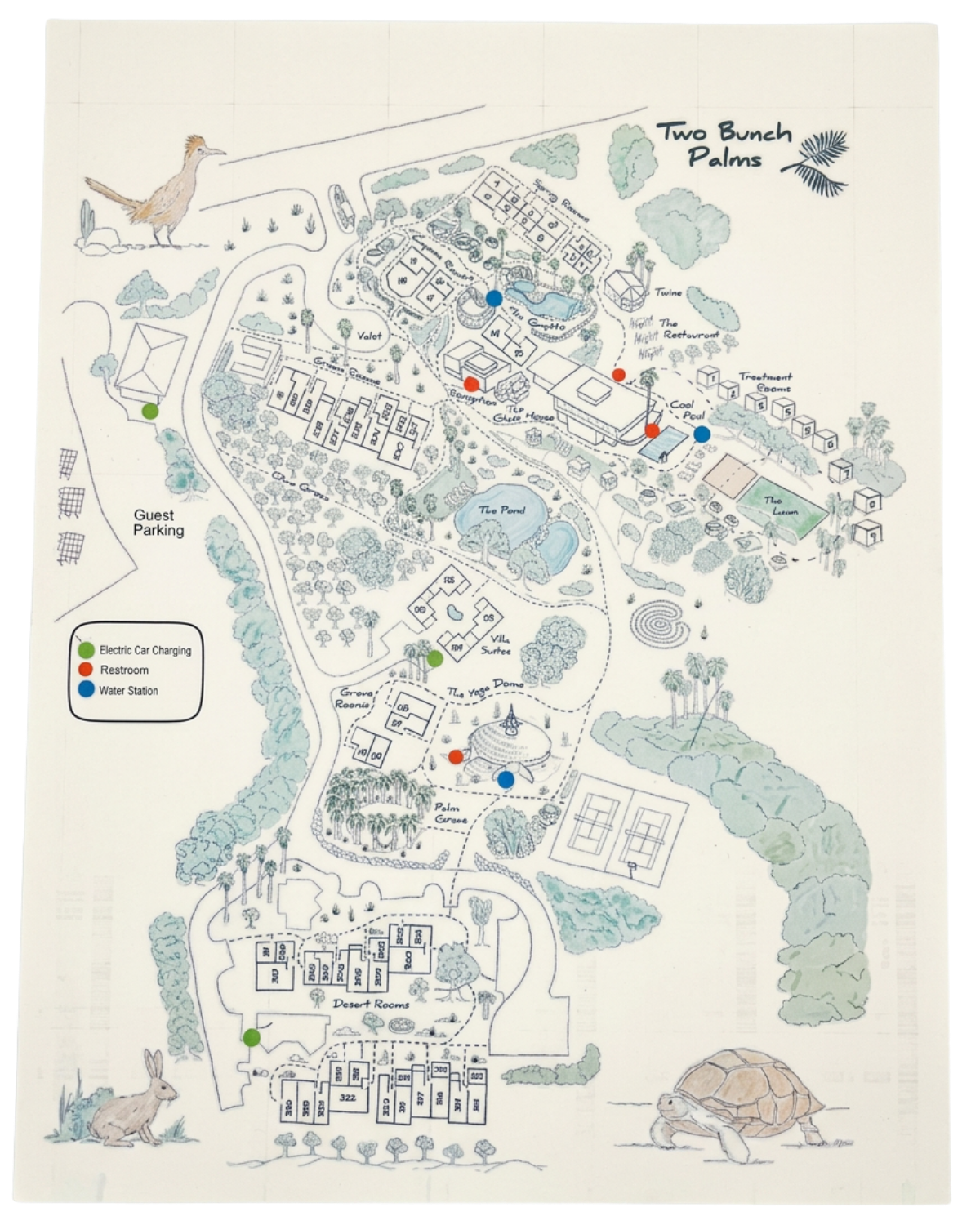
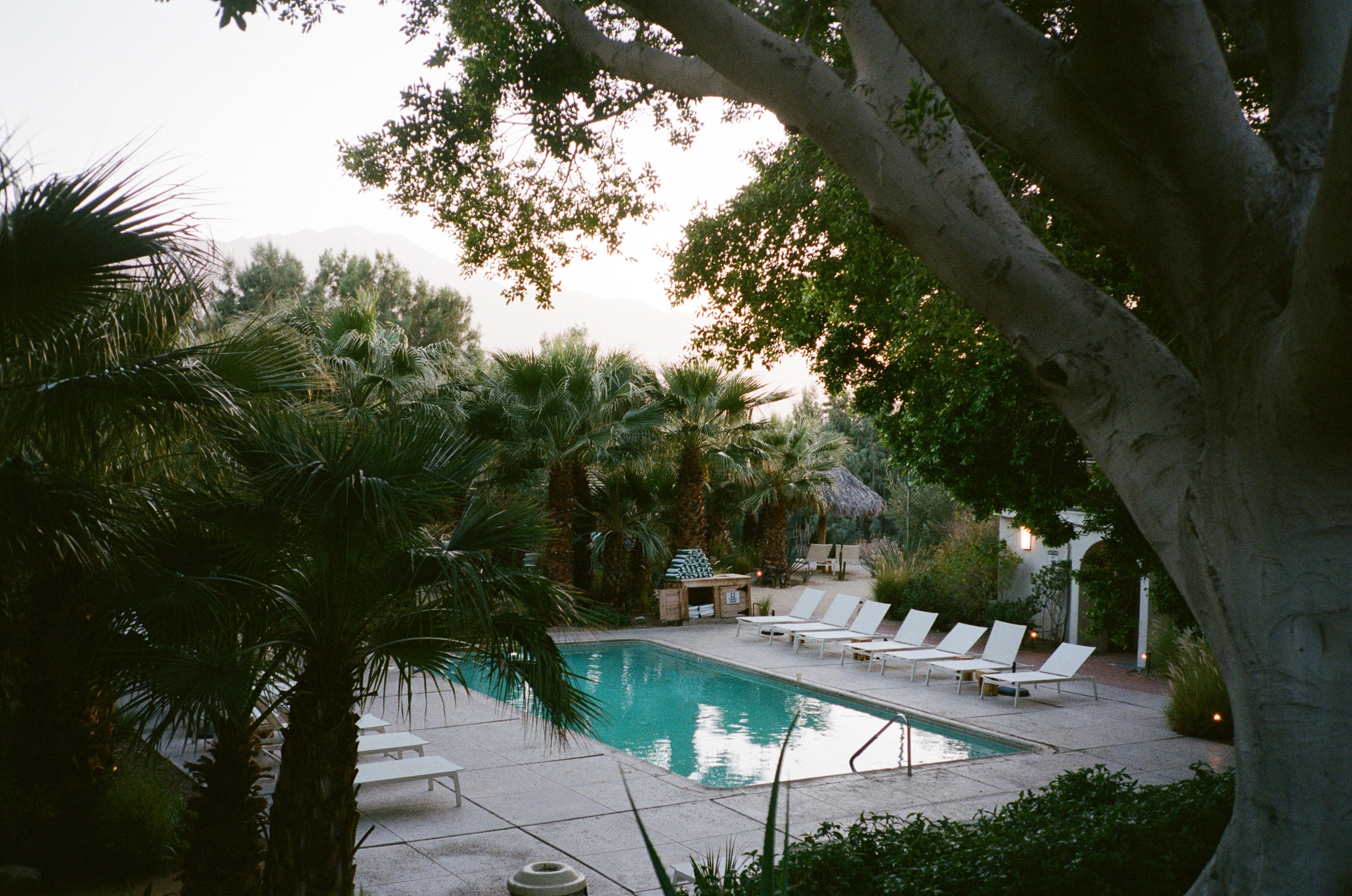
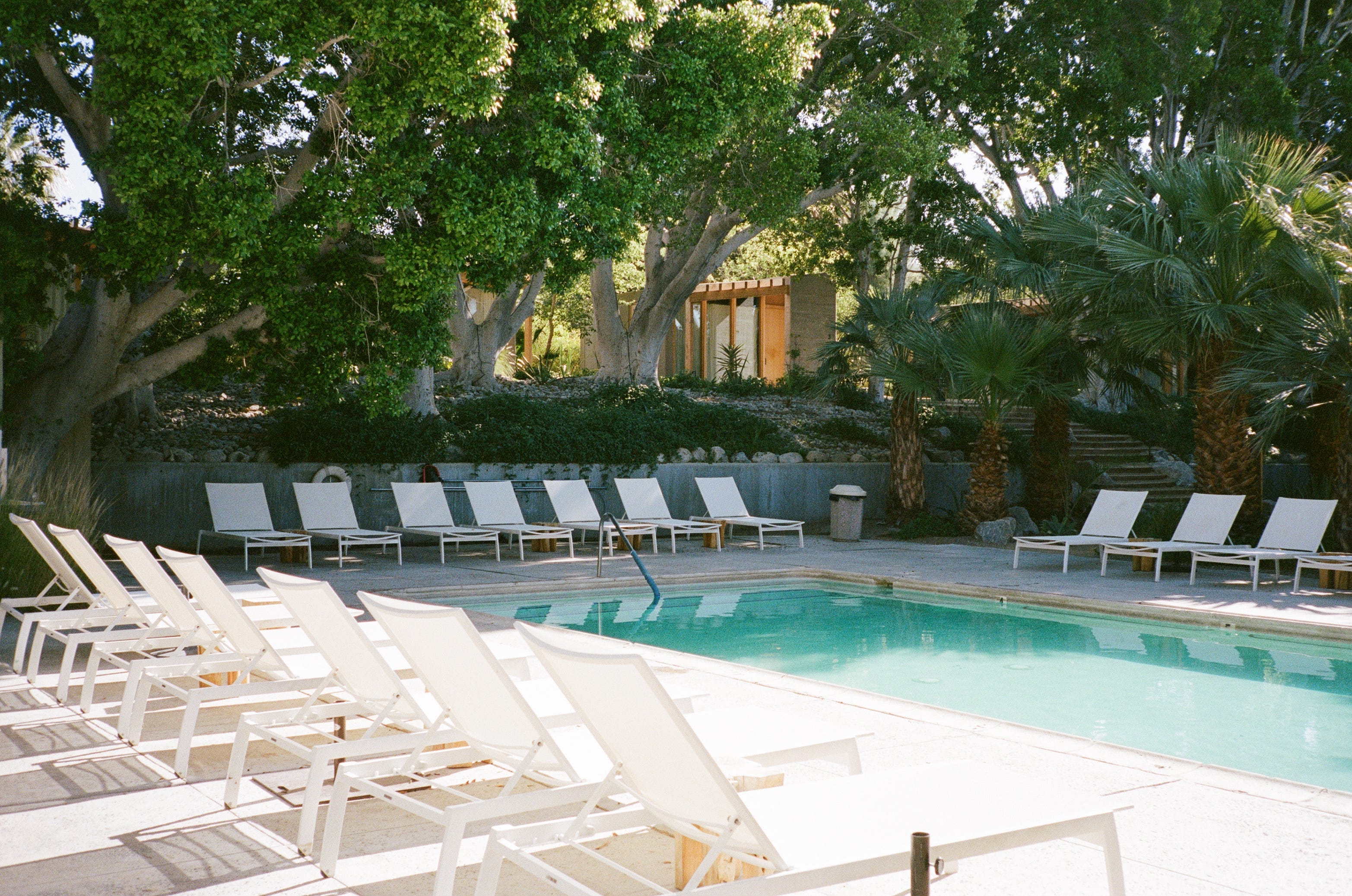
You arrive through an unmarked gate in a stretch of Desert Hot Springs that gives you no reason to expect what’s behind it. No sign, just a guard booth in an unremarkable part of town. The gate lifts and you’re somewhere else entirely — 277 acres tucked against the foothills, the Little San Bernardinos behind you with snow still melting off the top.
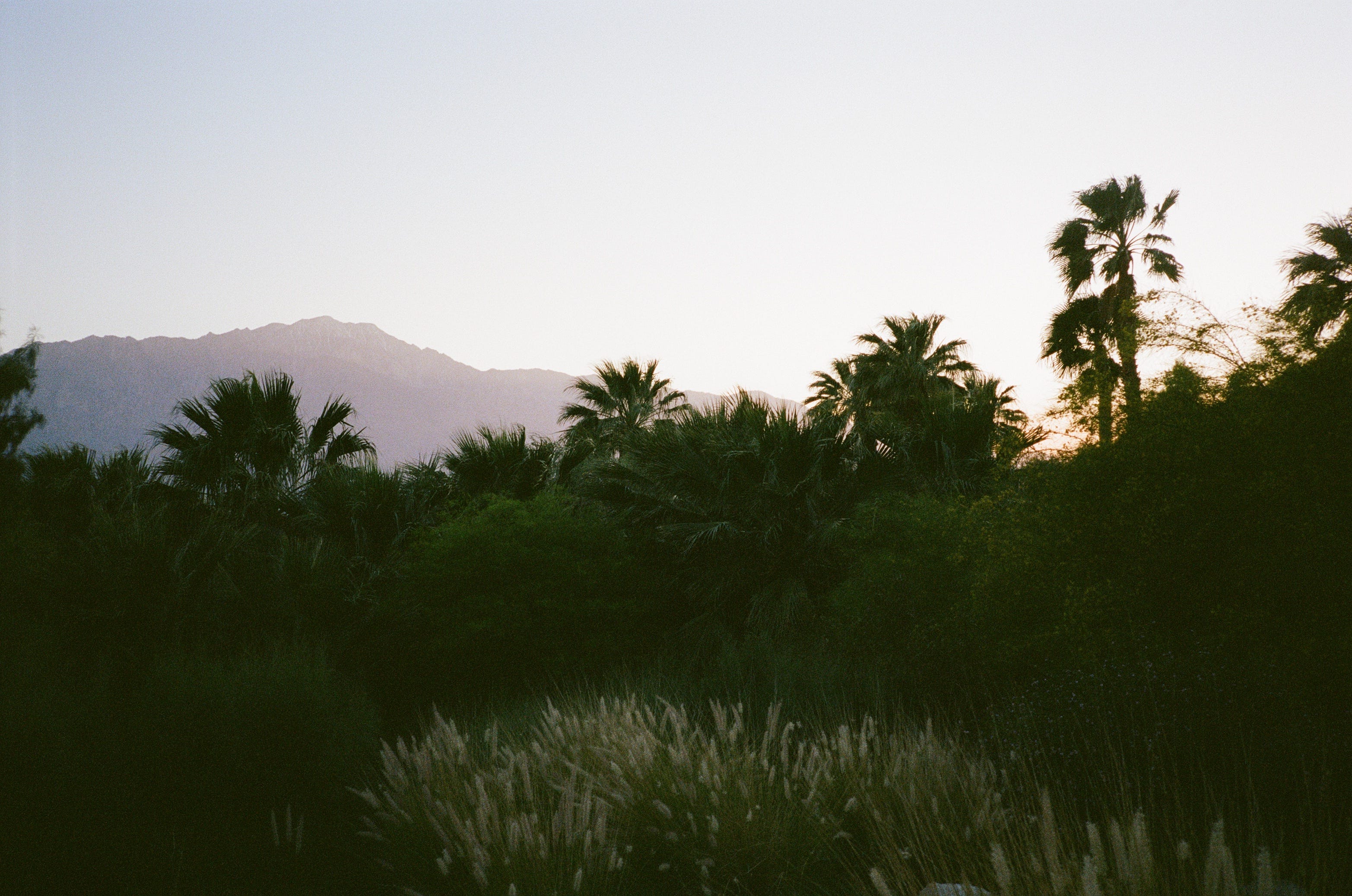
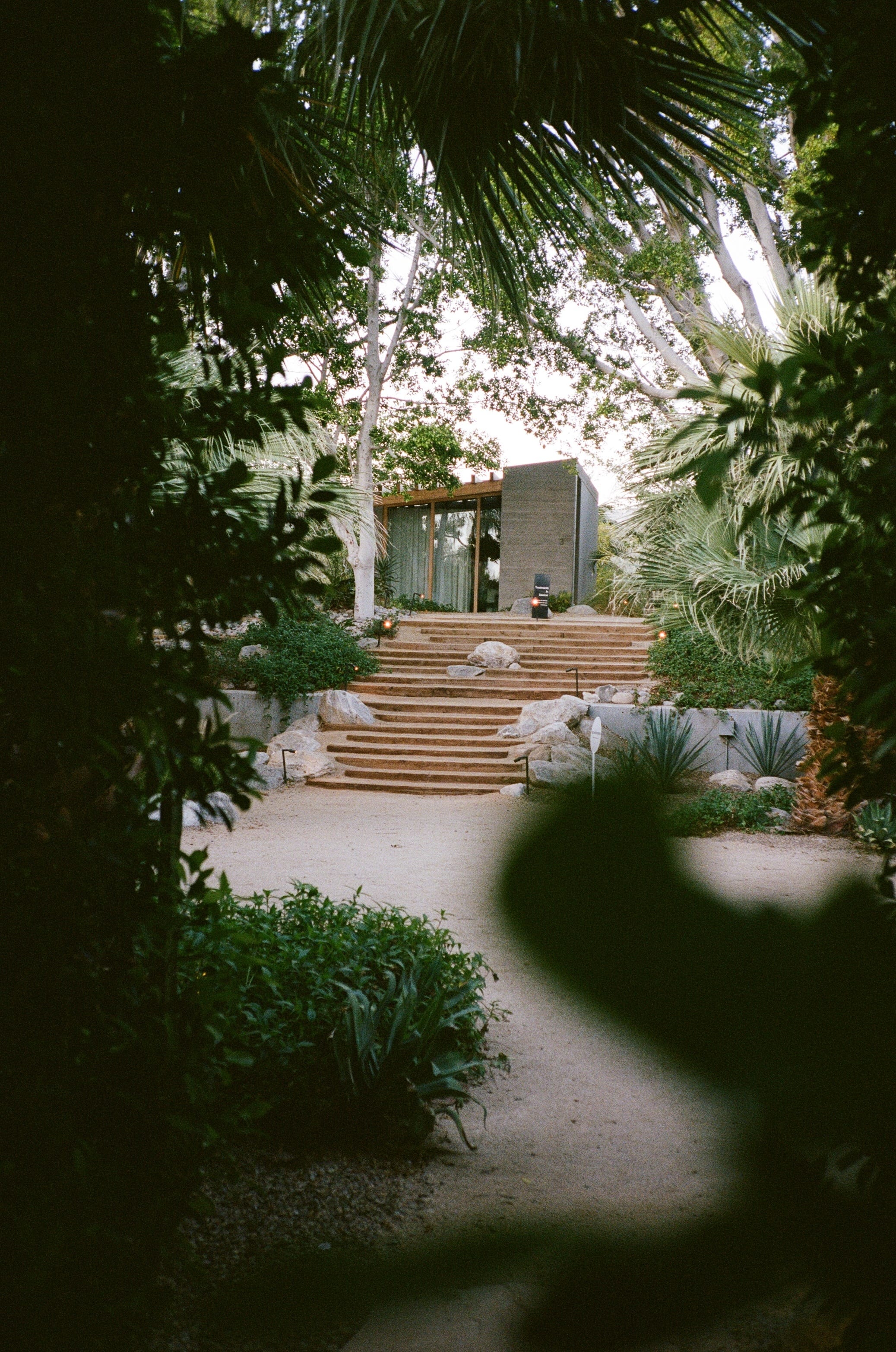
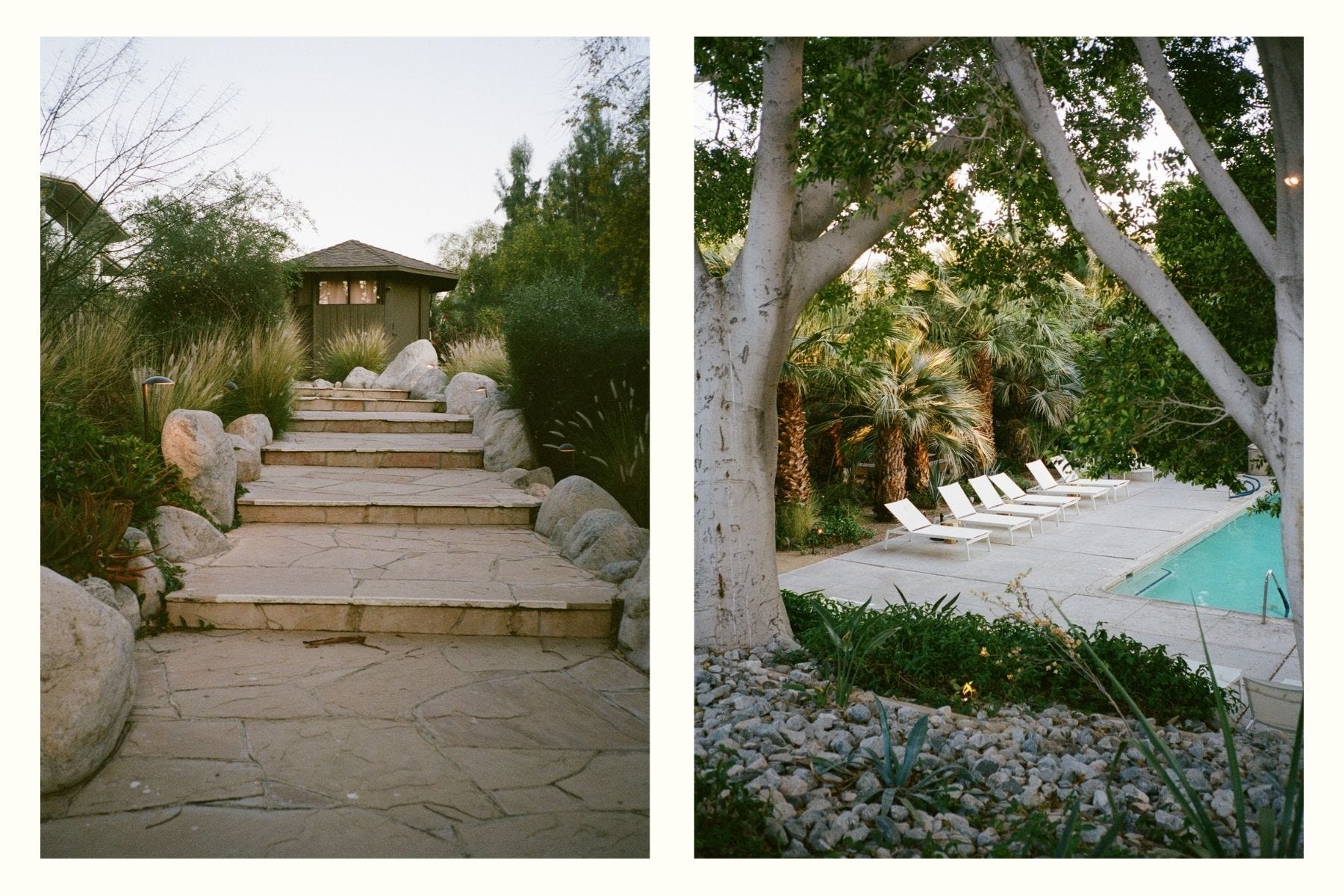
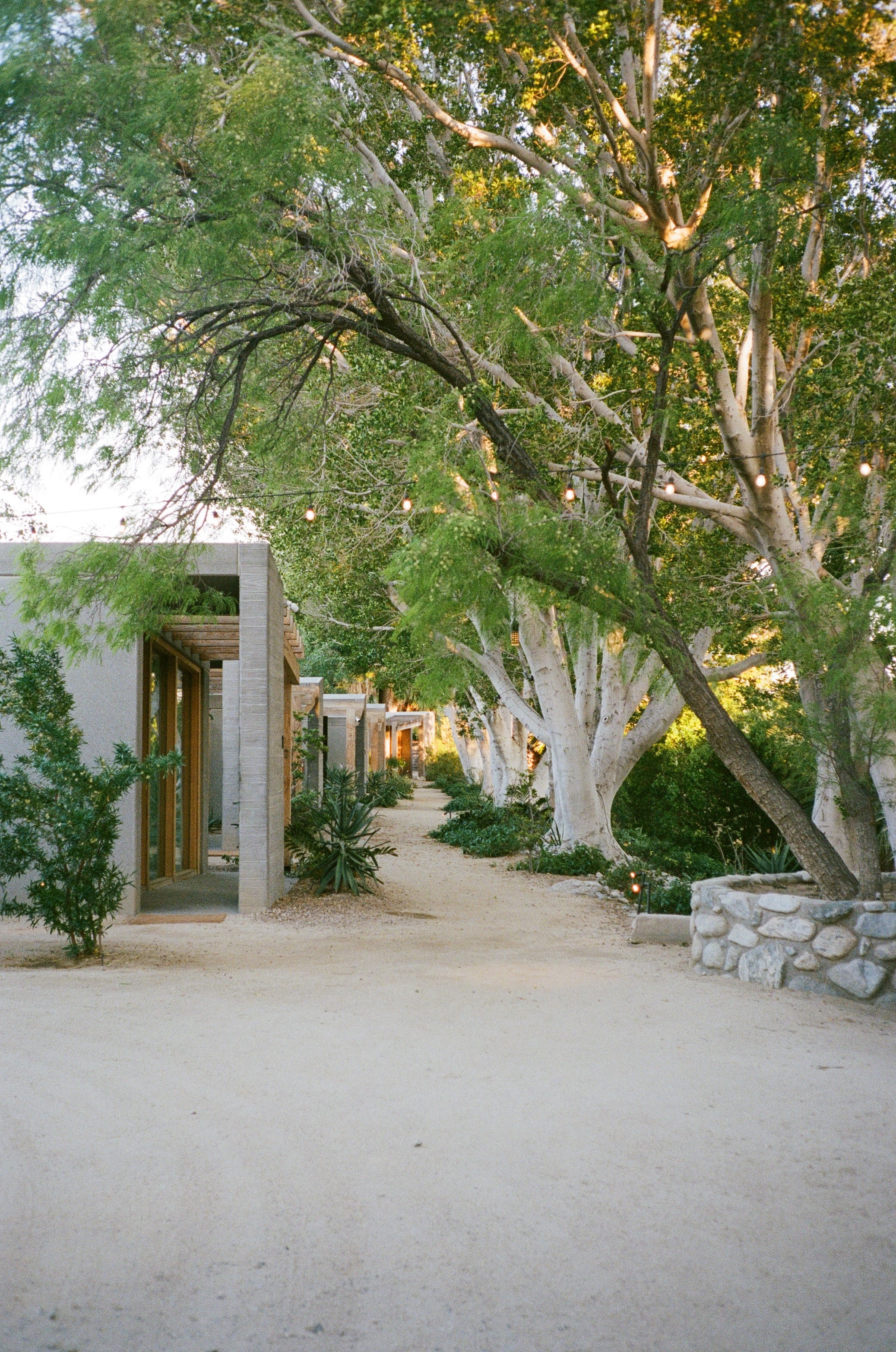
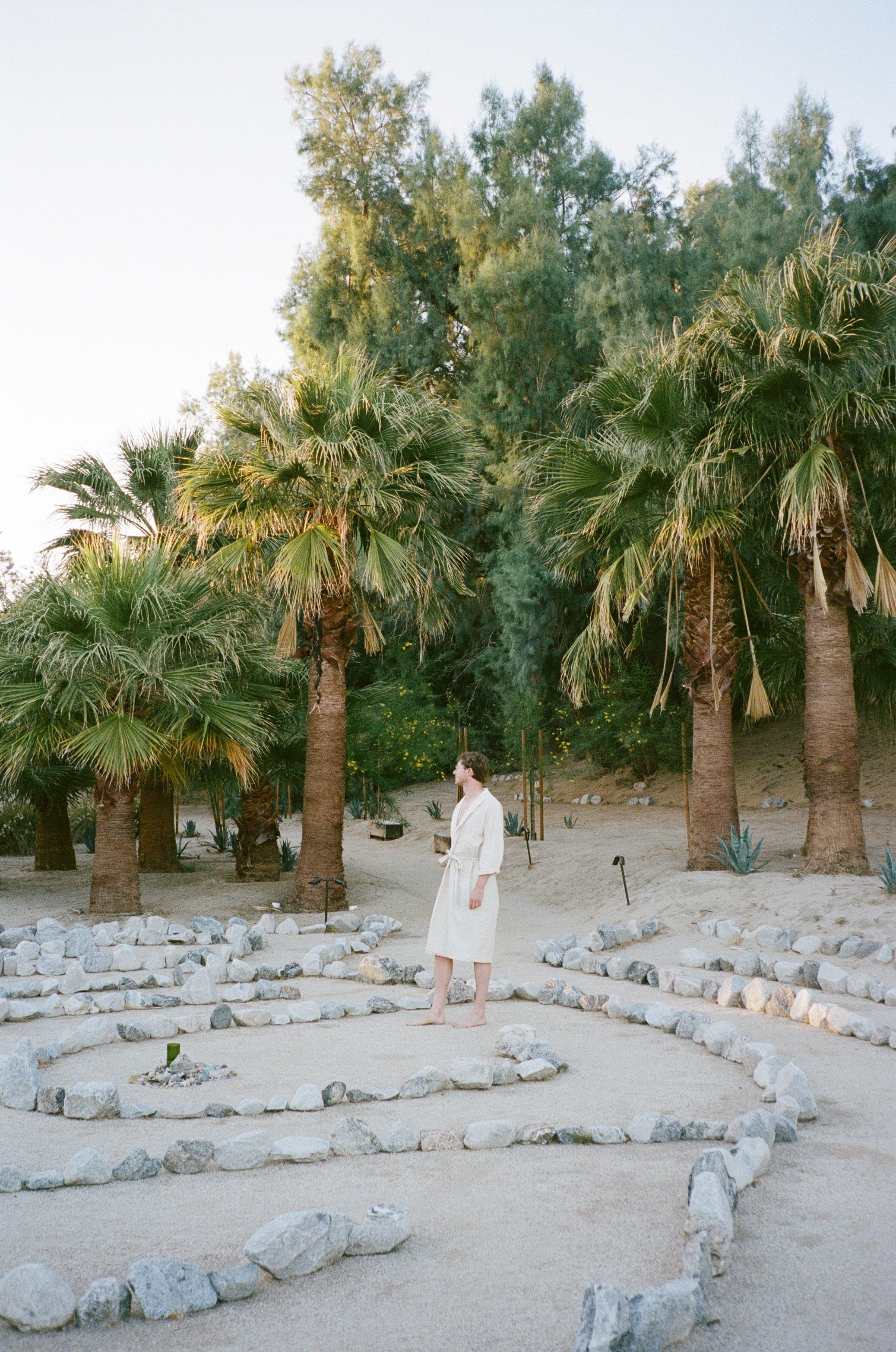
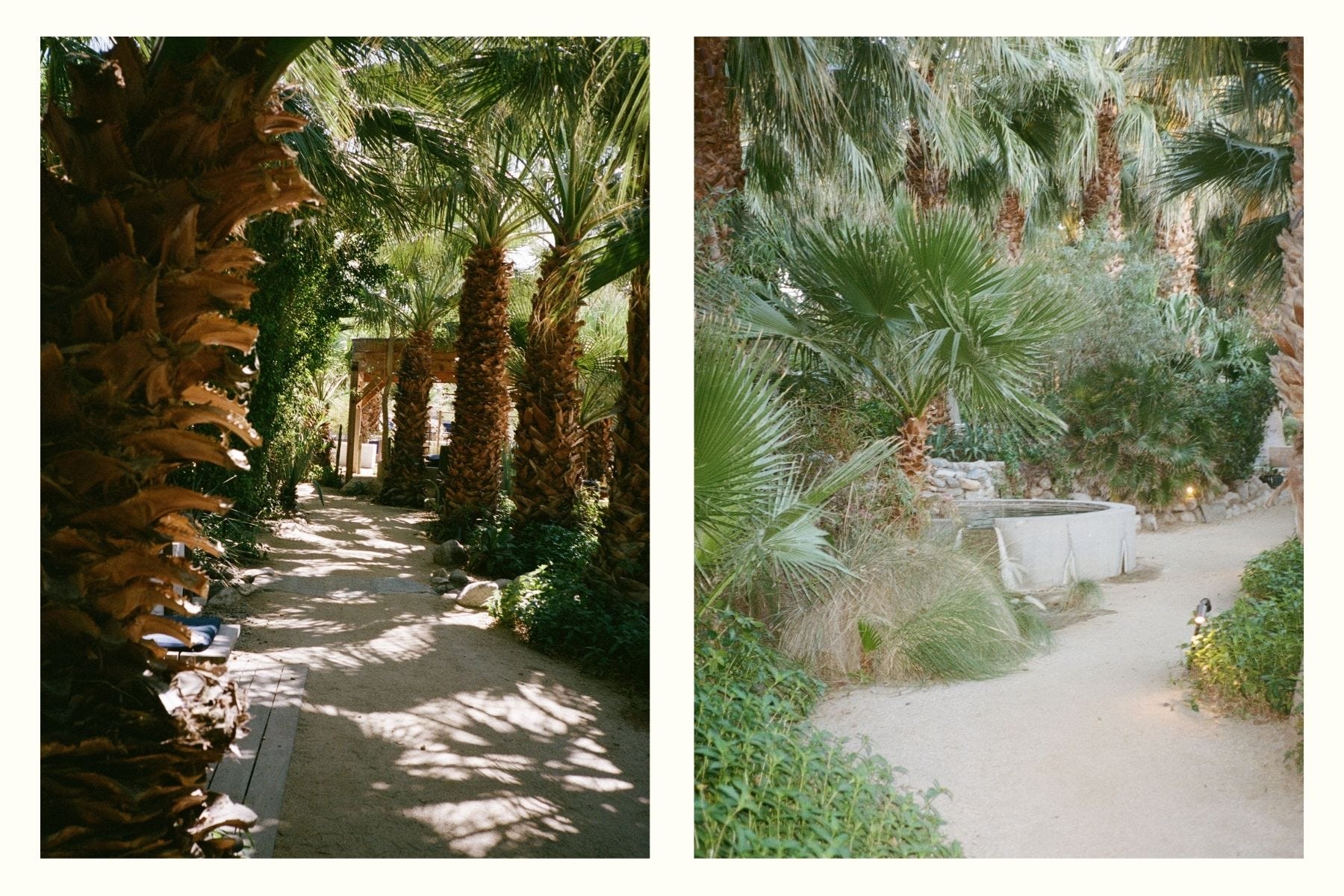
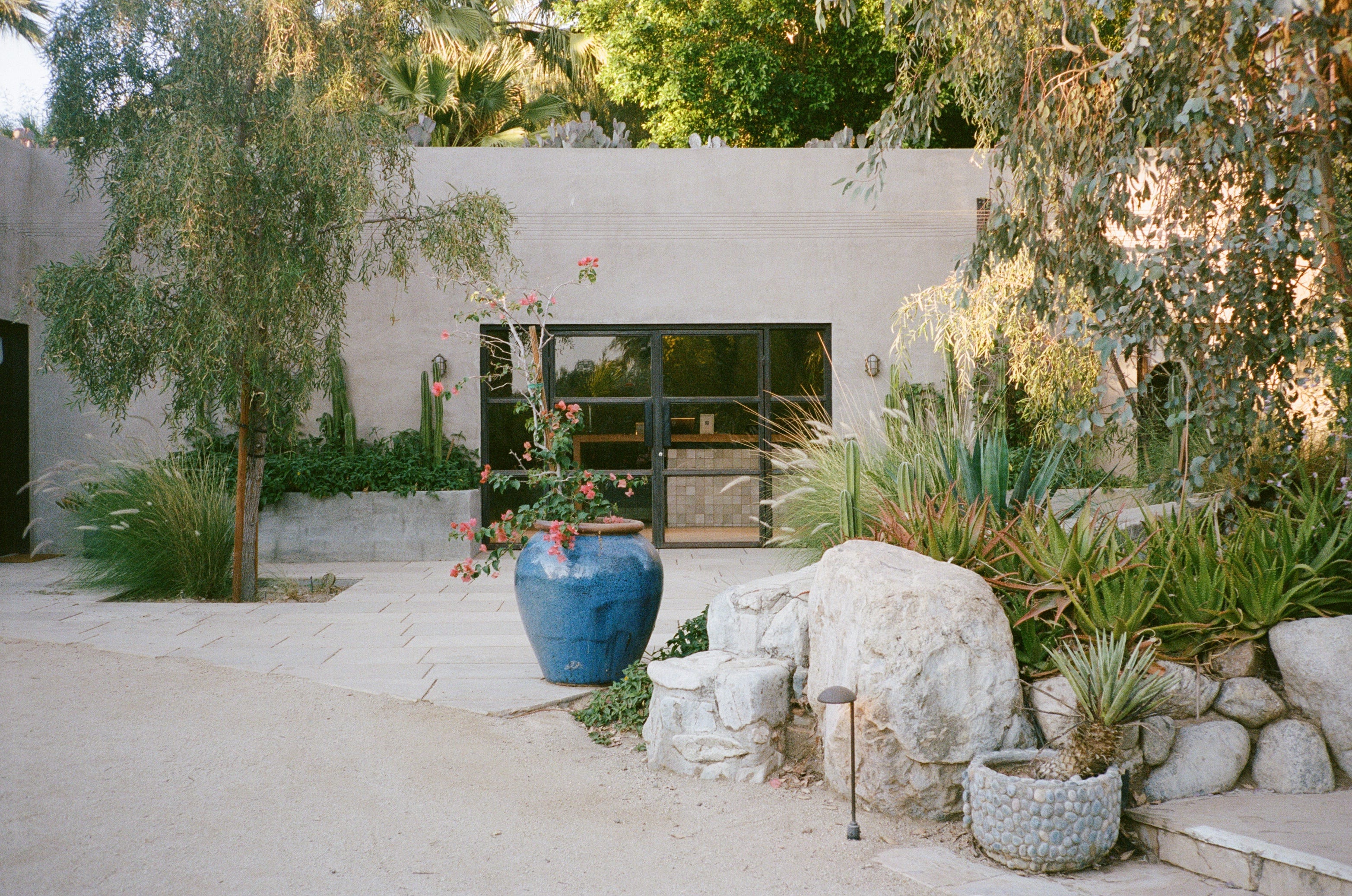
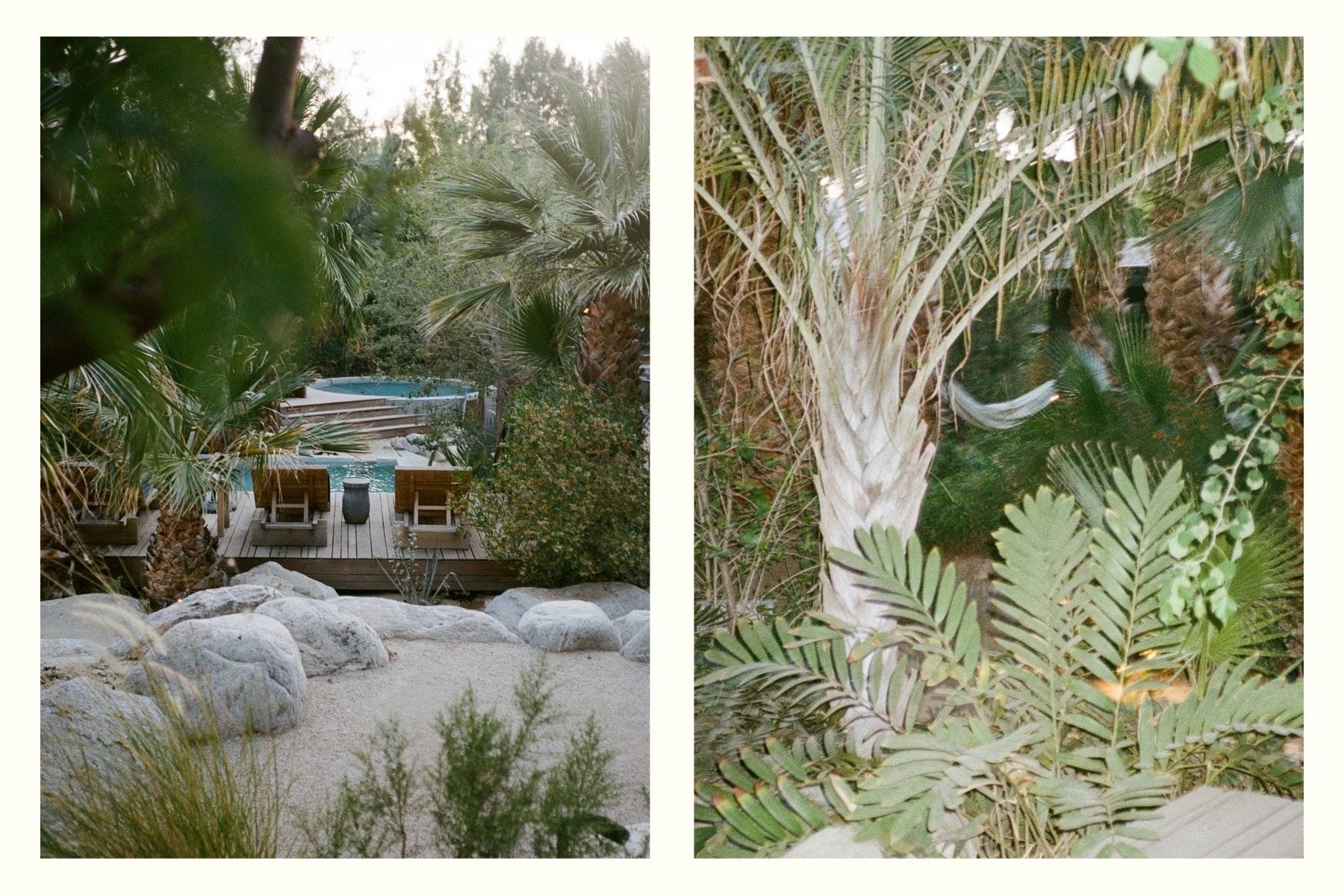
The first thing I noticed was the landscaping. A palette of greens, creams, blues, grays, and yellows, with a sea of young Palo Verde trees in full bloom scattering pops of yellow across the paths. When I dug into it, I realized the grounds are the work of Terremoto, the LA landscape firm behind the Rome Compound.
They also designed the landscape for the new spa, which opened in 2023 alongside the spa buildings by Sharif, Lynch: Architecture, with interiors by Studio MAI. Native, a little wild, deeply site-specific. Both the landscape and the architecture feel like a lush anomaly against the surrounding terrain — a magical little pocket of the desert.
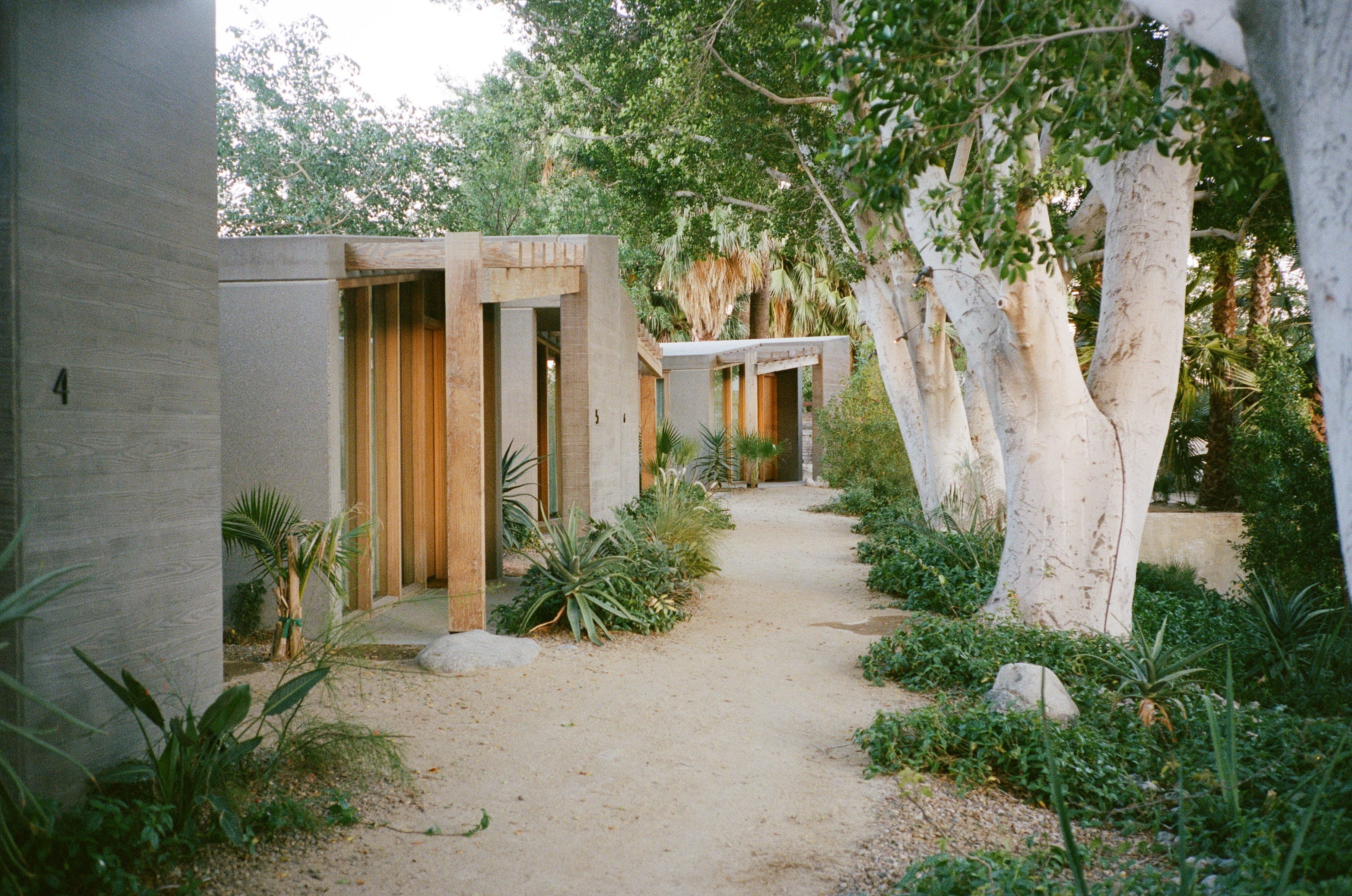
The architecture of the new spa buildings is the kind of thing I add to my vision board. A row of low, single-room pavilions threaded through the trees, each one built in board-formed concrete — a technique where the concrete is cast against rough-sawn timber planks so the wood's grain, knots, and seams are imprinted into the finished wall.
Le Corbusier coined the term béton brut, or "raw concrete", for this technique in the 1950s in Marseille; Tadao Ando later made it his signature. Here it's paired with heavy exposed timber lintels and full-height glass, and the effect lands somewhere between Scandinavian and Brutalist — warm where you'd expect cold, softened by the desert around it. A more organic Ando. Exactly how I'd build a cluster of micro-rooms in nature, if I ever got the chance.
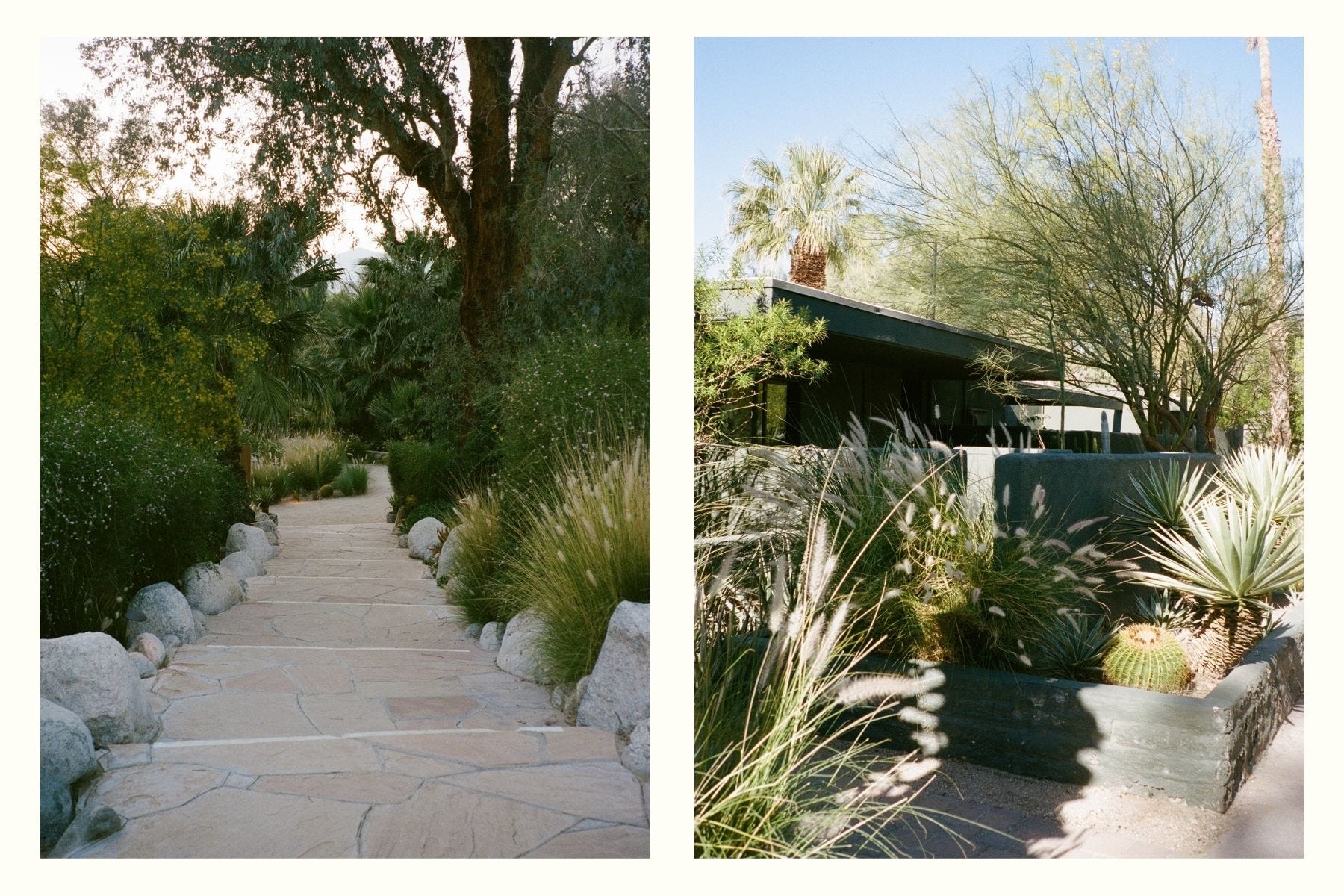
The second day turned overcast and windy, the palms thrashing in the gales, a welcome reprieve from the early summer heat. The whole property took on a mystical quality, the enclave feeling even more improbable than it already was.
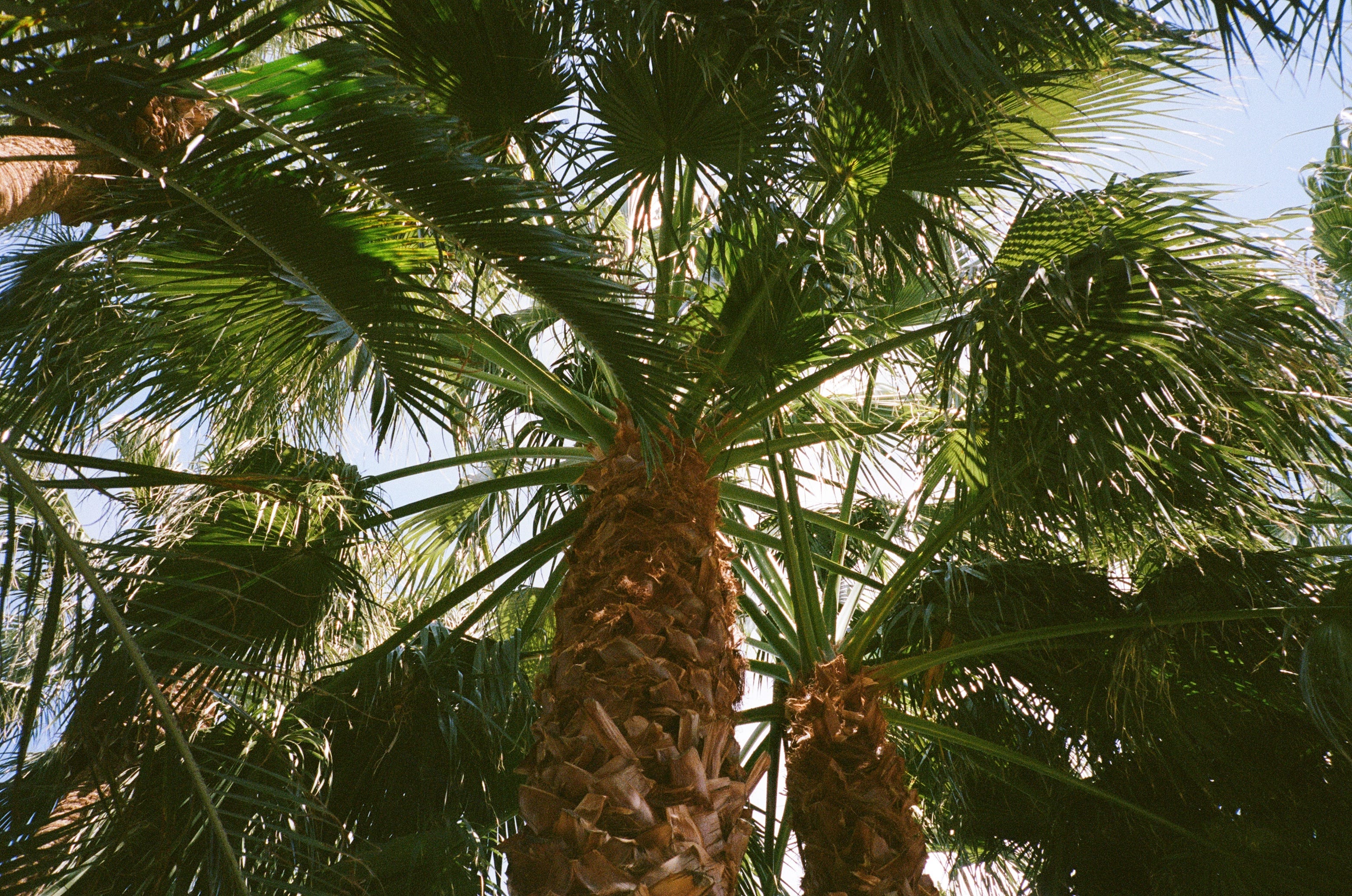
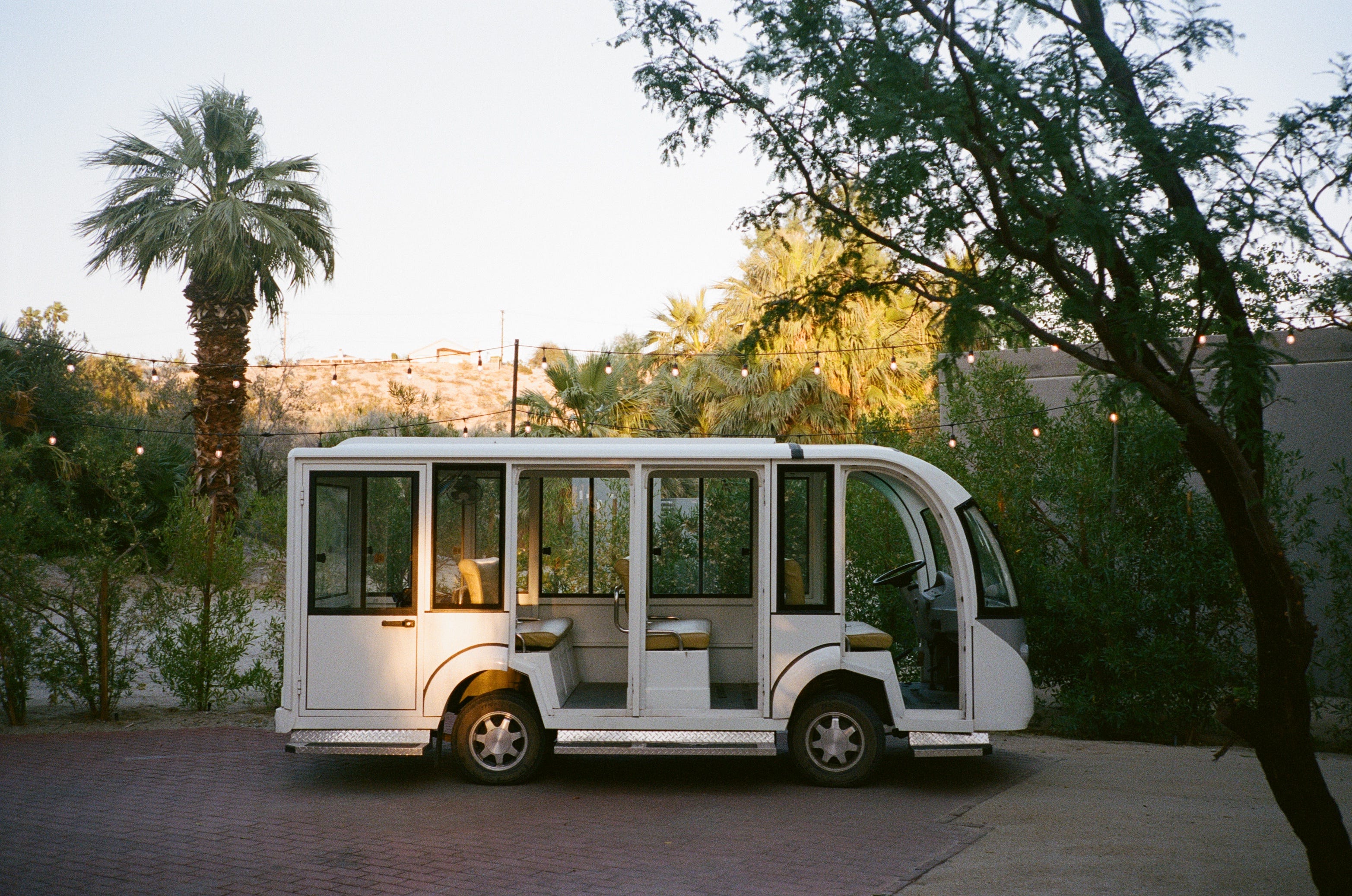
To understand how any of this got here — the palms, the water, the resort itself — I took the property’s guided history walk with Kerry Berman, a certified California Naturalist, published author, and former Vietnam tunnel rat who’s been leading these tours for twelve years.
He’s a kinesthetic teacher — every fact comes with a laminated map or a photograph or a gold dollar coin (which he hands out when you get the answer his questions correctly).
A few things from his walk I haven't stopped thinking about:
The property sits directly over the Mission Creek branch of the San Andreas Fault; Desert Hot Springs is the only incorporated city on the North American tectonic plate, and the fault is what pushes the water up.
The Cahuilla people who lived here for centuries knew the trick: wherever those specific palms clustered in the desert, water was within eight feet of the surface — the exact depth of a California Fan Palm's root ball. They built around that fact. The resort, much later, did the same.
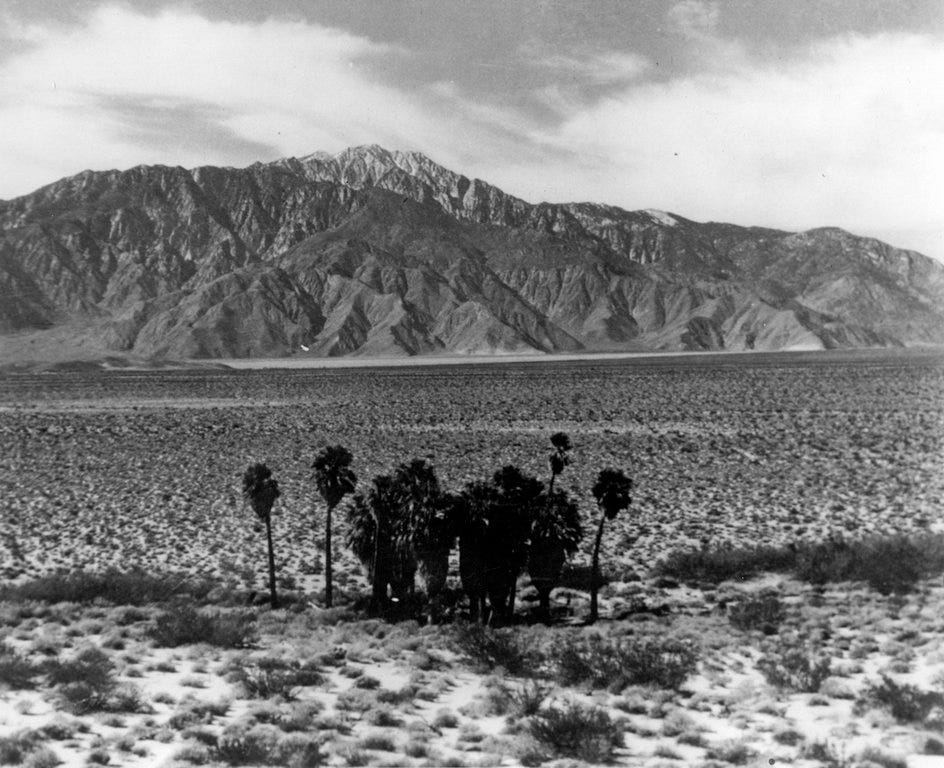
The other thing worth knowing is that almost everything you've heard about the property's origins is wrong. The famous Al Capone hideout legend, perpetuated for decades as marketing, doesn't survive a date-check. Capone was in a Georgia penitentiary by 1932 and Alcatraz by 1934, and the resort wasn't built until 1940.
The real story is quieter: a man named Al Wertheimer, head of Detroit's Purple Gang, built a small boutique hotel here in 1936 called the Colonial House. Hollywood actors were contractually forbidden from traveling more than two hours from the studio lot — ruling out Vegas and making Palm Springs the place — and the property became a discreet hideaway for them. Two Als, and not the one everyone thinks.
Originally the property housed a casino and a brothel. Years later it got turned into a spa, and is still an adults-only resort to this day.
The current owners, the Karen family, took over in 2015. Their head of landscaping has been there 25 years; some staff, 30. You can feel that kind of tenure in how the property holds itself — nothing is rushed, nothing feels outsourced.
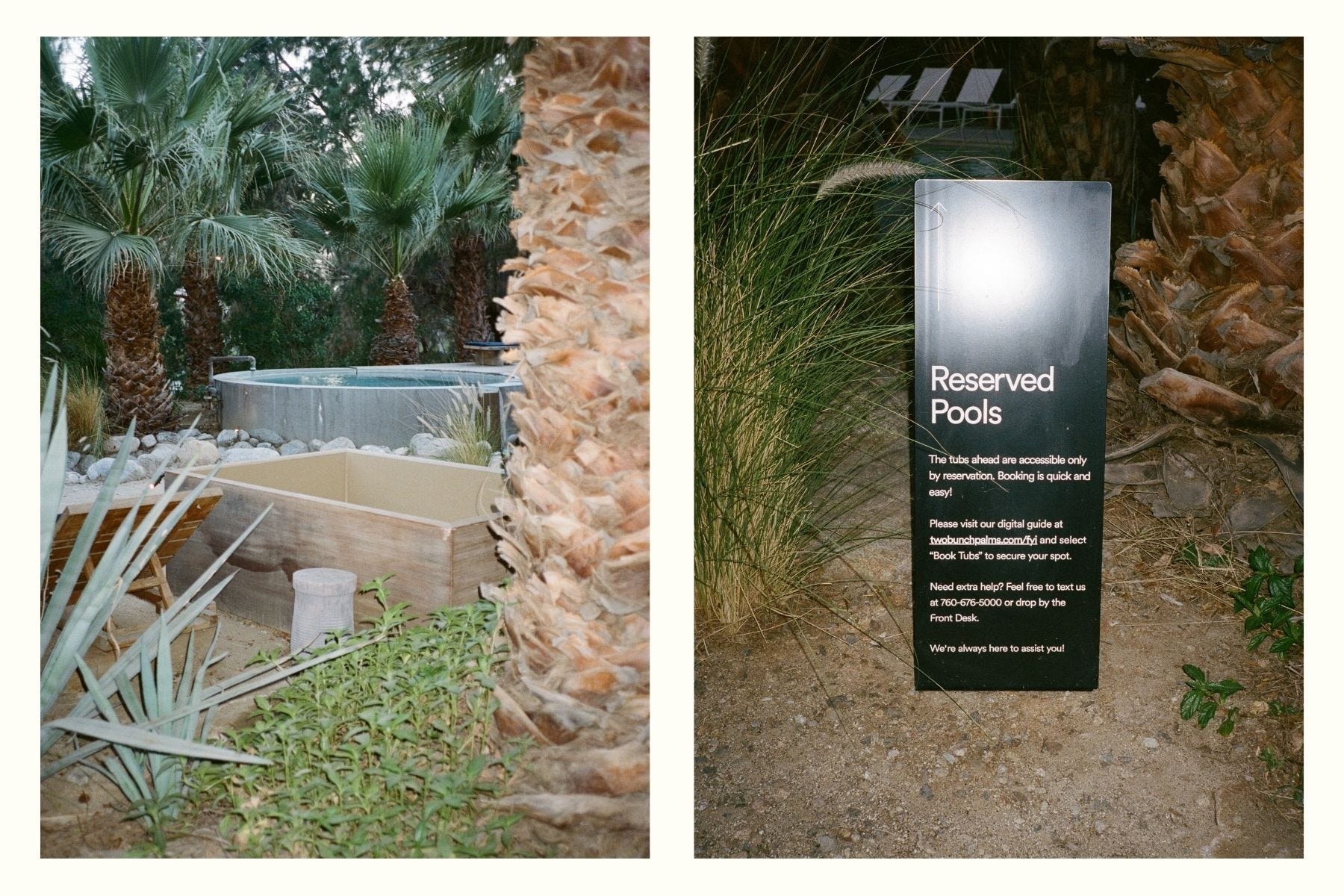
That held-ness is most of what the place is, once you stop moving through it and start sitting in it. Teak and concrete tubs are scattered everywhere. You can reserve private ones for free or drift between the communal ones.
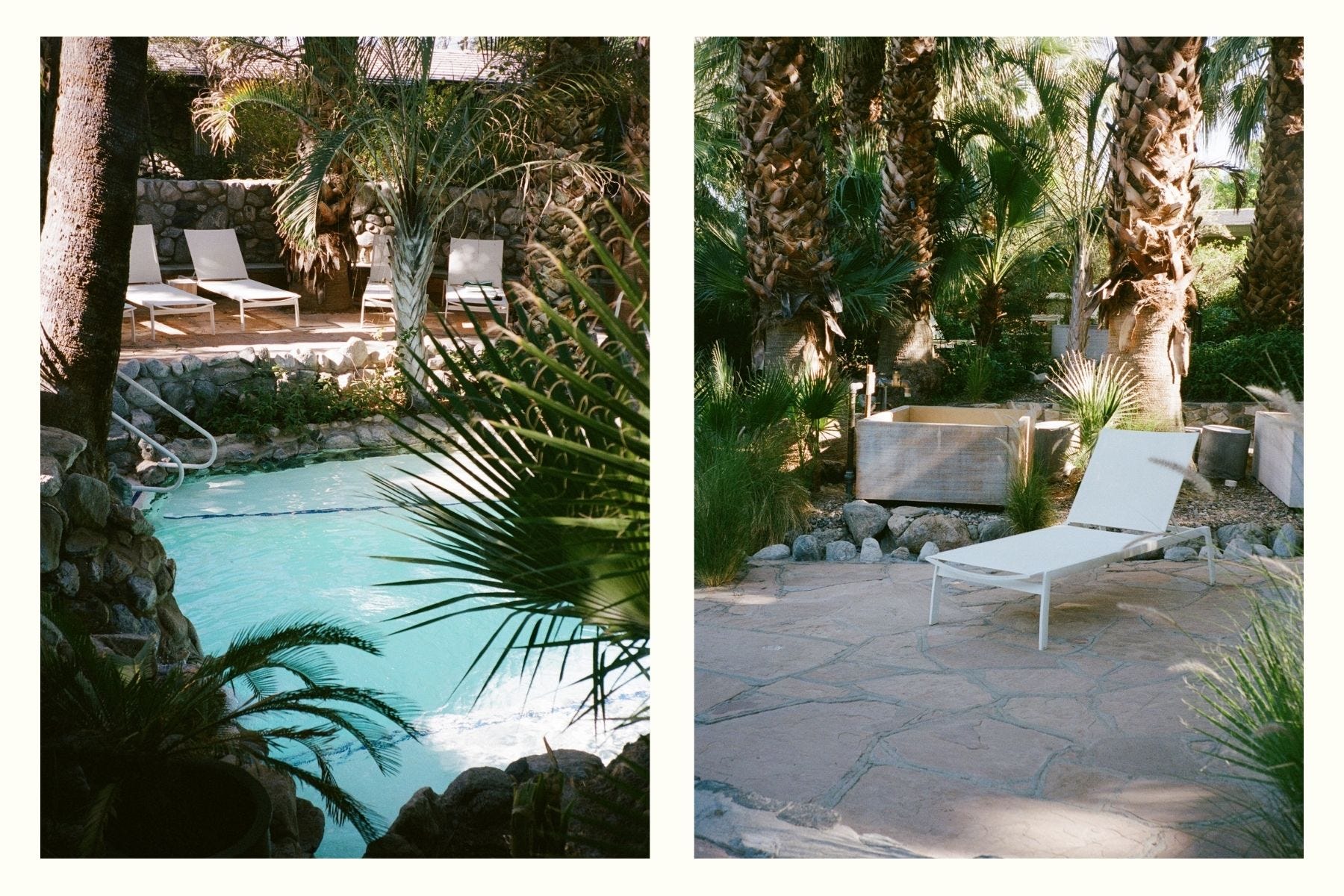
The newer tubs are a design piece in themselves: cast concrete and untreated teak, set in low rectangular beds against the gravel, the wood silvering as it ages. Many of them sit about a foot above ground, so you're slightly elevated when you soak, palms rising above you, a few with a stream running below — small details you only notice after you've been lounging in one for forty minutes.
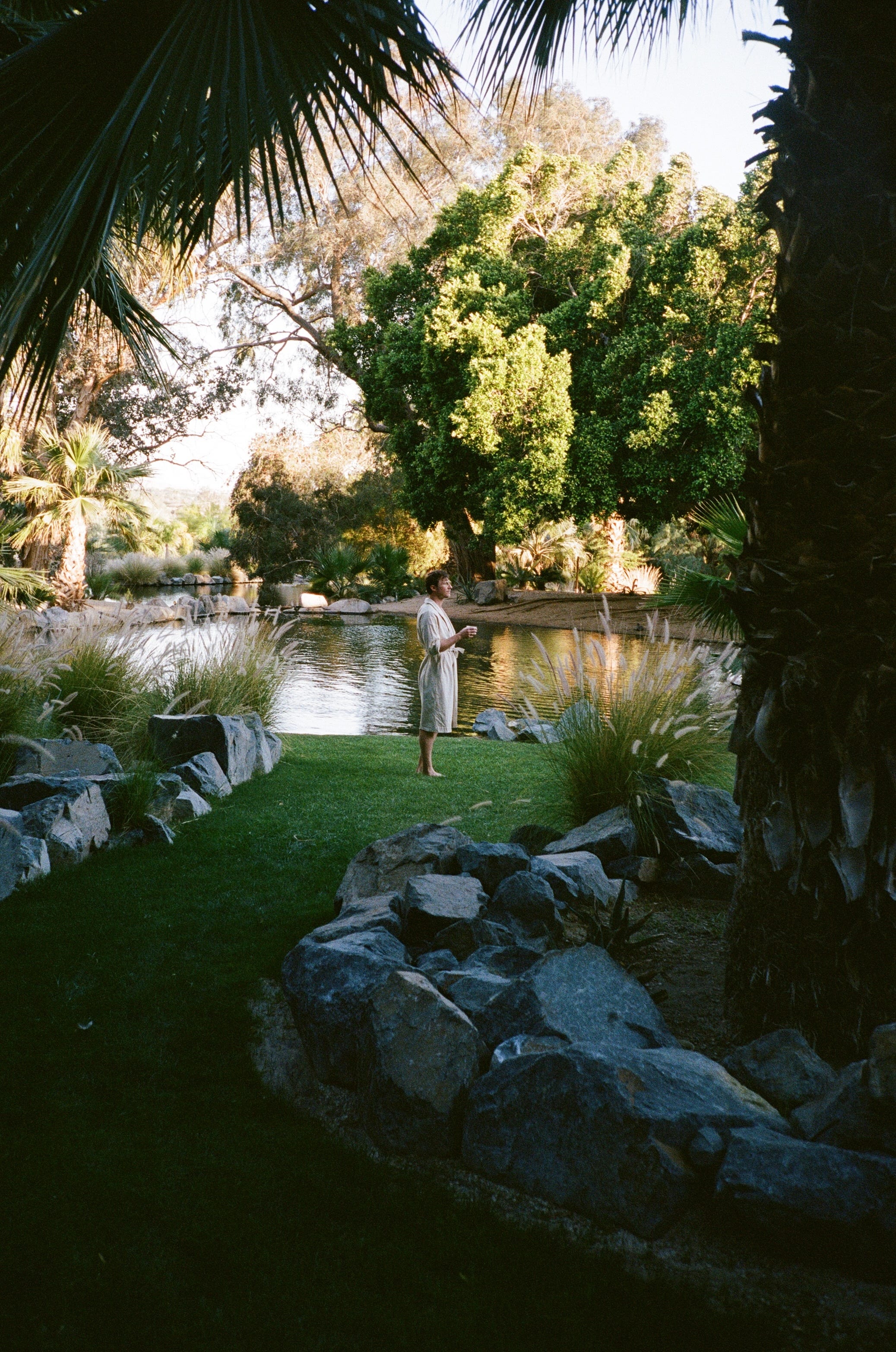
It reminded me of a desert Esalen — same unforced, barefoot, phone-free energy, minus the nudity. Cell phones are actively discouraged, which I loved. Nobody here is performing and that’s exactly the point. Everyone’s in a robe, moving slowly, taking in the sound of the flowing water and the wind.
My favorite spot on the property is the Grotto — the original 1940s heart of the resort, tucked against one of the two original bunches of palms. Two organically shaped pools fed directly by the geothermal wells, walled in dry-stacked river rock that feels like it was pulled from a creek bed and set back in place.
The water is naturally lithium-rich, and Kerry told us that drinking it can have the same stabilizing effect as a prescription; if you're someone who'd otherwise be on lithium for mood, the spring water does some of the work for you. It doesn't smell like sulfur or minerals, either; it's surprisingly clean.
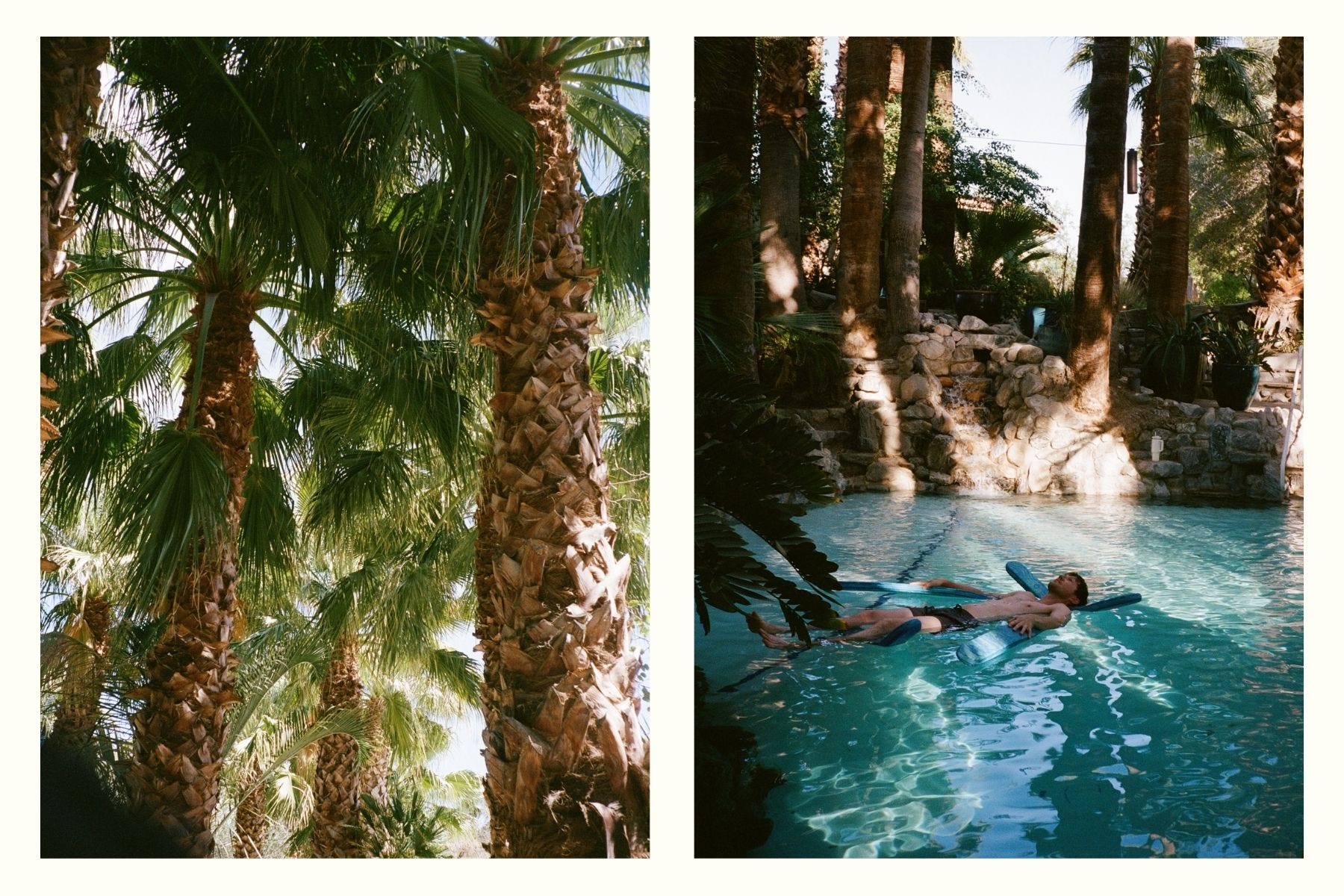
Robert Altman shot The Player here in 1992, the scene where Tim Robbins calls it "a great hideaway in Desert Hot Springs, about a two-hour drive" — and standing in it thirty years later, the description still holds.
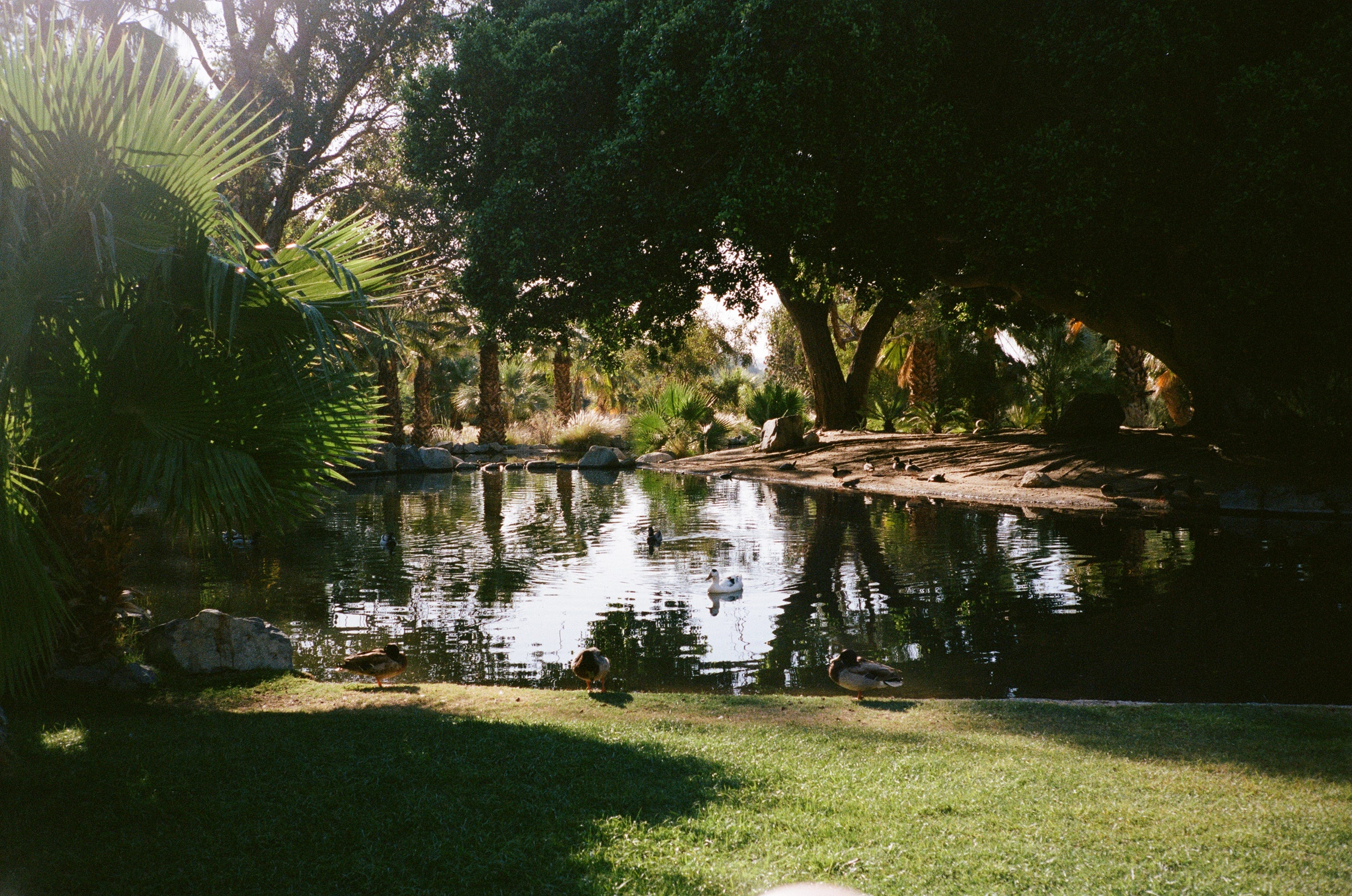
The only sounds are wind in the palm fronds and the occasional duck. The energy is wild. A vortex. Kerry told us Two Bunch is considered one of the most positive vortices on earth, on par with Sedona, and I'm not going to argue with him.
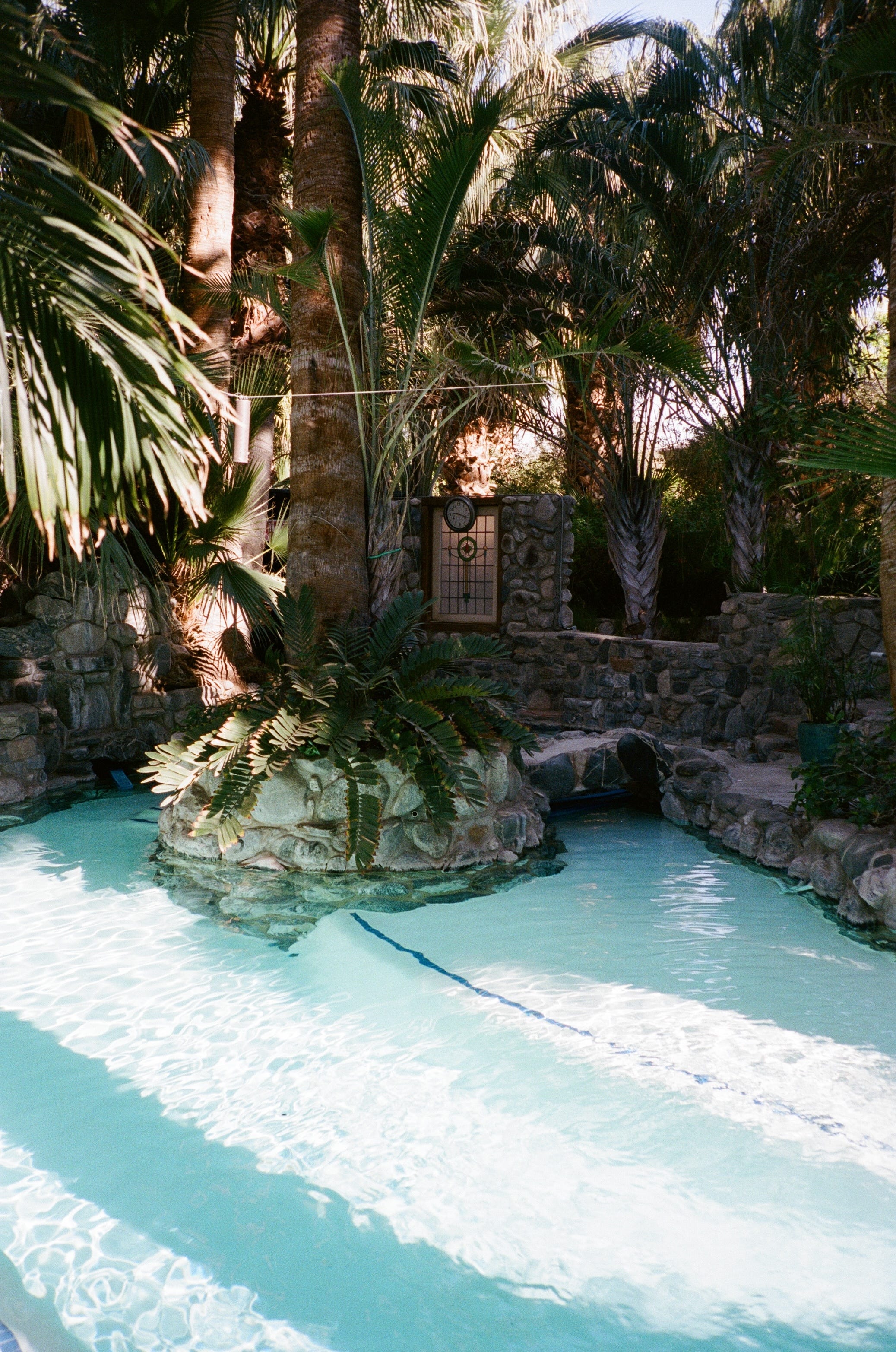
I left on the fourth morning feeling like I’d been gone much longer than I had — the particular trick of a place that makes you forget your phone exists. Two Bunch is now one of my favorite places, and I’m adding it to the list I return to over and over. The wildest part is that it’s two hours from my house in LA. It shouldn’t be possible to feel this far away, this fast.
A more communal and accessible bathhouse version of this is my dream for the Sparkletts property — a space for rest and healing for the community — and something I hope we can bring into reality. Building my own sanctuary like this, somewhere out in nature, someday, is the real dream.
On my list! Your photos are beautiful
Heavenly. I’ll be visiting again.