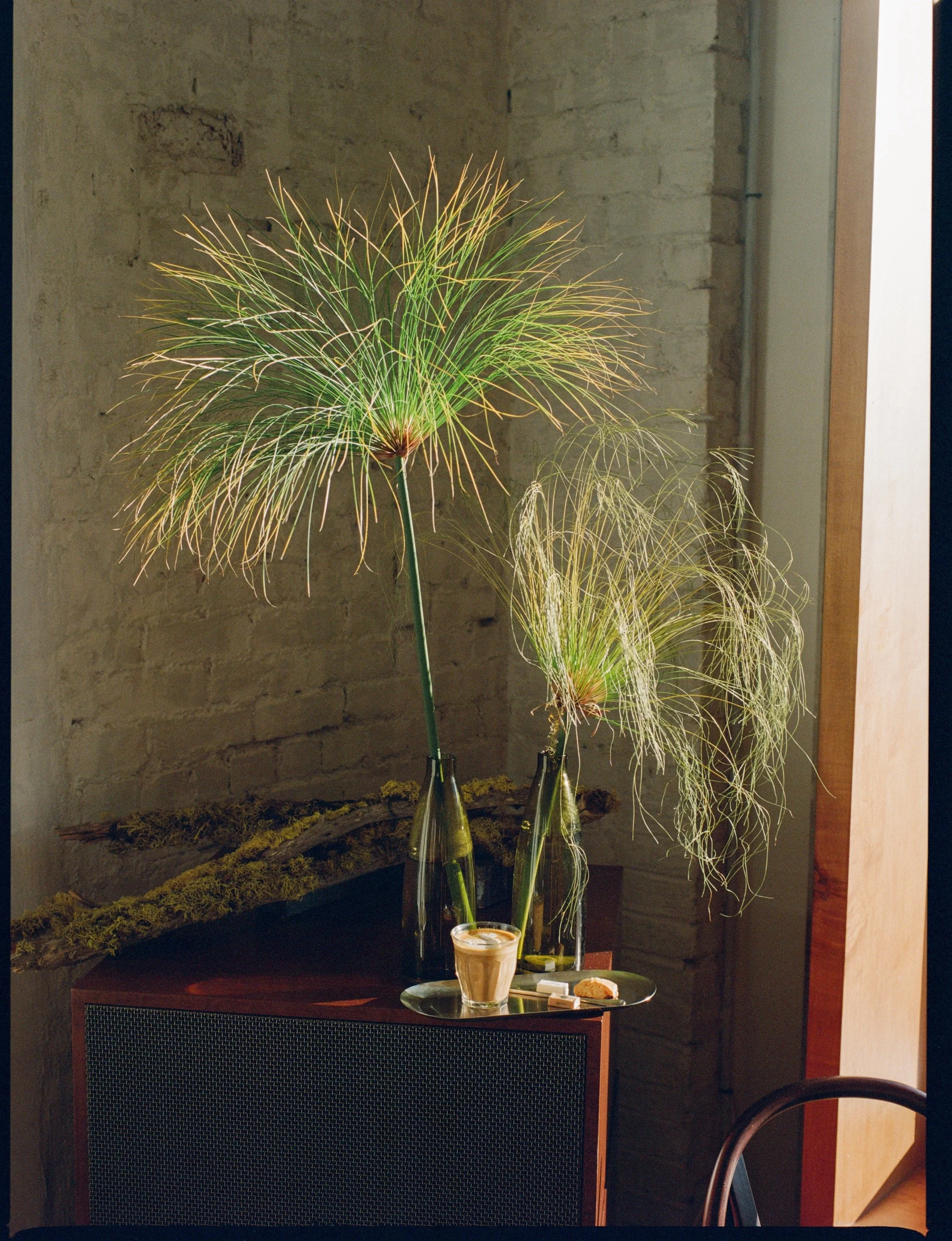
Inside Comet Over Delphi: the Highland Park Café Everyone’s Talking About
In the heart of Highland Park, a quiet revolution in coffee and community has taken root. Comet Over Delphi — created and designed by Austrian architect Constanzia Delort-Laval and her partner, Tim Nesmith — is less a café than an experiment in presence: a space where design, ritual, and humanity intertwine.
The couple lives just a few blocks away from their sunlit corner on Figueroa, and it was proximity, and a bit of fate, that brought the project to life. “We had gotten to know the landlords of this building, which had been empty since the 1960s,” says Tim. “It was in rough shape: the floors were broken and crumbling into dirt, there was no plumbing or electricity, and parts of the ceiling were completely open to the sky. The building was at risk of being lost to the city, and the landlords asked if we had a project in mind that might help bring it back to life.” For Constanzia, the connection was instant:
“Immediately upon entering the space, it felt like the energy was right and like it had potential. I loved the rawness of the space, and the light.”
— Constanzia Delort-Laval
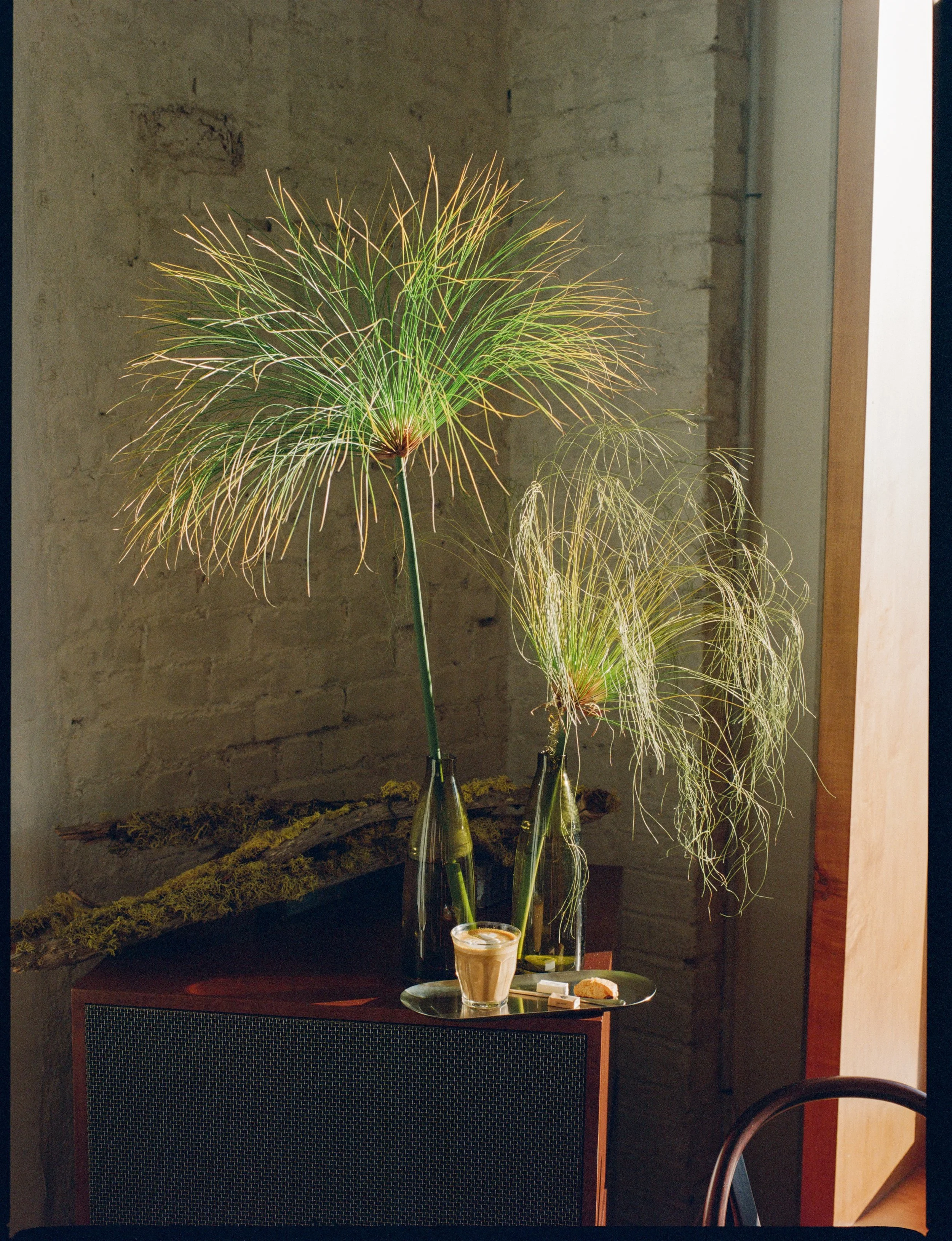
Caption 1 Photo: Caleb Rouse
Rather than recreate what already existed in Highland Park, they looked for what was missing. “We wanted a place where people could feel truly welcome, like they were at a friend’s house,” Tim explains. “A place with extremely high-quality coffee and products, but prepared without any pretension.”
Their time in Europe deeply informed this vision. “We missed the cafés in Vienna and Paris where we lived before moving to LA — where people would meet friends, read, and just stay for hours. That’s the feeling we wanted to recreate,” he continues.
“We believe space and interaction can have an impact on people. We wanted to build something that offered a sense of calm, surprise, and beauty in a place where people might not expect to find it in hopes that they can take that energy and pass it on.”
— Tim Nesmith
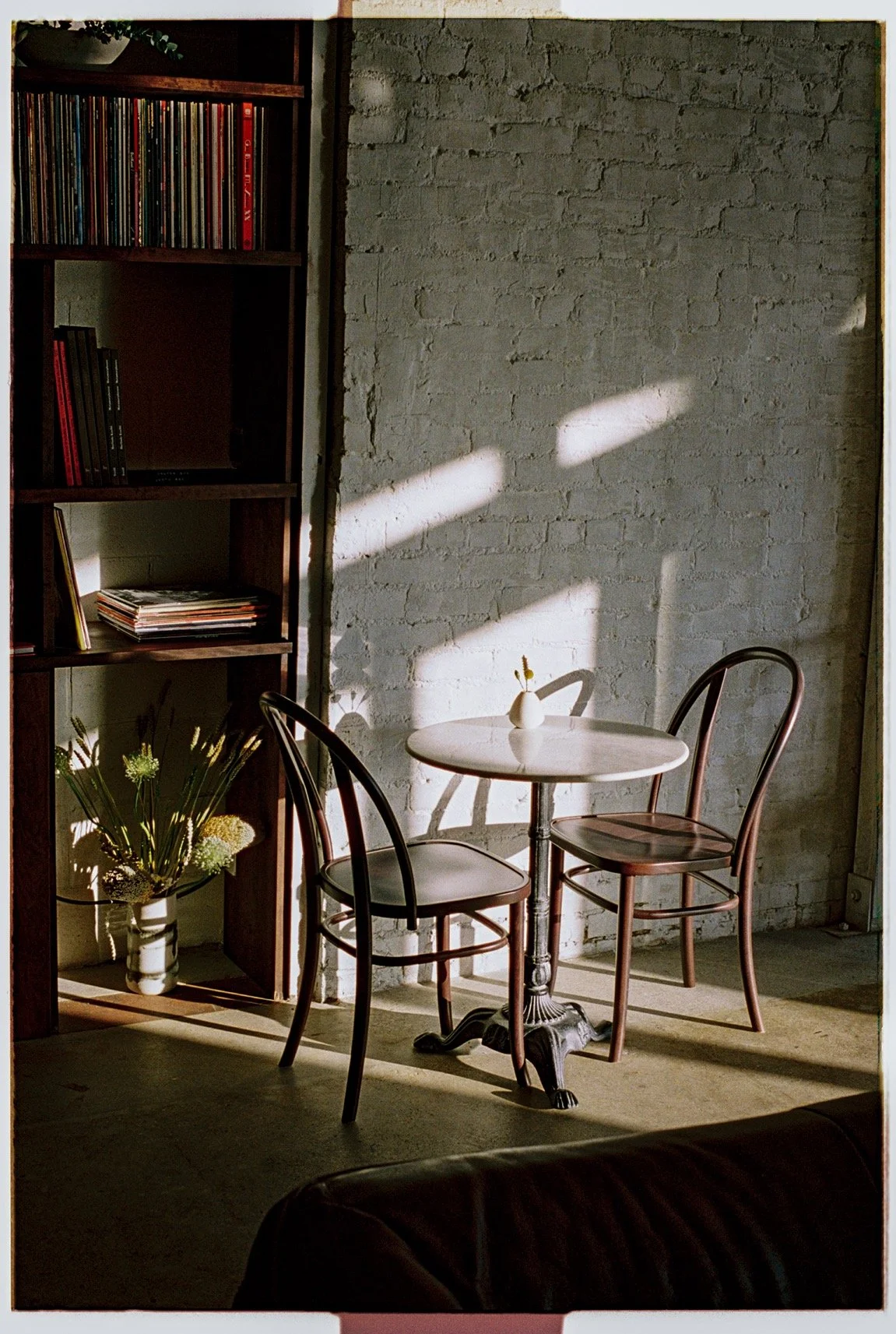
The custom shelving in the space was built by local carpenter KC Tarricone. Photo: Caleb Rouse
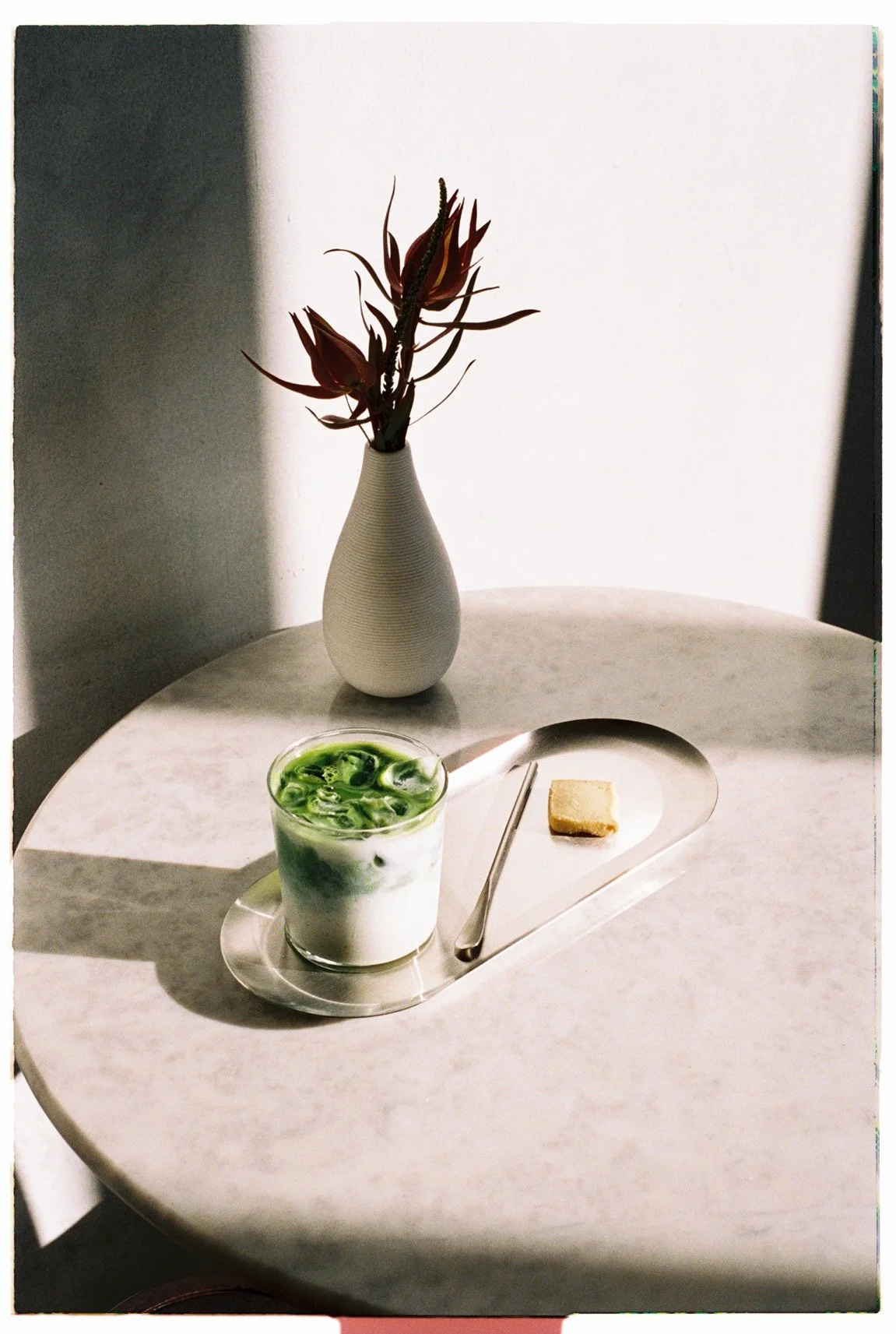
The iced matcha. Photo: Caleb Rouse
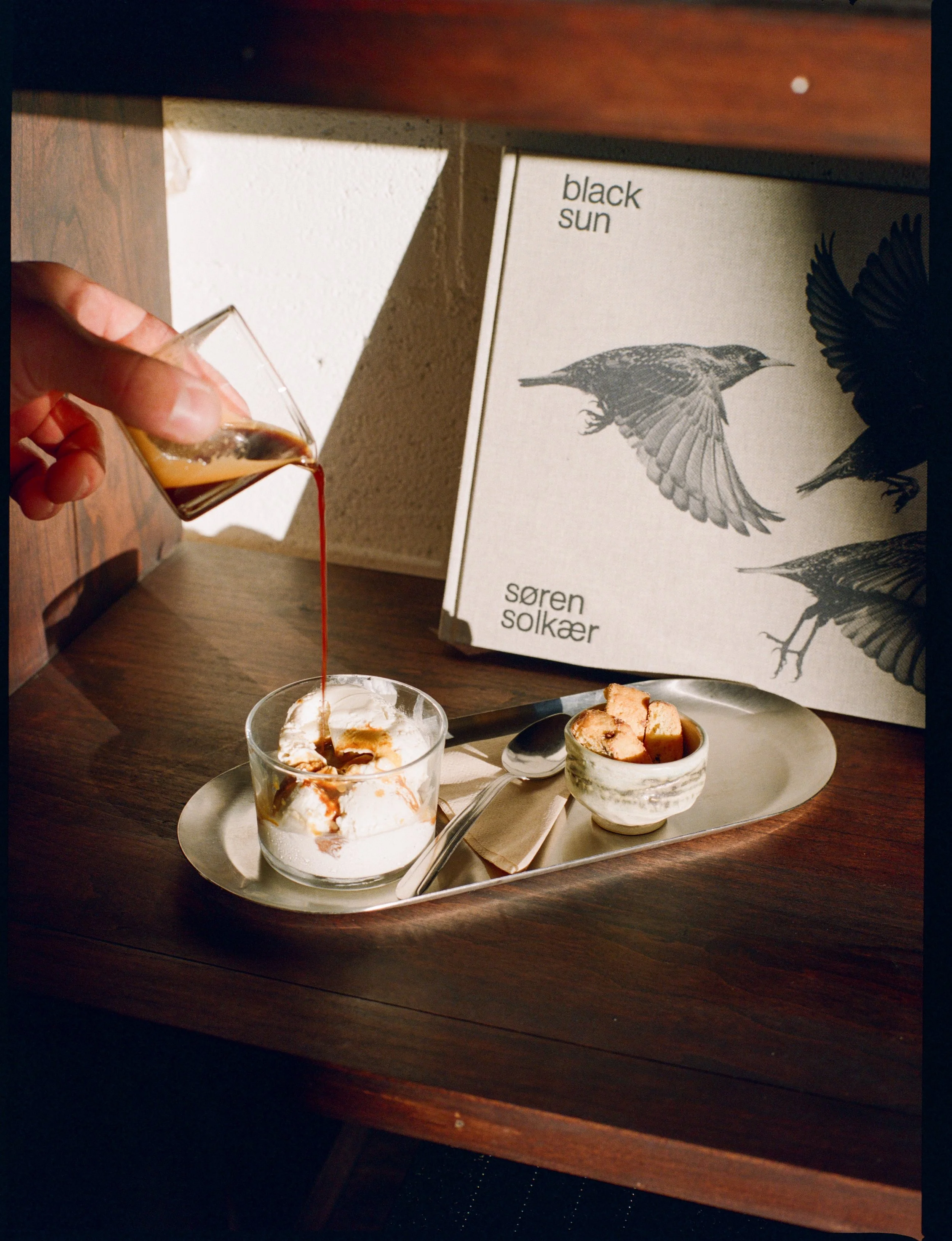
The iced latte. Photo: Caleb Rouse
The idea for the name came during a trip to Greece. “Delphi was once considered the center of the world and was a place where people came to seek answers,” says Tim. “But it wasn’t really about the answers, it was about asking better questions.”
They were drawn to the contrast between what endures and what disappears. “At its peak, Delphi felt like the most permanent place on Earth. And yet now, very little of it remains… A comet, on the other hand, is inherently the opposite. It’s fleeting. Bright, fast, and passing. What feels permanent and what feels ephemeral aren’t so different.
“Nothing lasts…not buildings, not feelings, not us…and that’s okay. That’s not a reason to give up. It’s a reason to try to create something beautiful anyway and impactful — even if it doesn’t last.”
— Tim Nesmith
“Delphi also reflected something else we care about: it was a place where even utilitarian objects were made with care and craft,” adds Constanzia. “That attention to beauty, even in the everyday, is something we feel has often been lost, and something we’d like to help bring back.”
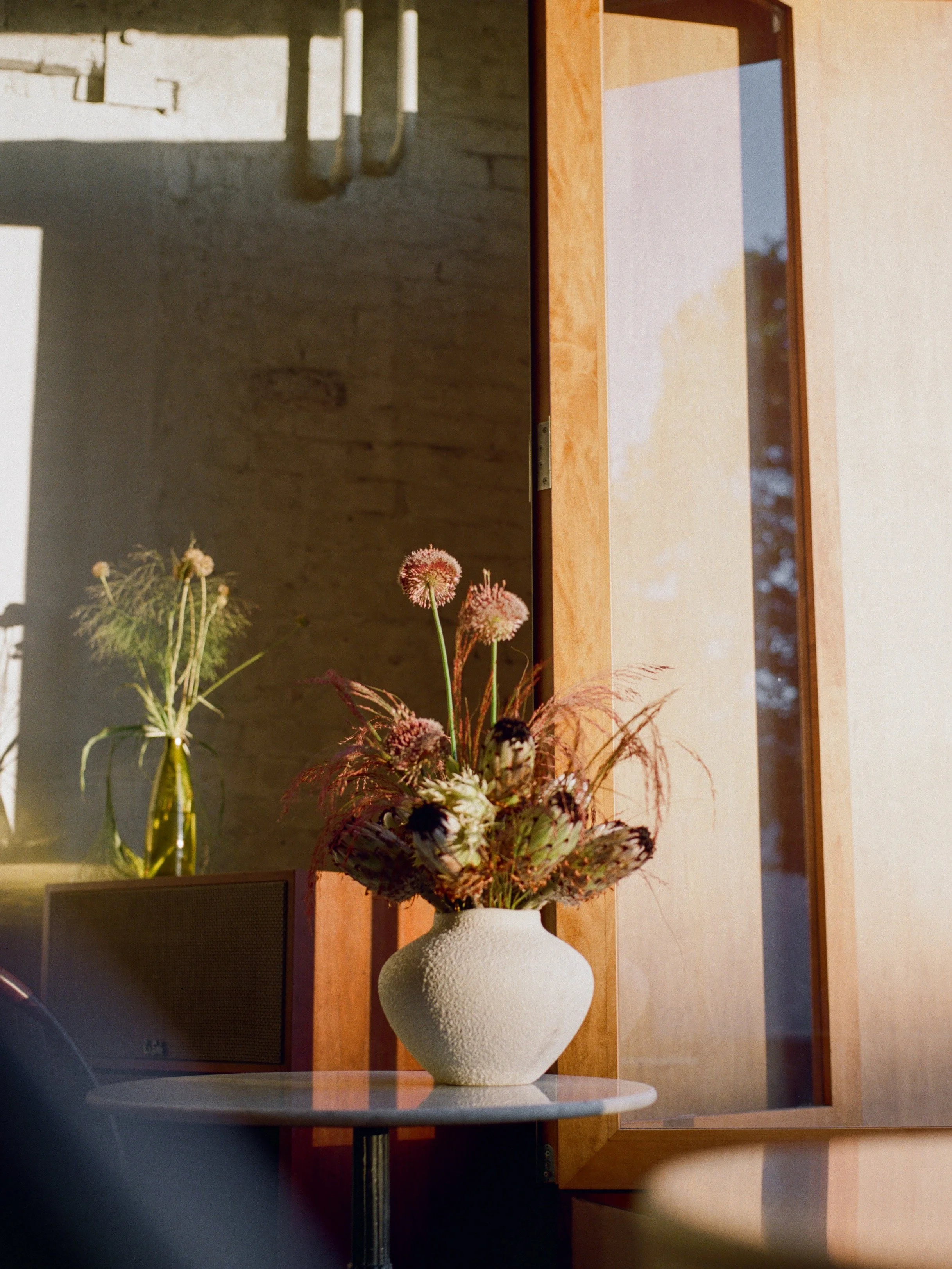
Caption Photo: Caleb Rouse
With Constanzia’s background in social architecture and historic preservation, every decision was made with purpose. “Everything here was chosen intentionally…the open bar, the lack of signage, the way the street flows into the interior. I didn’t want barriers between people, or between guest and barista.”
Tim continues, “We also didn’t want to perform quality. We had to work really hard to make sure there is no big espresso machine in the way, but rather something that opens the space between the front and back. We wanted everything to feel human-scale, transparent — to also reflect our idea of transparency of ingredients, and welcoming.”
The result is a minimal yet layered environment that invites exploration.
“The entire layout was conceived to foster a sense of community. Every element is meant to be shared and adapted… the design encourages people to rearrange and inhabit the space in their own way, blurring boundaries and inviting interaction.”
— Constanzia Delort-Laval
Caption Photo: Caleb Rouse
Caption Photo: Caleb Rouse
Caption Photo: Caleb Rouse
“Minimalism is about focusing only on what the space truly needs,” explains Constanzia. “Some things don’t need to be visible… like a door to a restroom or a kitchen. They should simply function quietly in the background. My approach isn’t decorative; it’s about creating clean lines and including only what’s essential, both from a visual and spatial flow perspective. Minimalism, to me, is about clarity and intention rather than absence.”
Her restraint extends to material choice. “I love materials in their original, honest form,” she says. “The raw concrete floor we added, along with the exposed HVAC pipes, became part of a base building already rich with texture. Chipped paint and weathered surfaces don’t bother me… they tell the story of the building.”
Having worked in historic preservation in Europe, she has developed a deep appreciation for, “the dialogue between old and new, creating contemporary forms that engage the past without attempting to replicate it.”
Within Comet Over Delphi are countless quiet details. “We have coat hooks that we inherited from an Austrian designer named Carl Auböck, along with traditional Austrian newspaper holders,” says Constanzia. “Probably 999 out of 1000 people will never notice those hooks, but they’re a small nod to that heritage, and we love them.”
Tim adds, “We did things like leaving out signage to encourage small moments of interaction and to help remove the ‘transactional’ feeling you can otherwise have in a space… There’s a small fold-out table built into the bookshelf. We never pointed it out to anyone, but people found it on their own, and now we see someone unfolding it almost every day. It’s a small thing, but it’s pretty special.”
Caption Photo: Credit
Caption Photo: Credit
The couple turned to local craftspeople and friends to bring their ideas to life.
“We really tried to tap into the local community for everything: woodworkers, steel fabricators, furniture designers. Everyone who contributed came to us through word of mouth.”
— Constanzia Delort-Laval
KC Tarricone, a friend and carpenter, “patiently brought the shelving on either side of the bar to life,” while “Bernardo built the window system from scratch” to match the exact proportions she envisioned. Their ottomans came from Forsyth Art, reupholstered in vintage fabrics.
“Wes from Common Wave downtown and Oscar from Rewind Audio helped us create a custom audio setup tailored specifically for the space,” says Tim. “They even convinced Klipsch to stain special wood speakers to perfectly match our palette.”
“It was a true team effort, and so many talented people were involved,” he adds. “We can’t wait to collaborate with all of them again.”
Caption Photo: Credit
For Tim, sanctuary is emotional.
“For me, sanctuary doesn’t mean silence or solitude…it just means feeling well enough to be unguarded. We hope this is a place where you don’t have to perform. Where you’re not being sold to or rushed along. That’s what we wanted to build here.”
— Tim Nesmith
“We designed the sound system to feel warm and immersive without ever becoming overpowering,” Tim adds. “We also pay close attention to scent. Nothing here is artificial, and we work with our neighbors at Flamingo Estate for candles and soaps to achieve that natural, balanced atmosphere.”
At different times of day, the café reveals different facets of itself. “In the mornings when it is still cold and misty, it feels so cozy,” says Tim. “We often light some candles and it’s a very quiet calm and peaceful way to wake up. In the late mornings and afternoons we love how people hang on the street and engage with the space with the open windows… Then in the late afternoons when the light comes in and reflects on the bar and the backdrop, it’s really beautiful and inspiring.”
Caption Photo: Credit
Caption Photo: Credit
Looking ahead, the couple plans to translate their values into a product line. “We’d love to extend the ideas of Comet Over Delphi into products,” says Tim. “Things that are beautiful, simple, well-made, and designed to support presence and ritual.”
“Beyond that, we want to extend the same sense of beauty and intention to the utilitarian, creating and curating objects that embody that philosophy,” adds Constanzia.
They describe their guiding principle simply: “Clarity over complexity, restraint over excess, hospitality focused, beauty in functionality,” shares Constanzia.
“We want to remind people that the world can be a nice place, which at times is really difficult to feel and remember.”
— Constanzia Delort-Laval
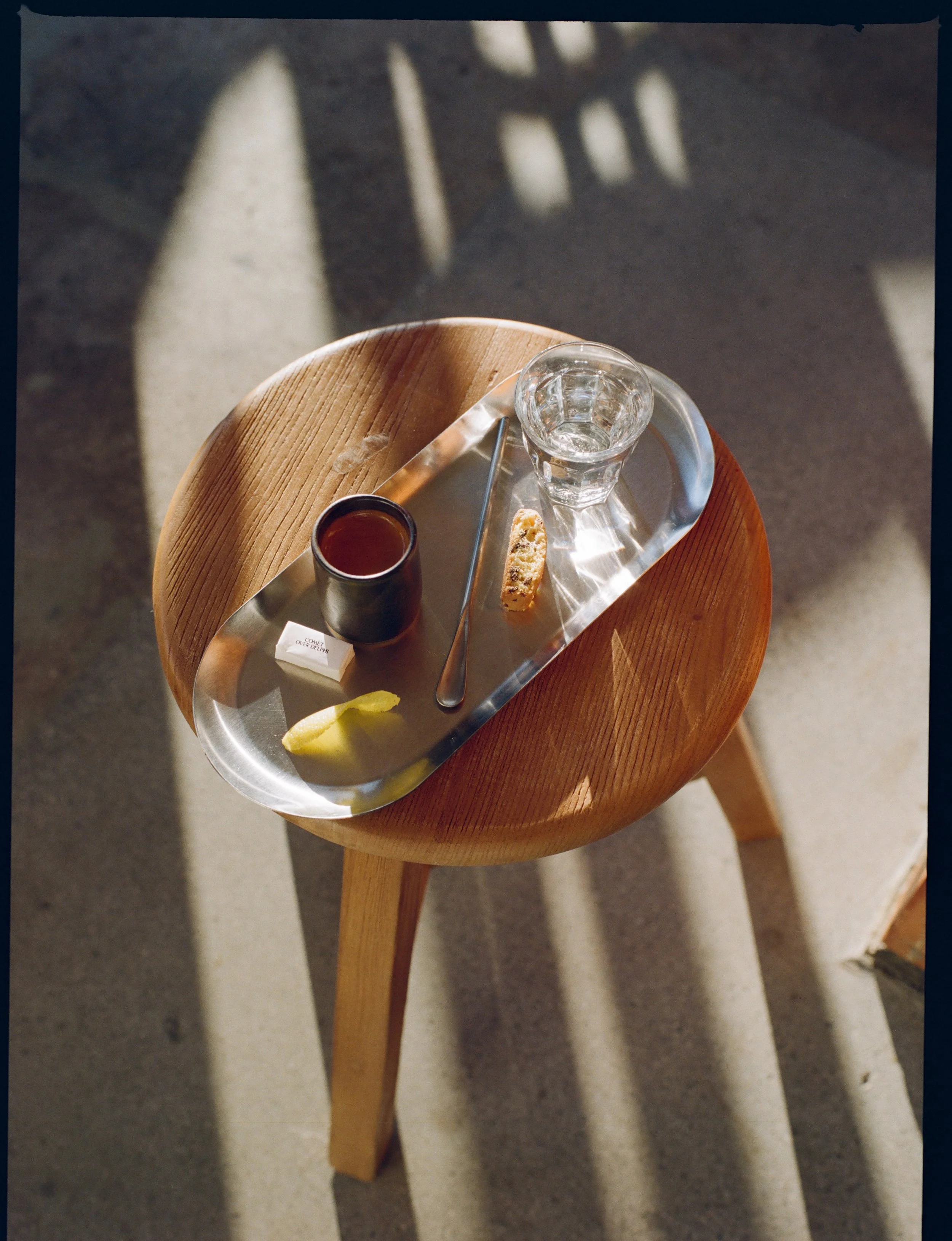
“Being geographically so far from home, I’ve learned to create small reminders of it around me,” says Constanzia. “Things like reading newspapers in my native language, serving drinks on a tray give me a sense of grounding and comfort.”
Caption Photo: Caleb Rouse
“To me, a sanctuary is a place that gives room to breathe and think, while still feeling connected to others. That’s what Comet Over Delphi embodies, a space where you can have a quiet moment for yourself but still be surrounded by neighbors who are here for the same reasons, sharing in a collective rhythm of calm and presence.”
— Constanzia Delort-Laval
Tim reflects on the rituals that inspired their approach. “There’s something in the Japanese tea ceremony that we try to carry with us… the idea that when you enter a space like this, you’re encouraged to leave your ego behind. To slow down. To strip away the extra. And to move toward calm, clarity, and just being in harmony with things as they are without needing to change or shape them.”
“We want Comet Over Delphi to feel like a home and a sanctuary for everyone,” he says. “To me, that means a space that doesn’t expect anything from you in return. No pressure to perform, no need to be anything other than who you are.”
This interview has been edited and condensed for clarity and length.